
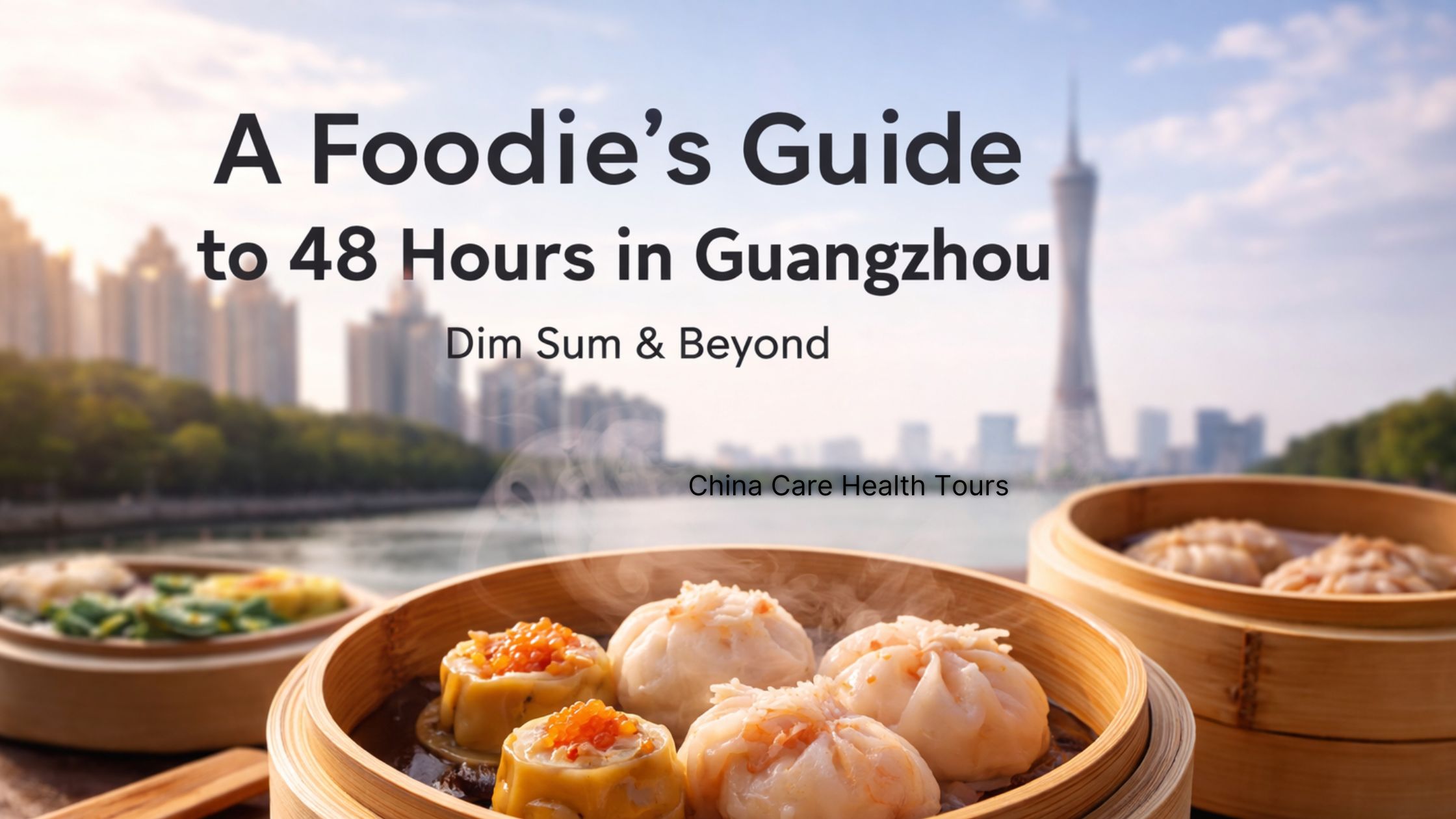
If there is one city in China that truly lives to eat, it is Guangzhou. As the cradle of Cantonese cuisine, this southern metropolis doesn’t just serve food—it reveres it. For locals, the day begins with a leisurely Guangzhou food, yum cha (tea drinking) session and often ends past midnight with a sizzling clay pot of rice or a bowl of silky congee. Every alley whispers the aroma of roasted meats, and every conversation seems to circle back to the question: “Where did you eat today?” With so much to explore in the realm of Guangzhou food, every meal becomes an adventure.
For travelers, Guangzhou offers a rare chance to taste culinary history. Yet beyond the dim sum carts and the neon‑lit food streets, the city holds another, less‑spoken‑of title: it is one of Asia’s premier medical hubs. But we will get to that later. First, let’s eat.
In fact, Guangzhou food is a reflection of the city’s rich culture and history. With its focus on fresh ingredients and meticulous preparation, Guangzhou food excels in delivering a unique culinary experience.
Table of Contents
Every dish you try adds to your understanding of what makes Guangzhou food so special. As you embark on your culinary journey, the various flavors of Guangzhou food will undoubtedly leave a lasting impression.
There’s something magical about savoring authentic Guangzhou food amidst the vibrant local atmosphere. Guangzhou food is not just a meal; it is a reflection of the city’s identity.
The rich flavors of Guangzhou food are a testament to the culinary innovations of this city. Don’t miss out on the opportunity to explore the depths of Guangzhou food during your visit. Find out more about when is the best time to visit China.
Part I: 48 Hours Guangzhou Food– A Culinary Pilgrimage
Morning – The Ritual of Yum Cha
7:00 AM – The Queue
In Guangzhou, breakfast is not a quick affair—it is a ceremony. To experience it properly, you must arrive early. Head to one of the city’s century‑old tea houses. Guangzhou Restaurant on Wenchang Road offers a grand, old‑school setting where waitstaff still push steaming trolleys between tables. For a more local vibe, Tao Tao Ju (founded in 1880) is a favorite among grandparents who come with their birdcages and newspapers.
Grab a pot of bo lei (pu‑erh) tea. The first pot is used to rinse your utensils—a practical tradition that also signals you are ready to order. Then, the trolley parade begins.
As you explore, you’ll discover how Guangzhou food brings people together. The street vendors serve Guangzhou food that captures the essence of local flavors. This culinary journey showcases the diversity and richness of Guangzhou food. Each bite of Guangzhou food reveals a story of tradition and flavor.
While you savor these delicacies, remember that Guangzhou food is an experience to cherish. From street food to fine dining, Guangzhou food caters to every palate.
During your exploration, you’ll find that Guangzhou food is not just about nourishment, but a cultural celebration. Be sure to try some of the lesser-known dishes that highlight the versatility of Guangzhou food.
The Non‑Negotiables
Each evening spent enjoying Guangzhou food creates memories that last a lifetime. Don’t forget to indulge in the sweet side of Guangzhou food with delightful desserts. As the day winds down, savoring Guangzhou food becomes a cherished ritual.
With the Pearl River as a backdrop, enjoying Guangzhou food elevates the entire dining experience. Dining on Guangzhou food while enjoying the view creates a perfect atmosphere. As you dive into the local dining scene, Guangzhou food will delight your senses.
- Har Gow (Shrimp Dumplings): The translucent wrapper should be thin enough to see the pink‑orange shrimp inside, yet sturdy enough to hold together with chopsticks. A good har gow is the benchmark of any dim sum kitchen.
- Siu Mai (Pork & Mushroom Dumplings): Topped with a dot of orange roe or a sliver of mushroom, these open‑faced dumplings are rich, savory, and slightly bouncy.
- Char Siu Bao (BBQ Pork Buns): You have two choices—the fluffy, snow‑white steamed version or the honey‑glazed baked one. Order both. The filling should be sweet, savory, and just a little sticky.
Late-night adventures often lead to discovering more hidden gems in the realm of Guangzhou food. The late-night offerings of Guangzhou food are perfect for satisfying evening cravings. Exploring these late-night options will expand your appreciation for Guangzhou food.
Pro Tip: Watch how the locals order. They will often ask for specific dishes to be made fresh rather than taking from the trolley. If you want the best har gow, request xian zhu (freshly made).
After a long day, there’s nothing quite like enjoying comforting Guangzhou food. Guangzhou food, especially the congee, offers both warmth and satisfaction. Whether you’re enjoying it alone or with friends, Guangzhou food creates a sense of community.
Ultimately, every aspect of the Guangzhou food experience contributes to your journey through this vibrant city.
Afternoon – Old Town & Street Guangzhou Food Crawl
10:30 AM – Shangxiajiu Pedestrian Street
By mid‑morning, it is time to walk off the dim sum and make room for more. Shangxiajiu is a covered arcade lined with qilou (arcade buildings) that date back to the Republican era. Here, food is as much about history as it is about flavor.
The Hunt for “Wok Hei”
Look for shops with whole roast ducks and glistening char siu (barbecue pork) hanging in the windows. Wok hei—literally “breath of the wok”—is the smoky, caramelized essence that defines Cantonese stir‑frying. At a humble street stall, order a plate of char siu over rice. The edges should be slightly charred, the meat tender, and the honey glaze deep and aromatic.
For a quick bite, find a stall selling chee cheong fun (rice noodle rolls). They are often made to order: a thin layer of steamed rice batter is scraped up, filled with shrimp, beef, or just soy sauce, and topped with sweet soy and sesame oil.
Sweet Treats
By afternoon, your palate may crave something cool. Head to a traditional dessert shop and order shuangpi nai—a silky double‑layered milk custard that originated in the nearby city of Shunde. Alternatively, yangzhi ganlu (mango pomelo sago) is a refreshing mix of juicy mango, tangy pomelo, and coconut milk.
Evening – Dinner by the Pearl River
6:00 PM – Live Seafood, Prepared Your Way
Guangzhou sits at the heart of the Pearl River Delta, where seafood is prized above almost everything else. The best way to experience it is to visit a restaurant with its own live seafood tanks—many are clustered along the riverfront or in the Haizhu district.
You will not order from a menu; instead, you walk through the tanks and select your lobster, crab, clams, or fish. The staff will weigh them and suggest preparations: steamed with ginger and scallion, stir‑fried with black bean sauce, or baked with cheese (a local favorite for lobster).
The Experience
Sit by a window if you can. As the sun sets, the Pearl River lights up, and the iconic Canton Tower glitters in the distance. Dinner here is not just a meal—it is a sensory celebration of Guangzhou’s abundance.
Late Night – The Midnight Supper
11:00 PM – Jichang Road or Baoye Road
While other cities wind down, Guangzhou food scene revs up. Late‑night supper, or xiaoye, is a beloved institution. Taxi drivers, shift workers, and night owls gather at open‑air stalls where the woks never stop sizzling.
Congee & Clay Pot Rice
Two dishes dominate the midnight menu. First, jook (congee)—cooked until the rice grains dissolve into a velvety porridge, topped with century egg, lean pork, or fresh fish. It is comfort in a bowl.
Second, bao zai fan (clay pot rice). Rice is cooked in a clay pot over a charcoal flame until a crispy, golden crust forms at the bottom (guo ba). It is then topped with Chinese sausage, chicken, or spare ribs, drizzled with a sweet‑savory soy sauce, and brought to your table still bubbling.
Pro Tip: Use your spoon to scrape up the crispy rice from the bottom—it is considered the best part.
Part II: Beyond the Plate – Navigating Guangzhou
Before we pivot, a quick word on logistics. Guangzhou is remarkably traveler‑friendly. The metro system is clean, extensive, and bilingual. Most major Guangzhou food destinations are within a short walk of a station. English menus are common in tourist areas, but learning a few Cantonese phrases like m goi (thank you) will earn you smiles.
Frequently Asked Questions
1. What food is Guangzhou known for?
Guangzhou is the undisputed capital of Cantonese cuisine. The city is famous for dim sum (har gow, siu mai, char siu bao), Cantonese barbecue (char siu, roast goose, soy sauce chicken), fresh seafood prepared live, clay pot rice, and congee. Street food like rice noodle rolls (chee cheong fun) and double‑layer milk custard are also local favorites.
2. Where to find halal food in Guangzhou?
Guangzhou has a long history of Muslim trade, so halal food is accessible. The Xiaobei area (around Xiaobei metro station) is the city’s main Muslim quarter, home to many authentic Xinjiang and halal Cantonese restaurants. You’ll also find halal noodle shops and Uyghur eateries scattered throughout Yuexiu District. For convenience, look for restaurants displaying a halal certificate or the green “清真” sign.
3. What is the famous food in Guangzhou?
The most iconic dishes include har gow (crystal shrimp dumplings), char siu (honey‑glazed barbecued pork), roast goose, clay pot rice, and century egg congee. Each represents the Cantonese pursuit of fresh ingredients, delicate technique, and balanced flavor.
4. How to order food in Guangzhou?
- At dim sum restaurants: flag down a trolley and point at what you want; the staff will stamp your order card.
- At street stalls: simply point at the item or use a translation app to show the name.
- In seafood restaurants: choose your live seafood from tanks, then discuss preparation with the staff.
- Using apps: many restaurants now support QR‑code ordering via WeChat—scan the table code and browse pictures.
- Language: knowing basic phrases like “m goi” (thank you) or “ni hao” helps, but pointing and smiling works almost everywhere.
5. Where to stay in Guangzhou for shopping and food?
Tianhe District (around Tianhe Road) is the modern city center with high‑end shopping malls (Taikoo Hui, Grandview Mall) and countless restaurants. For a blend of traditional food and shopping, Beijing Road and Shangxiajiu offer pedestrian streets lined with historic shops, snack stalls, and easy access to old‑town eateries.
6. Where to stay in Guangzhou for food?
For the most authentic food experience, stay in Yuexiu or Liwan District. These areas are home to century‑old teahouses, traditional Cantonese restaurants, and lively night markets. Zhujiang New Town (in Tianhe) is also a great base if you prefer modern hotels and a central location, with easy metro access to food hotspots across the city.
7. What is Guangzhou known for food?
Guangzhou is globally renowned for dim sum, the art of yum cha, and the principle of “freshness above all.” Its food culture emphasizes seasonality, texture, and subtlety. From Michelin‑starred restaurants to humble dai pai dong (open‑air stalls), Guangzhou offers an unparalleled culinary journey that has earned it the UNESCO City of Gastronomy designation.
Part III: Why “The Taste of Guangzhou” Is Just the Beginning
After 48 hours of indulging in the world’s finest flavors, you might find yourself wondering: How does this city maintain such precision, quality, and longevity?
The answer lies in a culture that prizes excellence in every field. Cantonese chefs train for years to master the perfect har gow fold. Similarly, Guangzhou’s medical specialists are among the most rigorously trained in Asia, and its hospitals rank consistently among China’s best.
Guangzhou: The Medical Capital of Southern China
While tourists flock to Guangzhou for its food, international travelers increasingly come here for a different kind of expertise. The city—and its surrounding metropolitan area—is home to a cluster of world‑class medical institutions:
- Sun Yat‑sen University Cancer Center: As one of China’s leading oncology institutes, it is renowned for advanced radiation therapies, precision medicine, and multidisciplinary cancer care. Patients from across Asia seek treatment here for its combination of cutting‑edge technology and deep clinical expertise.
- The Sixth Affiliated Hospital of Sun Yat‑sen University: This hospital is a national leader in gastroenterology, colorectal surgery, and digestive diseases. It attracts patients from around the world for its minimally invasive surgical techniques, comprehensive digestive disease center, and patient‑centered approach.
- Fosun Fuxing Chancheng Hospital: Located in the Guangzhou, Baiyun district, this JCI‑accredited private hospital sets the standard for executive health, premium inpatient services, and international patient care. It is particularly known for its comprehensive health check‑up packages, advanced imaging, and a multilingual medical team that caters to global patients.
What makes this medical hub unique is the convergence of high‑volume clinical experience—specialists here see more cases in a month than many Western doctors see in a year—with modern facilities and a service ethos that treats patients with the same care as a chef treats a guest.
Navigating Guangzhou’s Medical Maze
Most visitors find that navigating a “3A” hospital in Guangzhou is more complex than finding a hidden noodle shop in a back alley. The language barrier, the registration systems, and the sheer scale of the medical campuses can be overwhelming.
That is where China Care Health Tours steps in.
We believe in Medical Fairness. We provide the information you need to find the right specialist among Guangzhou’s elite medical centers.
- We find the doctor: Matching your diagnosis with the top surgeons in South China.
- We handle the S2 Visa: Ensuring your medical travel paperwork is flawless.
- We manage the “Tours”: From airport pickup to finding an apartment near the hospital.
You stay in control. We provide the data, the logistics, and the “Healing Soup” recommendations—but the final decision on your healthcare is always yours.
Start Your Journey to Recovery
If you are considering a medical checkup, a second opinion, or advanced oncology treatment in Guangzhou, don’t go it alone.
- View our 2026 Guangzhou Hospital Guide
- Talk to a Local Expert: Message us for an honest assessment of your options.