Medical Destination · Shanghai Municipality

Shanghai
China's Heavy Ion Capital

Shanghai is home to China's first heavy-ion therapy centre, Fudan University Shanghai Cancer Center, and a cluster of internationally recognized hospitals with extensive experience treating foreign patients.

4
World-class cancer centres
$45,000
Heavy ion therapy cost
~40%
Cheaper than Singapore
70+
Direct international flight cities
Why Shanghai

China's most internationally accessible city for advanced cancer treatment

Shanghai combines clinical excellence with the most cosmopolitan living environment in China. Its hospitals lead the country in heavy-ion radiotherapy, and the city's large English-speaking expat community means international patients experience the least culture shock of any Chinese medical destination.

China's only city with multiple heavy-ion therapy centres — the most precise form of radiotherapy available
Carbon ion beams deposit energy precisely at the tumour site, sparing surrounding tissue. Shanghai Proton and Heavy Ion Center was China's first dedicated facility, and demand has driven the opening of additional capacity making Shanghai the global leader outside Japan and Germany.
Fudan University Shanghai Cancer Center is ranked #2 in China for oncology
FUSCC handles over 50,000 new cancer cases annually and maintains dedicated international patient services. Its multidisciplinary tumour boards include specialists who have trained at MD Anderson, Memorial Sloan Kettering, and European cancer centres.
Shanghai Proton and Heavy Ion Center offers treatment at ~$45,000 vs $150,000+ in the US
Heavy-ion therapy for skull-base tumours, chordomas, prostate cancer, and certain lung cancers costs a fraction of equivalent treatment in the United States or Europe, with comparable or superior outcomes for eligible tumour types.
Most cosmopolitan Chinese city — largest English-speaking expat community, international schools, Western restaurants
Shanghai's Jing'an, Xuhui, and Pudong districts offer international-standard apartments, Western supermarkets, English-language medical clinics, and a well-established community of international residents who provide informal support networks for medical tourists.
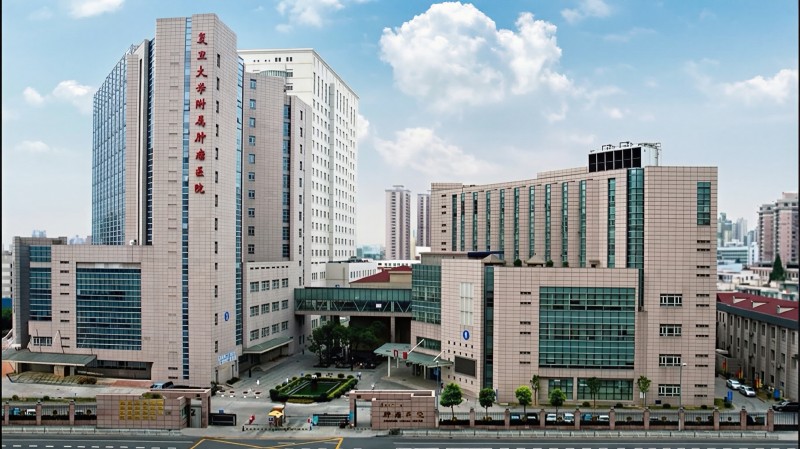
Fudan University Shanghai Cancer Center exterior — China's second-ranked oncology hospital for international patients

Fudan University Shanghai Cancer Center (FUSCC), ranked #2 in China for oncology and home to a dedicated international patient department.

Getting There
Flight: Direct from most international hubs via Pudong (PVG) or Hongqiao (SHA)
From HK: Direct flights, ~2.5 hours
Airport: Shanghai Pudong International (PVG)
Visa: 240-hour transit or Medical Visa S2
Partner & Recommended Hospitals

Top hospitals for international patients in Shanghai

China Care has established relationships with the following Shanghai hospitals. We coordinate your case, translate records, and accompany you during consultations.

Top Ranked
Fudan University Shanghai Cancer Center
Oncology · CAR-T · Precision Medicine

China's #2 dedicated cancer hospital, handling over 50,000 new cases annually. FUSCC's multidisciplinary teams cover all major tumour types and its CAR-T programme is among the most active in eastern China. Dedicated international patient wing with English-speaking oncologists and patient coordinators.

CAR-T Therapy Precision Medicine Breast Cancer Gastric Cancer
View Hospital Directory →
China Care Partner
Shanghai Proton and Heavy Ion Center
Heavy Ion Therapy · Proton Therapy · Radiotherapy

China's first and most established heavy-ion therapy facility. Jointly operated by Shanghai Jiao Tong University and national research institutes, SPHIC uses carbon ion beams to treat skull-base tumours, chordomas, prostate cancer, and selected lung, liver, and pancreatic tumours with exceptional precision at a fraction of Western costs.

Heavy Ion Therapy Proton Therapy Skull-Base Tumours Chordoma
View Hospital Directory →
Top Ranked
Ruijin Hospital
Haematology · CAR-T · Bone Marrow Transplant

Affiliated with Shanghai Jiao Tong University School of Medicine, Ruijin Hospital is one of China's foremost haematology centres. Its haematology department pioneered differentiation therapy for acute promyelocytic leukaemia and remains a national leader in bone marrow transplantation, CAR-T, and lymphoma treatment.

Haematology CAR-T Therapy Bone Marrow Transplant Leukaemia
View Hospital Directory →
What It Costs

Treatment costs in Shanghai (2026 estimates)

All figures are indicative ranges based on China Care's network data. Final costs depend on your specific protocol, hospital, and treatment duration. We provide a written itemised estimate before you commit to travel.

Commercial CAR-T Therapy
CD19, BCMA or dual-target constructs for lymphoma, myeloma, or ALL. Includes bridging chemo, infusion, and 4–6 week inpatient monitoring.
Shanghai Cost
$180K–$250K
Heavy Ion Therapy
Carbon ion radiotherapy for skull-base tumours, chordomas, prostate cancer, and selected solid tumours. 2–4 week treatment course at SPHIC.
Shanghai Cost
$40K–$55K
Clinical Trial CAR-T
Next-generation targets (solid tumours, dual-target, autoimmune) under investigational protocols. Trial drug costs may be covered by the hospital.
Shanghai Cost
$40K–$120K
PD-1 Immunotherapy
Tislelizumab, Camrelizumab, Sintilimab, or imported Keytruda/Opdivo. Annual cost including infusions and monitoring.
Annual Cost
$15K–$30K
Cancer Surgery (Robotic)
Da Vinci robotic surgery for colorectal, gastric, prostate, or gynaecological cancers. Includes 5–7 day inpatient stay.
Shanghai Cost
$12K–$22K
Executive Health Screening
Full-body check including CT, MRI, PET-CT, cardiac assessment, tumour markers, and specialist review. 1–2 day programme.
Shanghai Cost
$1,000–$1,400

Sources: China Care cost database 2026, hospital published price lists. Costs exclude accommodation, flights, and navigation service fee.

Practical Information

Everything you need to know before you travel

Visa & Entry
240-Hour Visa-Free
Most nationalities can enter Shanghai without a visa for up to 10 days. Sufficient for diagnostic visits, PET-CT, and initial oncology consultations at FUSCC or SPHIC.
Medical Visa (S2)
Required for treatment stays longer than 10 days. Requires a hospital invitation letter, financial proof ($10K–$15K USD), and medical records. China Care handles the documentation.
Accompanying Person
One family member may apply for an S1 visa to accompany the patient. China Care prepares both applications simultaneously.
Language & Communication
At the Hospital
FUSCC maintains a dedicated international patient centre with English-speaking oncologists. Shanghai's large expat population means English is more widely spoken in and around major hospitals than in other Chinese cities.
China Care Support
Xiaoyue Peng is on-site during key consultations. Real-time interpretation is provided for ward rounds and treatment planning discussions.
Accommodation
In-Hospital
FUSCC provides private international-wing rooms. SPHIC patients typically stay in nearby serviced apartments during their 2–4 week radiotherapy course, allowing daily outpatient attendance.
Near Hospital
Shanghai's international hospital clusters in Xuhui and Pudong are surrounded by international-standard hotels and serviced apartments. China Care recommends suitable accommodation options nearby and arranges airport transfers.
Payments & Insurance
Payment Methods
International wire transfer and select international credit cards accepted at major hospitals. Payment is made directly to the hospital.
Common Questions

What patients ask about treatment in Shanghai

What is heavy-ion therapy and why is Shanghai the best place for it?
Heavy-ion (carbon ion) therapy uses beams of carbon atoms to destroy cancer cells. The Bragg peak effect means the beam deposits maximum energy directly inside the tumour and minimal energy in surrounding healthy tissue — making it far more precise than conventional radiotherapy or even proton therapy. Shanghai Proton and Heavy Ion Center was China's first dedicated facility and has treated thousands of patients since opening, with outcomes data matching leading Japanese and German centres. It is the most accessible high-volume carbon ion facility in the world for patients coming from English-speaking countries.
How does Shanghai compare to Guangzhou for cancer treatment?
Both cities offer world-class oncology. Guangzhou has the highest CAR-T volume in southern China and SYSUCC handles extraordinary case numbers annually. Shanghai's advantage is heavy-ion therapy (not available in Guangzhou), a more cosmopolitan living environment, and stronger English-language support outside the hospital. For haematological cancers, either city is excellent. For skull-base tumours, chordomas, or cases requiring carbon ion radiotherapy, Shanghai is the clear choice.
Is Shanghai more expensive than other Chinese cities for medical care?
Hospital treatment costs in Shanghai are broadly comparable with Guangzhou and Beijing. Living costs — accommodation and food — are higher in Shanghai than in other major Chinese cities, but international-standard options are more readily available. For heavy-ion therapy specifically, Shanghai is considerably cheaper than equivalent treatment in Japan ($80,000–$100,000) or Germany ($120,000+). China Care provides a full cost breakdown before you travel.
What is the patient experience like in Shanghai hospitals?
Shanghai's major cancer hospitals have invested heavily in international patient infrastructure over the last decade. FUSCC's international centre offers English-speaking case managers, translated reports, and a dedicated patient liaison team. Outside the hospital, Shanghai's established expat community, Western restaurant scene, and English-language media make daily life significantly easier for international patients and their families during extended stays.
How do I arrange a consultation at Fudan University Shanghai Cancer Center?
Submit your pathology reports, imaging, and treatment history to China Care. We prepare a Chinese-language case summary and forward it to FUSCC's international patient centre. A specialist assessment is typically returned within 3–5 working days via email or WhatsApp. If the case is appropriate for FUSCC, China Care will advise whether a pre-travel video consultation is available at that hospital before you commit to travel.

Ready to explore treatment in Shanghai?

Submit your medical records to China Care. We will review your case, identify the most appropriate Shanghai hospital, and get a specialist's assessment — before you book any flights.