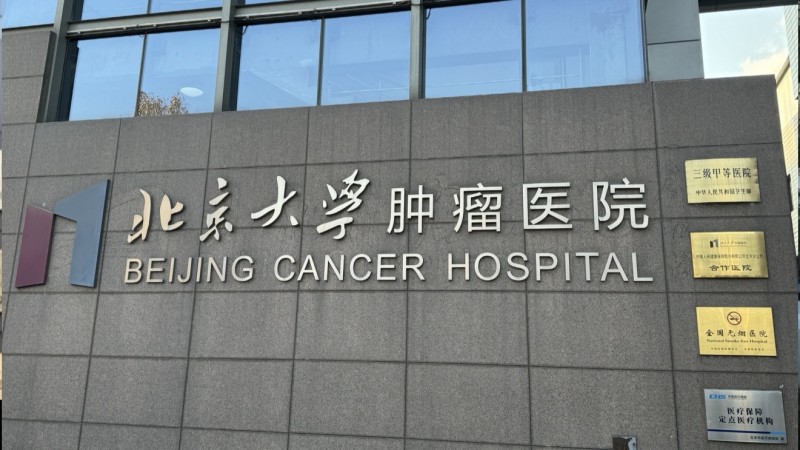
Gastric Cancer & ImmunotherapyMelanomaPublic · Grade 3AFounded 1976PKU Affiliated
Peking University Cancer Hospital China's deepest gastric cancer expertise
A dedicated cancer hospital affiliated with Peking University, internationally recognised for gastric cancer research, melanoma treatment in Asian patients, and immunotherapy trials that have informed how oncologists approach these cancers in China and the region. For patients with gastric cancer, colorectal cancer, or advanced melanoma, PKU Cancer Hospital may offer access to physicians who are active at the frontiers of the research — China Care helps you work out whether it's a suitable option for your specific case. China Care coordinates international patient access via the VIP Oncology Service.
52 Fucheng Road, Haidian District, Beijing — ~40 min from Capital Airport
Quick Facts
Payment
Paid directly to hospital
Consultation
In-person only at VIP Oncology Service
Advance booking
1–2 weeks minimum
Language
English (VIP dept) + bilingual escort
Type
Public hospital · Grade 3A · PKU Affiliated
Top-tier
Gastric cancer research ranking
Immunotherapy
Research informing clinical guidelines
PKU
Peking University affiliated
Haidian
Academic district, Beijing
About the Hospital
Where the Research Happens That Determines What Oncologists Worldwide Do Next
Peking University Cancer Hospital (北京大学肿瘤医院) is one of China's premier specialist oncology institutions, founded in 1976 and affiliated with Peking University. Its international reputation is built primarily on two areas: gastric cancer — where it holds a leading research ranking — and melanoma, where it runs a leading programme in Asia for patients with the mutation profiles most commonly found in Asian populations.
The hospital's immunotherapy research has produced findings that have informed treatment guidelines in China and internationally. Its oncologists contribute to clinical protocols used domestically and referenced by international oncology bodies. For patients seeking cancer treatment in China at an institution at the research frontier, PKU Cancer Hospital represents the highest tier of academic oncology.
The hospital treats the full range of gastrointestinal and gynaecological malignancies alongside its specialist programmes. Colorectal cancer, gastroesophageal cancer, and gynaecological oncology all benefit from the proximity to the gastric cancer and immunotherapy programmes — shared protocols, integrated trial portfolios, and the cross-fertilisation of research insights between departments.
"For gastric cancer specifically, this is where research that informs oncologist practice worldwide takes shape."
Why Patients Choose PKU Cancer Hospital
Three reasons international patients choose PKU Cancer Hospital
Deepest Gastric Cancer Expertise in China
PKU Cancer Hospital holds a leading position in gastric cancer research. Its oncologists have authored the clinical guidelines that govern how gastric cancer is treated domestically and have contributed landmark publications that informed international practice. For patients with gastric cancer, gastroesophageal junction cancer, or related GI malignancies, no institution in China has deeper disease-specific expertise.
Immunotherapy Research That Shapes Global Guidelines
The immunotherapy programme at PKU Cancer Hospital has generated data that has informed both Chinese and international treatment guidelines. Its clinical trial portfolio covers novel checkpoint inhibitor combinations and biomarker-driven patient selection approaches. Patients whose tumours have not responded to standard immunotherapy regimens may qualify for trials investigating next-generation approaches not yet available elsewhere.
Specialist Melanoma Programme for Asian Mutation Profiles
Melanoma in Asian patients commonly presents with acral lentiginous or mucosal subtypes with distinct mutation profiles — often KIT or BRAF non-V600 — compared to UV-driven melanoma in Western populations. PKU Cancer Hospital's melanoma programme has extensive experience with these Asian-specific subtypes and the targeted and immunotherapy regimens appropriate for them. Patients who have received suboptimal treatment based on protocols designed for Western melanoma cohorts often find more appropriate options here.
Beyond the Hospital
Why Patients Work With China Care
Finding a hospital's name is easy. Knowing whether it's actually the right one for your situation is much harder — that's where China Care helps.
Most international patients researching PKU Cancer Hospital are unsure whether it's genuinely the right fit for their case, or whether another hospital might serve them better. China Care helps you answer questions like:
Oncology Specialties Available to International Patients
PKU Cancer Hospital specialises in gastrointestinal oncology, immunotherapy, and melanoma, with strong complementary programmes in colorectal and gynaecological cancers. The following departments are most frequently accessed by international patients coordinated through China Care.
Primary Focus
Gastric Cancer
China's leading gastric cancer research and clinical center. Covers early-stage to metastatic gastric cancer and gastroesophageal junction tumours. Biomarker-driven treatment selection using HER2, PD-L1, MMR status, and molecular profiling. High surgical volume with complete D2 lymph node dissection expertise.
Gastric CancerGEJ TumoursD2 GastrectomyHER2+
Primary Focus
Immunotherapy
One of China's leading immunotherapy research programmes. Clinical trial portfolio covering novel checkpoint inhibitor combinations, bispecific antibodies, and biomarker-driven patient selection. Active Phase I–III studies across multiple tumour types. International patients may qualify for trials involving agents not yet approved elsewhere.
A recognised specialist center for Asian melanoma subtypes (acral lentiginous, mucosal). Extensive experience with KIT, NF1, and BRAF non-V600 mutations common in Asian patients. Personalised treatment protocols based on genetic profiling rather than protocols designed for Western UV-driven melanoma cohorts.
Acral LentiginousMucosal MelanomaKIT Targeted
Also Available
Colorectal Cancer
High-volume colorectal oncology programme including surgical, medical, and radiation approaches. Minimally invasive laparoscopic and robotic resection where appropriate. Microsatellite instability (MSI) and RAS/BRAF testing integrated into treatment planning for all metastatic cases.
LaparoscopicRobotic ResectionMSI Testing
Also Available
Gynaecological Oncology
Specialist department covering cervical, endometrial, and ovarian cancers. Fertility-sparing surgery where clinically appropriate. BRCA and homologous recombination deficiency (HRD) testing available to guide PARP inhibitor treatment selection in ovarian cancer.
Cervical & OvarianBRCA / HRDPARP Inhibitors
Explore your options
Not sure which department fits your case?
Hospital Access reviews your pathology and staging, identifies the most appropriate department at PKU Cancer Hospital, and books and confirms your appointment before you commit to travelling.
How China Care Helps You Reach PKU Cancer Hospital — If It's Right for You
Finding a hospital is the easy part. Understanding whether it's the right one for your situation is harder — China Care guides you through that, from initial guidance through to on-the-ground support in Beijing.
Step 1 · Tell Us What You Need
Submit Oncology Records to China Care
Send your pathology reports including biopsy results, IHC panel, and molecular profiling where available — especially HER2, PD-L1, MMR/MSI, RAS/BRAF status for GI cancers; KIT, BRAF, and NRAS status for melanoma. Include staging investigations, imaging, and full prior treatment history. China Care prepares a structured bilingual case summary within 1–2 working days.
full pathology & molecular profiling · 1–2 days
Step 2 · Hospital Access
China Care Registers and Confirms Your Case
Hospital Access registers your case with PKU Cancer Hospital, translates your pathology and staging records, and confirms your appointment details before you commit to travelling — all coordinated in English on your behalf. This may include a proxy consultation: China Care attends PKU Cancer Hospital in person and consults with the relevant oncology specialist on your behalf. The specialist reviews your case summary, gives initial clinical direction, and flags whether your case may qualify for any active clinical trials, with the outcome reported back to you with real-time voice interpretation.
This is a fixed-fee service covering hospital registration, the proxy consultation, and voice interpretation, agreed with you upfront. Already in China? Skip this step — China Care can arrange direct escort and interpretation for your own visit instead.
Hospital Access · fixed fee · results same day
Step 3 · In-Person Consultation
Travel to Beijing for Your In-Person Consultation
With your appointment confirmed and the specialist's initial direction in hand, you travel to Beijing for your own in-person consultation at the VIP Oncology Service. The specialist issues a formal treatment plan and cost estimate — this step cannot be completed remotely at a public hospital. Cases under consideration for clinical trial enrolment may receive an additional eligibility review. China Care's bilingual coordinator accompanies you throughout.
in-person consultation · treatment plan & cost estimate issued
Step 4 · Medical Journey
Admission & Treatment
Admission is arranged through the VIP Oncology Service once you confirm treatment. China Care's coordinator remains available throughout your stay for language support and coordination with hospital administration.
All treatment fees are paid directly to the hospital in Chinese yuan (RMB). Accepted payment methods vary by hospital — China Care will confirm with PKU Cancer Hospital before you travel. A deposit is required at admission; the balance is settled before discharge. China Care does not collect or handle medical payments.
VIP Oncology Service · payment direct to hospital
Step 5 · Medical Journey
Discharge and Follow-Up
Full bilingual discharge documentation is provided at discharge. An English-language summary is prepared for your home oncologist. For patients enrolled in clinical trials, follow-up schedules and reporting protocols are confirmed at discharge. China Care provides post-discharge support for any queries.
bilingual documentation · post-discharge support
Proxy consultation (fixed fee)Bilingual case coordinationClinical trial eligibility reviewIn-person escort & interpretationRMB payment direct to hospitalBilingual discharge documents
Before You Travel
What international patients need to know
Payment
Direct to hospital
Payment is made directly to the hospital. Accepted payment methods vary by hospital — your China Care coordinator will confirm before you travel.
Advance booking
1–2 weeks minimum
All appointments booked through China Care before you travel. Walk-in not available for international patients.
Consultation type
In-person only
Public hospital. All specialist consultations take place in person at the VIP Oncology Service. Remote consultation not available.
Language
English + bilingual escort
VIP Oncology Service physicians speak English. Ward staff: Mandarin. China Care provides escort and interpretation throughout.
From airport
~40 min taxi
From Beijing Capital Airport to Haidian District. Metro Line 10 (Lianhuachi) or Line 6 (Haidian Wuluju) nearby.
Hospital type
Public · Grade 3A
Peking University affiliated. Treatment costs quoted directly by hospital — zero markup from China Care.
Your Next Step
How China Care Can Help
Whichever stage you're at, China Care's role is the same: help you make an informed decision, not just a booking.
Why is PKU Cancer Hospital specifically recommended for gastric cancer?
PKU Cancer Hospital holds China's highest research ranking for gastric cancer, meaning its physicians have published more landmark research in this area than any other institution in the country. This research standing translates directly into clinical expertise: the surgeons are among the most experienced in D2 gastrectomy, the medical oncologists have the deepest familiarity with novel perioperative regimens, and the institution has access to clinical trials testing next-generation agents before they receive regulatory approval. For patients with gastric cancer, this depth of disease-specific experience is a meaningful clinical advantage.
What makes PKU Cancer Hospital's melanoma programme different for Asian patients?
Melanoma in Asian patients most commonly presents as acral lentiginous melanoma (on palms, soles, and under nails) or mucosal melanoma (nasal, oral, anorectal, or vaginal sites). These subtypes have distinct genetic profiles — high rates of KIT amplification or mutation and NF1 mutations, lower rates of BRAF V600E — compared to the UV-induced cutaneous melanoma predominant in Western populations. Most published clinical trial data and most Western treatment protocols are based on the UV-driven subtype. PKU Cancer Hospital's programme is specifically experienced with Asian-prevalent subtypes and the targeted therapy and immunotherapy regimens most appropriate for them, providing a fundamentally better fit for Asian patients than institutions applying Western protocols.
Do I need molecular profiling before seeking a consultation?
For gastric, colorectal, and melanoma cases, molecular profiling significantly improves the quality of the initial consultation. HER2 status, PD-L1 CPS score, MMR/MSI status, and NGS panel results allow the specialist to immediately assess treatment options, trial eligibility, and appropriate targeted therapy selection. PKU Cancer Hospital can perform its own molecular testing if profiling has not yet been done. Submit whatever reports you have — China Care will flag which additional tests may be needed. Consulting without profiling is possible; consulting with profiling is more productive.
Can international patients access clinical trials?
Yes, subject to individual trial eligibility criteria. PKU Cancer Hospital's immunotherapy and gastric cancer trial portfolios include studies open to international patients. Eligibility is based on tumour type, prior treatment history, molecular profile, and performance status. China Care identifies potentially relevant trials at case review stage; the hospital's clinical trials team completes a formal eligibility assessment during the initial consultation. Patients who qualify have access to novel agents and combinations not yet available in most countries.
How long do treatment stays typically last?
Duration varies by treatment type. Second opinion consultations can be completed in 3–5 days. Gastric surgery including preoperative investigations, surgery, and initial postoperative recovery typically requires 14–21 days of inpatient stay. Systemic therapy cycles are administered in outpatient cycles, typically 2–3 weeks apart, with patients returning home between cycles. For patients on clinical trials requiring regular monitoring visits, China Care assists with planning travel around the trial schedule.
What happens if my case is not suitable for PKU Cancer Hospital?
China Care conducts an honest case review before coordinating any referral. If your cancer type or clinical profile is better served by a different institution, we will say so and explain why. PKU Cancer Hospital is generally a strong option for gastric cancer, melanoma, immunotherapy access, and colorectal and gynaecological oncology, depending on the specifics of your case. For haematological malignancies, rare cancers, or cases requiring radiation oncology as the primary treatment, we may recommend CAMS Cancer Hospital or another specialist institution. Our goal is the right referral, not the nearest one.
Still Deciding?
Not every hospital is the right fit for every patient
We'll help you understand whether PKU Cancer Hospital — or another hospital in China — may be a better option for your situation.
China Care coordinates your referral to PKU Cancer Hospital's international patient team. Treatment costs are quoted directly by the hospital. We never add to, inflate, or mark up the hospital's quoted treatment cost.
Hospital profile note: This profile is general reference information. China Care does not endorse or guarantee a particular hospital, treatment, appointment, clinical decision, or outcome. Current services, requirements, language support, availability, and clinical suitability should be confirmed directly with the hospital.
We use essential cookies to make this site work. With your permission, we also use analytics cookies to improve it. See our Cookie Policy for details.