
Bispecific antibodies are a class of off-the-shelf blood cancer drugs that redirect your immune system’s T-cells to attack tumor cells — no waiting weeks for custom cell manufacturing. In China, drugs like blinatumomab, teclistamab, and epcoritamab are available at leading hematology hospitals at a fraction of Western prices. This guide explains how they work, what they cost, and how to access them through China Care’s medical facilitation service.
Key Facts
- Teclistamab (BCMA × CD3) for multiple myeloma costs approximately $8,000–$15,000 per month in China versus $40,000–$45,000 per month in the United States — a saving of $300,000–$440,000 over 12 months of treatment.
- The MajesTEC-1 trial (teclistamab, 165 patients, median 5 prior lines): 63.0% overall response rate, 39.4% complete response or better, median duration of response 18.4 months.
- The TOWER trial (blinatumomab, 405 ALL patients): overall survival 7.7 months vs 4.0 months with standard chemotherapy; complete remission rate 39% vs 18%.
- Epcoritamab (EPCORE NHL-1 trial) achieved a 63% ORR and 39% complete response rate in heavily pre-treated DLBCL — including a 54% ORR in patients who had already failed prior CAR-T therapy.
- Blinatumomab is NMPA-approved in China for relapsed/refractory B-cell precursor ALL; a 28-day treatment cycle costs approximately $8,000–$18,000 in China versus $60,000–$80,000 in the United States.
- Bispecific antibodies can begin within days of arrival in China — no apheresis, no manufacturing wait — making them the fastest-access advanced immunotherapy option for blood cancer patients.
Table of Contents
What Are Bispecific Antibodies?
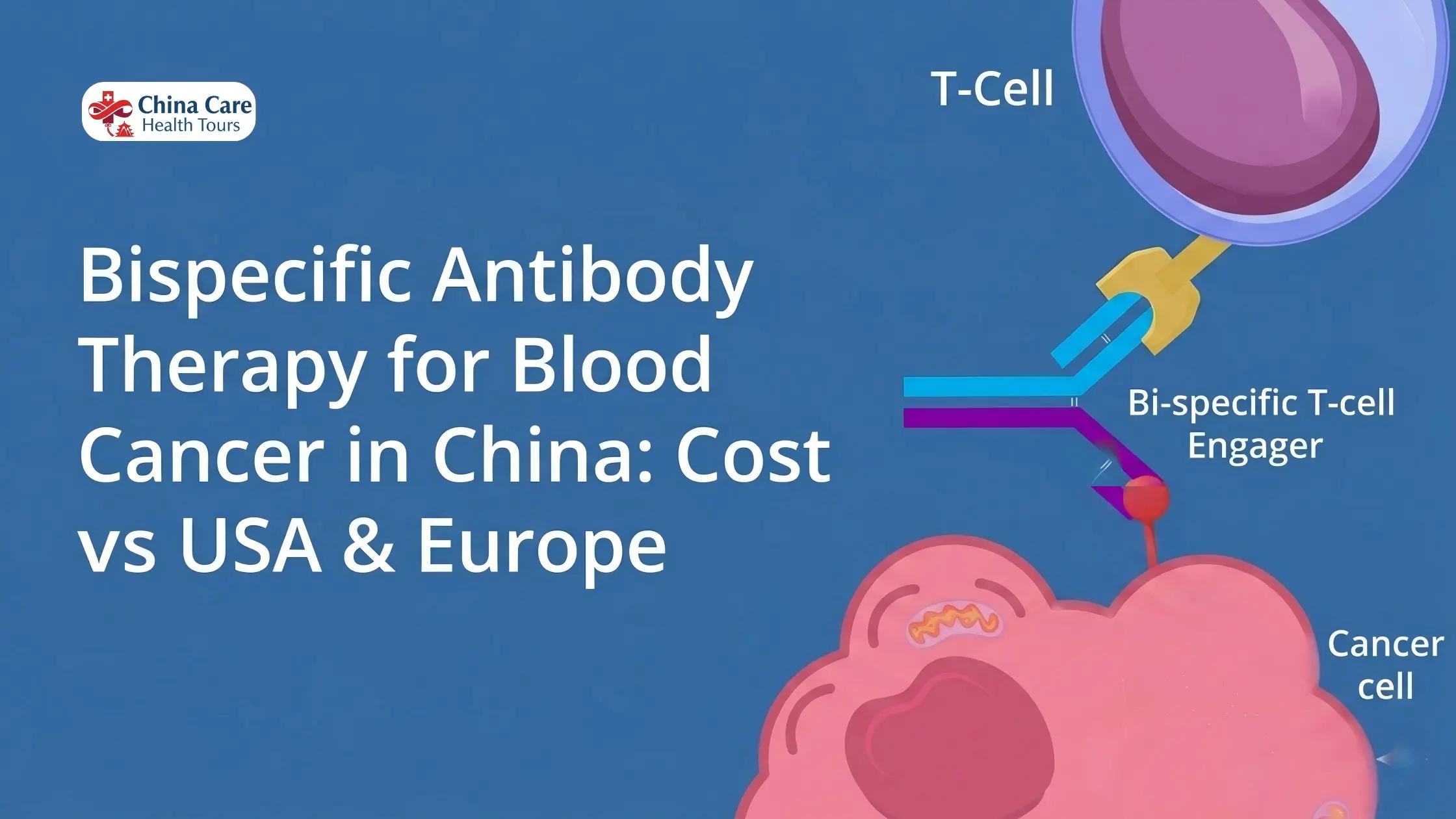
A bispecific antibody is an engineered protein with two distinct binding arms — one that locks onto a protein expressed on cancer cells, and a second that simultaneously latches onto a protein on the patient’s own T-cells. By physically bridging tumor cells and immune effector cells, bispecific antibodies force the immune system to recognize and destroy cancers it would otherwise ignore.
This is immunotherapy delivered from a vial — not from a manufacturing facility. That distinction matters enormously for patients.
The Dual-Targeting Mechanism
The most common design in blood cancer therapy uses a CD3-engaging arm (which binds T-cells) paired with a tumor-targeting arm. Different drugs target different cancer antigens:
- CD19 × CD3 (blinatumomab): redirects T-cells against B-cell leukemia and lymphoma
- BCMA × CD3 (teclistamab): targets multiple myeloma plasma cells via BCMA surface protein
- CD20 × CD3 (epcoritamab, glofitamab): attacks B-cell lymphomas expressing CD20
- CD38 × CD28 and other novel designs: next-generation combinations currently in Chinese trials
When the bispecific antibody binds both targets simultaneously, it creates what immunologists call an immunological synapse — a direct junction between T-cell and tumor cell that triggers cytotoxic killing. The T-cells do not need to be genetically reprogrammed (as in CAR-T therapy) and do not need to be harvested, engineered, and reinfused. The drug simply creates a temporary bridge every time it circulates through the blood.
This is why bispecific antibodies are described as off-the-shelf: they are manufactured as pharmaceutical products, stored like any biologic drug, and administered by standard IV infusion or subcutaneous injection. There is no apheresis appointment, no manufacturing facility, no 2–6 week wait for cell production.
For patients in urgent need — or patients for whom CAR-T manufacturing has failed or is unavailable — this immediacy is clinically meaningful.
Why This Class Is Growing Rapidly
Bispecific antibodies occupy a position between conventional monoclonal antibodies and cell therapies. They are more potent than single-target antibodies (which simply flag cancer cells for immune clearance) but logistically simpler than CAR-T (which requires patient-specific cell engineering). For many blood cancers, particularly relapsed or refractory cases that have failed multiple prior lines of therapy, bispecific antibodies now form an increasingly important treatment option recognized in international guidelines including the NCCN Clinical Practice Guidelines in Oncology.
China is not behind in this area. Chinese pharmaceutical companies including Innovent Biologics, Henlius, and Zymeworks China are running active clinical trials for domestic bispecific constructs. Internationally approved drugs have entered China through NMPA approval or are available at major research centers through expanded access pathways.
For patients considering cancer treatment in China, bispecific antibodies represent one of the most accessible and cost-effective advanced therapy options currently available.
Bispecific Antibodies vs CAR-T: Key Differences
Bispecific antibodies and CAR-T cell therapy both redirect T-cells to attack blood cancers, but they differ fundamentally in how they work, how quickly they can be deployed, what they cost, and what risks they carry. For a detailed overview of CAR-T cell therapy in China, see our dedicated guide.
| Factor | Bispecific Antibody | CAR-T Cell Therapy |
|---|---|---|
| Manufacturing | Off-the-shelf pharmaceutical; no patient cells needed | Patient’s own T-cells harvested, genetically engineered, expanded, and reinfused |
| Time to treatment | Days to weeks (drug availability + step-up dosing) | 4–8 weeks after apheresis (manufacturing lead time) |
| Typical cost (US prices) | $20,000–$45,000/month (ongoing) | $400,000–$600,000 one-time infusion |
| Cost model | Ongoing treatment — monthly infusions | One-time or limited infusion (potential long-term remission) |
| CRS risk | Present but generally lower grade than CAR-T | High; can be severe (Grade 3–4) in a significant minority |
| Neurotoxicity (ICANS) risk | Low to moderate | Moderate to high with some constructs |
| Response rate (r/r DLBCL) | ~40–60% ORR (epcoritamab, glofitamab) | ~50–80% ORR (axi-cel, tisa-cel) |
| Durability | Responses maintained while on treatment; some durable remissions seen | Can achieve durable remissions; long-term data still maturing |
| Off-the-shelf availability | Yes — no patient-specific manufacturing | No — requires personalized manufacturing |
| Eligibility | Broadly available; fewer fitness requirements | Requires adequate organ function; CAR-T manufacturing failure possible |
| Monitoring intensity | Step-up dosing phase requires hospitalization; maintenance often outpatient | Hospitalization required during infusion and early post-infusion period |
The practical implication: Bispecific antibodies are often the better choice for patients who cannot wait for CAR-T manufacturing, who have failed CAR-T previously, who have marginal performance status, or who need treatment to begin immediately. CAR-T may offer more durable single-course remission in suitable patients — but it requires more infrastructure, more time, and significantly more upfront cost.
Many patients and oncologists now sequence these therapies: bispecific antibodies as a bridge or first option, CAR-T if deep remission is needed and logistics allow. China’s leading hematology centers have experience with both approaches.
The Drugs Available in China
Blinatumomab (Blincyto) — CD19 × CD3
Approved by China’s NMPA (National Medical Products Administration) for relapsed/refractory B-cell precursor acute lymphoblastic leukemia (ALL) in adult patients. Blinatumomab was the first bispecific T-cell engager (BiTE) approved globally and has the deepest clinical evidence base in the class.
It is administered as a continuous IV infusion — typically 28 days on, 14 days off per cycle. Its short half-life (~2 hours) means it is cleared quickly if side effects occur, which is both a safety advantage and the reason continuous infusion is required. Portable pump systems allow some outpatient administration, though hospitals in China typically initiate treatment under inpatient observation due to CRS risk during cycle 1.
Blinatumomab is also being studied in China for B-cell non-Hodgkin lymphoma indications beyond ALL, with trials recruiting through ClinicalTrials.gov.
Teclistamab (Tecvayli) — BCMA × CD3
A subcutaneous bispecific antibody targeting BCMA on multiple myeloma cells and CD3 on T-cells. In the US and Europe, teclistamab is approved for heavily pre-treated multiple myeloma (3+ prior lines including a proteasome inhibitor, an immunomodulatory agent, and an anti-CD38 antibody). It is administered via subcutaneous injection with a step-up dosing schedule at week 1 (to reduce CRS risk), then weekly thereafter.
In China, teclistamab is available at major hematology research centers — see our multiple myeloma CAR-T and bispecific guide for how it sits within the broader treatment landscape. Chinese physicians at top-tier research hospitals have access to teclistamab through institutional procurement channels, and several centers are also running BCMA-targeting bispecific trials with domestic constructs.
Epcoritamab (Epkinly) — CD20 × CD3
A subcutaneous CD20 × CD3 bispecific antibody approved in the US for relapsed/refractory large B-cell lymphoma including diffuse large B-cell lymphoma (DLBCL) — one of the most common blood cancers worldwide. In the EPCORE NHL-1 trial, epcoritamab achieved an overall response rate of 63% in heavily pre-treated DLBCL patients, with complete responses in approximately 39%.
Epcoritamab is also being evaluated in follicular lymphoma and marginal zone lymphoma. At China’s leading lymphoma centers, access to epcoritamab is available for eligible patients through research programs and international procurement, with subcutaneous administration making it logistically more convenient than continuous IV infusion.
Chinese Domestic Bispecific Antibodies in Clinical Development
China’s pharmaceutical sector is actively developing its own bispecific antibody pipeline, which will significantly reduce costs once approved:
| Drug | Target | Company | Status |
|---|---|---|---|
| IBI322 | CD47 × PD-L1 | Innovent Biologics | Phase II trials (AML, MDS) |
| HLX301 | CD20 × CD3 | Henlius | Phase I/II (B-cell lymphoma) |
| IBI388 | IL-15 × PD-1 | Innovent Biologics | Early phase (NHL) |
| QLS31905 | BCMA × CD3 | Qilu Pharmaceutical | Phase I (multiple myeloma) |
| BGB-11417 | BCL-2 inhibitor (bispecific approach) | BeiGene | Phase I/II combinations |
These trials are searchable at ClinicalTrials.gov under “China” and “bispecific.” Eligible patients who enroll in these trials may access cutting-edge drugs at significantly reduced or no cost, as is standard for clinical trial participation globally.
The Cost Gap: China vs USA vs Europe
The cost difference for bispecific antibody therapy between the United States and China is large, consistent, and driven by structural factors — not by differences in treatment quality.
Why Bispecific Drugs Cost Less in China
1. NMPA pricing negotiations. China’s National Healthcare Security Administration (NHSA) negotiates drug prices directly with manufacturers as a condition of National Reimbursement Drug List (NRDL) inclusion. Blinatumomab, for example, entered China’s NRDL through this process at a price far below its US list price.
2. Domestic competition. As Chinese biosimilar and domestic bispecific manufacturers bring products to market, they create competitive pricing pressure that benefits patients accessing the imported reference products.
3. Hospital procurement. Major research hospitals in China procure drugs through volume-based purchasing agreements that further reduce patient-facing costs compared to US retail pharmacy pricing.
4. No PBM markup. The US drug pricing chain — manufacturer, pharmacy benefit manager, specialty pharmacy, and insurer — adds cost at every step. Chinese hospital-based dispensing removes most of this intermediary overhead.
5. Clinician judgment on dosing. Chinese hematologists at research hospitals often adjust dosing schedules based on clinical response and tolerance, sometimes reducing cycle costs without reducing efficacy.
The result is that a drug like teclistamab, which costs approximately $40,000–$45,000 per month at US list price, is available in China at costs that are substantially lower — often in the range of $8,000–$15,000 per month equivalent, depending on the hospital, procurement channel, and whether any trial access applies.
For blinatumomab, the US list price for a complete cycle of ALL treatment can reach $178,000+ for a single 28-day course. Chinese hospital pricing for comparable treatment is a fraction of this figure.
Key Hospitals in China for Bispecific Therapy
1. Institute of Hematology, Chinese Academy of Medical Sciences (CAMS) — Tianjin
China’s flagship institution for hematology research and blood cancer treatment. The Institute of Hematology at CAMS is the national reference center for leukemia, lymphoma, myeloma, and aplastic anemia in China — the equivalent, in scope and prestige, of the US National Cancer Institute’s hematology division.
The Institute runs more bispecific antibody clinical trials than any other single center in China, with particular strength in ALL (blinatumomab protocols), AML, and novel myeloma combinations. For patients with acute leukemia requiring bispecific therapy, Tianjin CAMS should be on every shortlist.
Specialties: ALL, AML, CML, MDS, aplastic anemia, multiple myeloma, lymphoma
Bispecific access: Blinatumomab (commercial + trials), BCMA bispecifics, CD20 bispecific trials
2. Peking Union Medical College Hospital (PUMCH) — Beijing
Among the most internationally recognized hospitals in China, PUMCH is the teaching hospital of CAMS and a tertiary referral center for complex hematologic malignancies. Its hematology department has deep expertise in lymphoma and myeloma management, including bispecific antibody protocols.
PUMCH is well set up for international patients — it has a dedicated International Medical Services department with English-speaking coordinators and established relationships with overseas referring oncologists.
Specialties: Lymphoma, multiple myeloma, CLL, relapsed/refractory blood cancers
Bispecific access: Teclistamab, epcoritamab-eligible trials, CD20 bispecific protocols
3. Ruijin Hospital, Shanghai Jiao Tong University — Shanghai
Ruijin’s hematology department, led by one of China’s most published hematology research groups, is particularly strong in lymphoma and leukemia bispecific therapy. Shanghai’s position as China’s international hub makes Ruijin one of the most logistically accessible centers for patients arriving from Southeast Asia, Europe, or North America.
The hospital participates in multinational blood cancer trials and has protocols for both blinatumomab (ALL) and CD20-targeting bispecific programs for lymphoma.
Specialties: B-cell lymphomas, ALL, CML, acute leukemia
Bispecific access: Blinatumomab, CD20 × CD3 programs, investigational bispecifics
4. Nanfang Hospital (Southern Medical University) — Guangzhou
Nanfang Hospital has one of the most recognized hematology departments in South China, with particular strength in bone marrow transplantation, lymphoma, and myeloma. Its proximity to Hong Kong and Southeast Asia makes it a highly accessible option for patients from those regions. Nanfang has an active program in bispecific antibodies as part of its lymphoma and myeloma treatment pathways.
Specialties: Lymphoma, multiple myeloma, bone marrow transplant integration
Bispecific access: Teclistamab programs, lymphoma bispecific protocols
5. Sun Yat-sen University Cancer Center (SYSUCC) — Guangzhou
SYSUCC is South China’s preeminent oncology institution — ranked among China’s top 3 cancer hospitals and the first mainland Chinese hospital admitted to the NCCN Global Program. While SYSUCC’s primary strength is in solid tumors and nasopharyngeal carcinoma, its hematology department participates in national lymphoma and myeloma programs that include bispecific antibody protocols. For international patients already seeking care at SYSUCC for other malignancies, blood cancer bispecific access is feasible within the same institutional framework.
Specialties: B-cell lymphoma, myeloma, NPC, solid tumor oncology
Bispecific access: Lymphoma bispecific trials, BCMA-targeting programs
Who Qualifies?
Eligibility for bispecific antibody therapy depends on the specific drug, the cancer type, and the number of prior lines of therapy received. The table below reflects standard eligibility criteria as recognized by international guidelines and current clinical practice at China’s leading hematology centers.
| Drug | Cancer Type | Minimum Prior Therapy | Key Requirements |
|---|---|---|---|
| Blinatumomab | B-cell precursor ALL (relapsed/refractory) | 1+ prior line | Philadelphia chromosome status (Ph+ or Ph− affects protocol); adequate PS |
| Blinatumomab | Minimal residual disease (MRD)-positive ALL | After first complete remission | MRD testing required |
| Teclistamab | Multiple myeloma | 3+ prior lines (PI + IMiD + anti-CD38) | Must have received prior anti-CD38 therapy (e.g., daratumumab) |
| Epcoritamab | Relapsed/refractory DLBCL | 2+ prior lines (including anti-CD20 + alkylating agent) | Post-auto-SCT or transplant-ineligible |
| Epcoritamab | Follicular lymphoma (Grade 1–3a) | 2+ prior lines | Anti-CD20 prior exposure |
| CD20 × CD3 bispecific trials (China) | B-cell NHL, CLL | Varies by trial | Trial eligibility screening required |
| Domestic BCMA bispecifics (China trials) | Multiple myeloma | 2+ prior lines (varies) | Trial enrollment required |
Patients who do not meet the standard commercial drug criteria may still be candidates for clinical trial access at Chinese research centers, where eligibility requirements sometimes differ from approved commercial indications.
What the Evidence Shows
The clinical evidence base for bispecific antibody therapy in blood cancer is now substantial, with data from multiple large Phase I/II trials and, in some cases, Phase III studies.
Blinatumomab in Relapsed/Refractory ALL
The pivotal TOWER trial, which led to blinatumomab’s full FDA approval, enrolled 405 adult patients with relapsed/refractory Philadelphia chromosome-negative B-cell precursor ALL. Key results:
- Overall survival: 7.7 months (blinatumomab) vs 4.0 months (standard chemotherapy) — a statistically significant improvement
- Complete remission rate: 39% vs 18% with chemotherapy
- Complete remission with partial haematologic recovery: 34%
- Overall response rate: 44%
Blinatumomab has also demonstrated efficacy in MRD-positive ALL patients in complete remission, where it significantly reduced MRD levels and improved relapse-free survival in the BLAST trial.
Teclistamab in Multiple Myeloma — MajesTEC-1
The MajesTEC-1 trial — the pivotal study for teclistamab in heavily pre-treated multiple myeloma — enrolled 165 patients who had received a median of 5 prior lines of therapy.
- Overall response rate: 63.0%
- Complete response or better: 39.4%
- Median duration of response: 18.4 months
- 12-month progression-free survival: 50.8%
These results, achieved in patients who had failed an average of five prior regimens, established teclistamab as a meaningful option for late-line myeloma. The MAJESTIC-9 trial is evaluating teclistamab in earlier lines.
Epcoritamab in Relapsed/Refractory DLBCL — EPCORE NHL-1
The EPCORE NHL-1 trial enrolled patients with relapsed or refractory large B-cell lymphoma, including DLBCL, across multiple sites. In the pivotal cohort:
- Overall response rate: 63%
- Complete response rate: 39%
- Median duration of response: 12.0 months (in responders)
- Responses observed in patients who had failed prior CAR-T therapy: ORR ~54%, CR ~34%
The last finding is particularly significant: epcoritamab showed activity in patients who had already failed CAR-T cell therapy — a patient population with almost no other options. This positions CD20 × CD3 bispecific antibodies as a viable next step after CAR-T failure.
The Treatment Process
Understanding the treatment process is essential for planning a medical trip to China for bispecific therapy. Unlike CAR-T — which is a single infusion followed by a recovery period — bispecific antibody therapy is an ongoing treatment model. This has significant implications for how international patients structure their care.

Phase 1: Step-Up Dosing (Hospitalization Required)
The first 1–3 weeks of bispecific therapy require careful medical supervision due to the risk of cytokine release syndrome (CRS) — an immune reaction caused by T-cell activation. To manage this risk, the initial dose is set very low, then gradually escalated over several administrations.
For teclistamab and epcoritamab (both subcutaneous), this typically means:
- Day 1: Very low priming dose — inpatient observation for 24–48 hours
- Day 4 or 8: Intermediate dose — further observation
- Day 15+: Full therapeutic dose — transition possible to outpatient once stable
For blinatumomab (continuous IV infusion), the first cycle requires inpatient hospitalization due to both CRS and neurotoxicity monitoring requirements.
International patients typically plan a 3–4 week initial stay in China to complete step-up dosing under supervision of their treating hematologist.
Phase 2: Maintenance Treatment
After step-up dosing, patients who respond and tolerate treatment move to a maintenance schedule:
- Teclistamab: Weekly subcutaneous injections (may reduce to biweekly in sustained remission)
- Epcoritamab: Biweekly or monthly subcutaneous injections after initial phase
- Blinatumomab: Repeated 28-day continuous infusion cycles with 14-day breaks
Unlike CAR-T, which is typically a single infusion with no ongoing drug administration, bispecific therapy continues for as long as the patient is responding and tolerating treatment.
How International Patients Structure Ongoing Treatment
This ongoing model requires planning. China Care’s facilitation approach for international patients on bispecific therapy typically involves:
- Initial stay in China (3–4 weeks): Step-up dosing under specialist supervision
- Return visits every 4–8 weeks (or as determined by treating hematologist): Maintenance administration, response assessment (blood tests, PET/CT)
- Local oncology monitoring between visits: CBC, LFTs, and clinical review arranged with a local oncologist in the patient’s home country
- Drug sourcing strategy: Discussion with treating team about whether drug can be procured in China for administration, or whether arrangements for continuing at home center are needed
This is not a single-trip treatment. Patients should budget for travel, accommodation, and multiple China visits over the course of treatment — typically 12–24 months if responding.
Cost Comparison Table
Prices below represent approximate treatment costs per month and per year for a standard responder continuing on therapy. US prices reflect current list price data; China prices reflect typical hospital pricing at major research centers. Actual costs vary by hospital, procurement channel, trial access, and clinical response.
| Drug & Indication | China (per month) | USA (per month) | UK (per month) | Germany (per month) |
|---|---|---|---|---|
| Blinatumomab (ALL, 28-day cycle) | ~$8,000–$18,000 | ~$60,000–$80,000 | ~$35,000–$50,000 | ~$30,000–$45,000 |
| Teclistamab (myeloma, weekly) | ~$8,000–$15,000 | ~$40,000–$45,000 | ~$25,000–$35,000 | ~$22,000–$30,000 |
| Epcoritamab (DLBCL, biweekly/monthly) | ~$6,000–$12,000 | ~$25,000–$35,000 | ~$18,000–$25,000 | ~$15,000–$22,000 |
| Drug | China (12 months) | USA (12 months) | China savings vs USA |
|---|---|---|---|
| Blinatumomab | ~$96,000–$216,000 | ~$720,000–$960,000 | Save $500,000–$750,000+ |
| Teclistamab | ~$96,000–$180,000 | ~$480,000–$540,000 | Save $300,000–$440,000+ |
| Epcoritamab | ~$72,000–$144,000 | ~$300,000–$420,000 | Save $200,000–$300,000+ |
These figures do not include travel, accommodation, or facilitation costs. However, even accounting for multiple return flights and extended accommodation in China, the cost advantage is very large for patients who are self-paying or have insurance with lifetime caps.
How to Access Bispecific Therapy in China
Step 1: Share Your Medical Records
Send us your complete oncology history — diagnosis, pathology reports, prior treatment lines, most recent imaging (PET/CT, bone marrow biopsy), and any genomic or cytogenetic testing results. We review these with our medical advisors to identify which bispecific agent you are most likely to qualify for and which hospitals are best suited for your case.
Step 2: Hospital Matching and Pre-Assessment
Based on your records, we identify 1–2 appropriate hospitals from our verified network — including those listed above. We facilitate a pre-assessment submission to the hematology department, which will review your case and confirm eligibility for bispecific therapy (commercial or trial) before you travel. This avoids unnecessary trips for patients who are ultimately not suitable candidates.
Step 3: Medical Visa and Logistics
Once hospital acceptance is confirmed, we assist with the China medical visa application, accommodation booking near the treatment center, airport transfer, and interpreter arrangements. Patients requiring step-up dosing must plan for a minimum 3–4 week initial stay.
Step 4: Step-Up Dosing and Initial Treatment in China
Your treating hematologist in China will initiate the step-up dosing protocol under inpatient monitoring. During this phase, you will undergo regular blood tests (CBC, cytokine levels, LFTs) and clinical review. CRS is managed with corticosteroids and tocilizumab if needed. Most patients complete step-up dosing without severe complications — but the monitoring infrastructure is why this phase must be done in hospital.
Step 5: Ongoing Treatment Planning and Return Visits
Before you leave China, your China Care coordinator and treating physician will create a maintenance schedule. This includes the frequency of return visits, what blood monitoring can be done locally in your home country, and how to coordinate between your home oncologist and your China team. Bispecific antibody treatment is an ongoing commitment — patients who respond typically remain on therapy for 12–24+ months. We coordinate each return visit, monitor response data between visits, and maintain communication between your treating teams across countries.
FAQs
For current questions about this topic, contact China Care or consult the relevant official provider or authority for up-to-date information.
Start Your Consultation
Bispecific antibody therapy is available now in China — no manufacturing wait, no queue. If you or a family member has relapsed or refractory ALL, DLBCL, follicular lymphoma, or multiple myeloma, China’s leading hematology centers may be able to offer treatment that is faster to access and significantly more affordable than in your home country.
Contact China Care — Free Case Review
Submit your medical records for a confidential assessment. Our advisors will identify which bispecific agent you may qualify for and which hospital is best matched to your case.
Learn About All Blood Cancer Treatments in China
See our full overview of blood cancer treatment options available to international patients in China, including CAR-T, bispecific antibodies, clinical trials, and transplantation.
Explore Our Verified Hospital Network
Browse China Care’s network of verified hematology and oncology centers, with profiles on specialties, international patient support, and clinical trial access.
Disclaimer
China Care Health Tours is a medical facilitation company registered in Hong Kong. We help international patients access hospitals in China and coordinate travel, translation, and care logistics. We do not provide medical advice, diagnose conditions, or recommend specific treatments. All treatment decisions must be made by qualified oncologists and hematologists in consultation with the patient. Clinical data cited in this article is for informational purposes only. Treatment outcomes vary by individual patient and disease characteristics. This article does not constitute a guarantee or prediction of outcomes.
References
- Wikipedia. “Bispecific antibody.” Wikipedia. https://en.wikipedia.org/wiki/Bispecific_antibody
- Martinelli G, et al. “Complete Hematologic and Molecular Response in Adult Patients With Relapsed/Refractory Philadelphia Chromosome-Positive B-Precursor ALL (TOWER Trial — blinatumomab).” Journal of Clinical Oncology, 2017.
- Gokbuget N, et al. “Blinatumomab for minimal residual disease in adults with B-cell precursor ALL (BLAST Trial).” Blood, 2018.
- Moreau P, et al. “Teclistamab in Relapsed or Refractory Multiple Myeloma (MajesTEC-1 Trial).” New England Journal of Medicine, 2022.
- Thieblemont C, et al. “Epcoritamab, a Bispecific CD3xCD20 Antibody, in Relapsed or Refractory Large B-Cell Lymphoma (EPCORE NHL-1 Trial).” New England Journal of Medicine, 2023.
- National Comprehensive Cancer Network (NCCN). “NCCN Clinical Practice Guidelines in Oncology.” NCCN.org. https://www.nccn.org/
- National Medical Products Administration (NMPA). Blinatumomab approval for B-cell precursor ALL in China. NMPA.gov.cn. https://www.nmpa.gov.cn/
- ClinicalTrials.gov. Bispecific antibody clinical trials — China (IBI322, HLX301, QLS31905, BGB-11417). https://clinicaltrials.gov/