Medical Destination · Guangdong Province

Shenzhen
Gateway from Hong Kong

Shenzhen offers the shortest path from Hong Kong to advanced Chinese medical care. A 20-minute MTR or high-speed rail journey connects Hong Kong to a cluster of top-tier private and public hospitals with extensive international patient experience.

20 min
From Hong Kong by MTR
Direct
Access from HK MTR
~50%
Cheaper than Singapore
Strong
Biotech & precision medicine sector
Why Shenzhen

The easiest entry point to China's healthcare system for patients based in Hong Kong

For international patients already in Hong Kong, Shenzhen removes every logistical barrier to accessing mainland Chinese medical care. No flights, no lengthy transit — a 20-minute train ride delivers patients to hospitals that combine international-standard private facilities with the full depth of China's oncology expertise.

Easiest Chinese city to reach from Hong Kong — 20 minutes by MTR or high-speed rail from Hung Hom
The MTR East Rail line terminates at Lo Wu border crossing, from which Shenzhen hospitals are 10–20 minutes by taxi. The high-speed rail from Hung Hom to Shenzhen North takes under 20 minutes. Patients can attend consultations and return to Hong Kong the same day.
Strong cluster of private hospitals with international accreditation and English-speaking staff
Shenzhen's private hospital sector is among the most developed in China, driven by demand from the large expatriate population and cross-border healthcare seekers from Hong Kong. Several facilities hold JCI accreditation or operate under Hong Kong clinical governance frameworks.
Shenzhen People's Hospital is a national leader in minimally invasive surgery and oncology
One of Guangdong's top-ranked public hospitals, Shenzhen People's Hospital performs high volumes of robotic and laparoscopic surgery and runs active oncology and immunotherapy programmes with dedicated international patient services.
China's Silicon Valley — strong biotech ecosystem with access to cutting-edge precision medicine and genetic testing
Shenzhen hosts BGI Genomics, one of the world's largest genomics organisations, alongside a dense cluster of biotech and medtech companies. This translates into faster access to next-generation sequencing, liquid biopsy, and molecular profiling services than is available in most other Chinese cities.
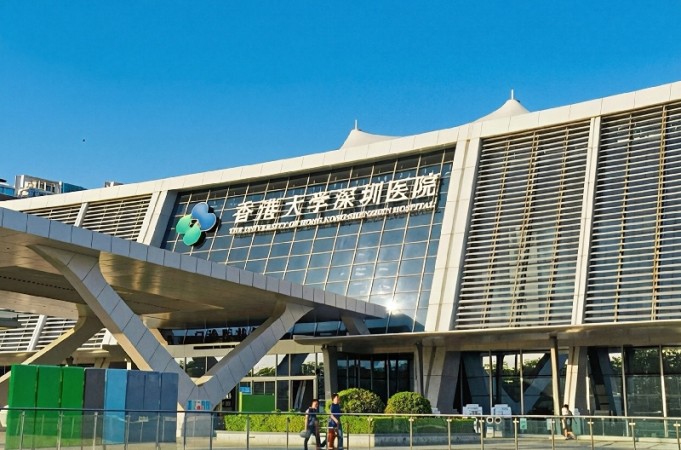
University of Hong Kong–Shenzhen Hospital exterior — international-standard cancer care 20 minutes from Hong Kong

University of Hong Kong–Shenzhen Hospital, operating to Hong Kong clinical standards with full Cantonese and English language support.

Getting There
Flight: Direct international flights via Shenzhen Bao'an (SZX)
From HK: MTR East Rail to Lo Wu (20 min) or high-speed rail from Hung Hom to Shenzhen North
Airport: Shenzhen Bao'an International (SZX)
Visa: 240-hour transit or Medical Visa S2
Partner & Recommended Hospitals

Top hospitals for international patients in Shenzhen

China Care has established relationships with the following Shenzhen hospitals. We coordinate your case, translate records, and accompany you during consultations.

Top Ranked
Shenzhen People's Hospital
Oncology · Minimally Invasive Surgery · Immunotherapy

One of Guangdong Province's leading public hospitals and a national benchmark for minimally invasive surgical oncology. Shenzhen People's Hospital performs high volumes of da Vinci robotic procedures and runs active programmes in immunotherapy, targeted therapy, and CAR-T for haematological malignancies. Dedicated international patient department available.

Robotic Surgery Immunotherapy CAR-T Therapy Precision Medicine
View Hospital Directory →
China Care Partner
University of Hong Kong–Shenzhen Hospital
International Standards · Cancer · Cardiology

A joint venture between the University of Hong Kong and Shenzhen Municipal Government, this hospital operates under Hong Kong's clinical governance framework. Its oncology and cardiology departments follow international evidence-based protocols, and consultations can be conducted entirely in English or Cantonese. Ideal for patients who want mainland Chinese pricing with Hong Kong-standard clinical oversight.

International Standards Oncology Cardiology English & Cantonese
View Hospital Directory →
Top Ranked
Peking University Shenzhen Hospital
Oncology · Precision Medicine · CAR-T

Affiliated with Peking University's medical school and located in central Shenzhen, this hospital combines Beijing's academic clinical standards with Greater Bay Area biotech resources. Known for its oncology precision medicine platform and access to next-generation genomic sequencing through Shenzhen's BGI network. Active CAR-T programme for lymphoma and myeloma.

Oncology Precision Medicine CAR-T Therapy Genomic Profiling
View Hospital Directory →
What It Costs

Treatment costs in Shenzhen (2026 estimates)

All figures are indicative ranges based on China Care's network data. Final costs depend on your specific protocol, hospital, and treatment duration. We provide a written itemised estimate before you commit to travel.

Commercial CAR-T Therapy
CD19, BCMA or dual-target constructs for lymphoma, myeloma, or ALL. Includes bridging chemo, infusion, and 4–6 week inpatient monitoring.
Shenzhen Cost
$180K–$250K
Clinical Trial CAR-T
Next-generation targets (solid tumours, dual-target, autoimmune) under investigational protocols. Trial drug costs may be covered by the hospital.
Shenzhen Cost
$40K–$120K
PD-1 Immunotherapy
Tislelizumab, Camrelizumab, Sintilimab, or imported Keytruda/Opdivo. Annual cost including infusions and monitoring.
Annual Cost
$15K–$30K
Cancer Surgery (Robotic)
Da Vinci robotic surgery for colorectal, gastric, prostate, or gynaecological cancers. Includes 5–7 day inpatient stay.
Shenzhen Cost
$12K–$22K
Executive Health Screening
Full-body check including CT, MRI, PET-CT, cardiac assessment, tumour markers, and specialist review. 1–2 day programme.
Shenzhen Cost
$1,000–$1,400
PET-CT Scan
Whole-body FDG PET-CT with radiologist report in English. Same-day results at most international-wing facilities.
Shenzhen Cost
$1,000–$1,400

Sources: China Care cost database 2026, hospital published price lists. Costs exclude accommodation, flights, and navigation service fee.

Practical Information

Everything you need to know before you travel

Visa & Entry
240-Hour Visa-Free
Most nationalities can enter Shenzhen and Guangdong Province without a visa for up to 10 days. Sufficient for diagnostic visits, PET-CT, and initial oncology consultations.
Medical Visa (S2)
Required for treatment stays longer than 10 days. Requires a hospital invitation letter, financial proof ($10K–$15K USD), and medical records. China Care handles the documentation.
Accompanying Person
One family member may apply for an S1 visa to accompany the patient. Patients from Hong Kong do not require a visa for Shenzhen under the existing cross-border framework.
Language & Communication
At the Hospital
HKU–Shenzhen Hospital operates entirely in English and Cantonese. Shenzhen People's Hospital and Peking University Shenzhen Hospital both have English-speaking international patient coordinators. Cantonese is widely spoken across Shenzhen.
China Care Support
Xiaoyue Peng is on-site during key consultations. Real-time interpretation is provided for ward rounds and treatment planning discussions.
Accommodation
In-Hospital
All three recommended hospitals provide private international-wing rooms. HKU–Shenzhen Hospital's facilities are to Hong Kong private hospital standard with en-suite bathrooms and companion beds.
From Hong Kong
Many patients receiving outpatient treatment in Shenzhen continue to stay in Hong Kong and commute. For inpatient stays, Shenzhen offers abundant international hotel options within 10–15 minutes of major hospitals.
Payments & Insurance
Payment Methods
International wire transfer and select international credit cards accepted at major hospitals. Payment is made directly to the hospital.
Common Questions

What patients ask about treatment in Shenzhen

Can I travel directly from Hong Kong to a Shenzhen hospital?
Yes. The MTR East Rail Line from central Hong Kong to Lo Wu takes approximately 40 minutes, followed by a 10–20 minute taxi to the hospital. The high-speed rail from West Kowloon or Hung Hom to Shenzhen North takes under 20 minutes and connects to the Shenzhen metro. China Care meets patients at the border crossing or hospital entrance. International patients from outside Hong Kong can fly into Hong Kong International Airport and reach Shenzhen hospitals within 90 minutes of landing.
Is Shenzhen better than Guangzhou for cancer treatment?
Guangzhou has higher overall oncology case volumes and hosts SYSUCC — one of Asia's busiest dedicated cancer hospitals. Shenzhen's advantage is its proximity to Hong Kong, stronger private hospital infrastructure, and English/Cantonese language environment. For patients who prioritise convenience from Hong Kong, international-standard private care, or access to BGI genomic profiling, Shenzhen is often the better choice. For the highest CAR-T case volume in southern China, Guangzhou remains the primary recommendation.
Does HKU–Shenzhen Hospital use Hong Kong medical standards?
Yes. HKU–Shenzhen Hospital is a joint venture governed by the University of Hong Kong's clinical protocols and quality standards. Medical staff include specialists who rotate from Queen Mary Hospital and other HKU-affiliated institutions in Hong Kong. Treatment guidelines follow international evidence-based standards rather than mainland Chinese hospital protocols. For patients who are familiar with Hong Kong's healthcare system and want to remain within that clinical framework while accessing mainland pricing, HKU–Shenzhen is a natural choice.
What types of cancer treatment are Shenzhen hospitals best known for?
Shenzhen hospitals are particularly strong in minimally invasive robotic surgery (Shenzhen People's Hospital), precision medicine and next-generation genomic profiling (Peking University Shenzhen Hospital), and internationally governed oncology care (HKU–Shenzhen Hospital). For CAR-T therapy, Shenzhen hospitals have active programmes but lower case volumes than Guangzhou or Beijing. China Care recommends the most appropriate Shenzhen facility based on your specific tumour type and treatment needs.
How do I pay for treatment in Shenzhen from abroad?
Shenzhen hospitals accept international wire transfers for large treatment deposits and select international credit cards for smaller payments. China Care provides a written itemised cost estimate before you travel, along with banking instructions for the treatment deposit. For insurance patients, we provide full English documentation — discharge summaries, itemised invoices, and physician letters — in the format required by major international insurers. HKU–Shenzhen Hospital's documentation is particularly well-suited to Hong Kong insurance reimbursement claims.

Ready to explore treatment in Shenzhen?

Submit your medical records to China Care. We will review your case, identify the most appropriate Shenzhen hospital, and get a specialist's assessment — before you book any travel.