Dermatology — National Key SpecialtyCAR-T via PKU NetworkPublic · Grade 3AEstablished 1999IMC Available
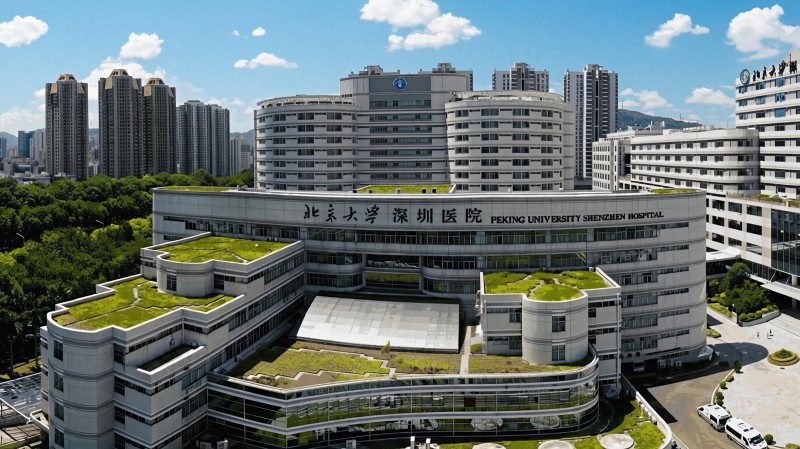
Peking University Shenzhen Hospital PKU Health Science Center, Futian District
A hospital with strong dermatology and skin cancer credentials — and a growing precision oncology presence with its own CAR-T clinical trials run as part of the Peking University medical network. The International Medical Center provides private-level intake within a public hospital, which may make it a suitable option for international patients seeking specialist expertise without private hospital pricing. Whether it's the right fit for your case depends on your diagnosis and objectives — China Care helps you work that out before you travel.
1120 Lianhua Road, Futian District, Shenzhen — ~25 min from Shenzhen Bay Port
Quick Facts
Payment
Paid directly to hospital
Consultation
In-person only at IMC
Advance booking
1–2 weeks minimum
Language
English (IMC) + bilingual escort
Type
Public hospital · Grade 3A · PKU affiliated
1,850+
Inpatient beds
Grade 3A
China's highest classification
PKU
Affiliated teaching hospital
IMC
International patient center
About the Hospital
Peking University in Shenzhen — Where Academic Oncology Meets a Growing Tech Hub
Peking University Shenzhen Hospital (北京大学深圳医院) was established in 1999 and is a PKU-affiliated hospital within the Peking University Health Science Center system. Situated in Futian District — Shenzhen's administrative and financial center — it holds Grade 3A status and functions as one of the city's primary referral hospitals for both dermatology and cancer care.
The hospital's dermatology department holds National Clinical Key Specialty designation and sees case volumes that few other hospitals in southern China match. For oncology patients, the connection to Peking University's broader academic network means access to clinical trial pipelines and NGS genomic profiling protocols that feed directly from PKU research programmes in Beijing. The IMC provides a dedicated intake path for international patients, operated separately from the main outpatient flow.
"The PKU network gives Shenzhen patients access to Beijing-level oncology expertise — the clinical trial linkage is especially meaningful for patients exploring CAR-T or experimental protocols."
Why Patients Choose PKU Shenzhen
Three reasons international patients choose Peking University Shenzhen Hospital
Dermatology & Skin Cancer — National Key Specialty
The dermatology department holds National Clinical Key Specialty designation and manages the full spectrum of skin conditions — from autoimmune skin disease to melanoma and cutaneous lymphoma. For patients with complex skin presentations or skin cancer requiring specialist second opinion, this is one of the strongest departments in southern China. International patients can access the department through the IMC with a proxy consultation arranged by China Care in advance of travel.
CAR-T Trials Run Locally, Within the PKU Network
Peking University Shenzhen Hospital runs its own CAR-T cell therapy trials as part of the Peking University medical network — its haematology team has conducted CAR-T protocols independently since 2016, including world-first cases in cutaneous T-cell lymphoma. For patients who need CAR-T but prefer Shenzhen's proximity to Hong Kong, this hospital provides genuine PKU-network oncology expertise without travelling to Beijing.
Private-Level IMC Within a Public Hospital
The International Medical Center operates with dedicated staff, a separate patient flow, and a service standard closer to a private hospital. International patients receive bilingual case coordination, dedicated consultation scheduling, and a designated liaison throughout their stay — at public hospital treatment pricing. China Care coordinates directly with the IMC, pre-clearing your case before you travel.
Beyond the Hospital
Why Patients Work With China Care
Finding a hospital's name is easy. Knowing whether it's actually the right one for your situation is much harder — that's where China Care helps.
Most international patients researching Peking University Shenzhen Hospital are unsure whether it's genuinely the right fit for their case, or whether another hospital might serve them better. China Care helps you answer questions like:
Is Peking University Shenzhen Hospital suitable for my diagnosis?
The departments most commonly accessed by international patients coordinated through China Care.
Primary Focus
Dermatology & Skin Oncology
National Clinical Key Specialty designation. Full spectrum from autoimmune skin diseases (psoriasis, lupus) to melanoma, cutaneous lymphoma, and rare skin cancers. Advanced phototherapy, biologics, and surgical excision all available.
MelanomaCutaneous LymphomaPsoriasisSkin Cancer
Primary Focus
Precision Oncology & CAR-T
NGS genomic profiling integrated into oncology intake. Runs its own CAR-T cell therapy trials as part of the Peking University medical network for eligible haematological malignancies. Solid tumour oncology with precision medicine protocols.
Comprehensive urology covering prostate cancer, bladder cancer, kidney disease, and male reproductive health. Minimally invasive laparoscopic procedures and robotic-assisted surgery available for appropriate cases.
Prostate CancerBladder CancerRobotic Surgery
Also Available
Cardiology
Interventional cardiology, echocardiography, and cardiac imaging. Coronary artery disease management and electrophysiology. Collaborative management for oncology patients with cardiac complications.
Coronary InterventionElectrophysiology
Also Available
Neurology & Neurosurgery
Cerebrovascular disease, brain tumours, and spinal conditions. Neurosurgery with microsurgical and minimally invasive techniques. Stroke intervention and neurological rehabilitation programmes.
Brain TumourStrokeSpine
Explore your options
Not sure which department fits your case?
Hospital Access reviews your records, identifies the right specialist team, and books and confirms your appointment before you commit to travelling.
How China Care Helps You Reach Peking University Shenzhen Hospital — If It's Right for You
Finding a hospital is the easy part. Understanding whether it's the right one for your situation is harder — China Care guides you through that, from initial guidance through to on-the-ground support in Shenzhen.
Step 1 · Tell Us What You Need
Tell Us About Your Situation
Send your medical records, pathology reports, and imaging to China Care. For dermatology or skin oncology cases, include photos and any prior biopsy results. For oncology cases, include complete treatment history and current blood panel. This step is free and helps us understand whether Peking University Shenzhen Hospital — or another hospital — may be worth exploring for your case. We review your records and prepare a bilingual case summary within 1–2 working days.
1–2 days
Step 2 · Hospital Access
China Care Arranges and Confirms Your Appointment
China Care registers your case with Peking University Shenzhen Hospital's international coordination team, translates your medical records and referral documents, and confirms your appointment date, department, and specialist before you arrange your travel — all coordinated in English on your behalf. This is a fixed-fee service, agreed with you upfront. Already in China? Skip this step — China Care can arrange direct escort and interpretation for your own visit instead.
Travel to Shenzhen for Your In-Person Consultation
With your appointment confirmed, you travel to Shenzhen for your own in-person consultation at the IMC. The specialist reviews your case in full, confirms the treatment plan, and provides a formal cost estimate — this cannot be completed remotely at a public hospital. For oncology cases, NGS genomic profiling is typically initiated at this appointment. China Care's bilingual coordinator accompanies you throughout.
in-person consultation · treatment plan & cost estimate issued
Step 4 · Medical Journey
Admission & Treatment
Once you agree to proceed, admission is arranged through the IMC. China Care's coordinator remains on hand during your stay — accompanying you to ward rounds, follow-up appointments, and administrative processes. Ward nursing staff and hospital administration operate primarily in Mandarin, so on-site escort is strongly recommended for non-Chinese speakers.
All treatment fees are paid directly to the hospital in Chinese yuan (RMB). Accepted payment methods vary by hospital — China Care will confirm with PKU Shenzhen Hospital before you travel. A deposit is required at admission; the balance is settled before discharge. China Care does not collect or handle medical payments.
IMC admission · payment direct to hospital
Step 5 · Medical Journey
Discharge and Follow-Up
Complete bilingual discharge documentation is issued on the day of discharge. For oncology patients requiring follow-up genomic testing or treatment monitoring, China Care can coordinate remote check-ins with the specialist team depending on the individual physician's availability. Post-discharge coordination with your home physician is also available on request.
bilingual documentation · post-discharge support
Hospital Access (fixed fee)Bilingual case coordinationNGS genomic profiling supportCAR-T cell therapy (PKU network)In-person escort & interpretationMedical visa supportRMB payment direct to hospitalBilingual discharge documents
Before You Travel
What international patients need to know
Payment
Direct to hospital
Payment is made directly to the hospital. Accepted payment methods vary by hospital — your China Care coordinator will confirm before you travel.
Advance booking
1–2 weeks minimum
Walk-in not available for international patients. All appointments coordinated through China Care before you travel.
Location
Futian District
Central Shenzhen. ~25 min from Shenzhen Bay Port (Hong Kong crossing) and ~20 min from Futian Checkpoint.
Language
English (IMC) + escort
IMC attending physicians speak functional English. Ward staff operate in Mandarin. China Care arranges bilingual escort for all consultations.
From Hong Kong
~45–60 min door-to-door
Via Shenzhen Bay Port or Futian Checkpoint. MTR West Rail and direct bus connections available from central Hong Kong.
Hospital type
Public · Grade 3A
Government-funded academic hospital. Treatment costs quoted directly by the hospital — zero markup from China Care.
Your Next Step
How China Care Can Help
Whichever stage you're at, China Care's role is the same: help you make an informed decision, not just a booking.
What patients ask about Peking University Shenzhen Hospital
Is this hospital genuinely affiliated with Peking University in Beijing?
Yes. Peking University Shenzhen Hospital is a PKU-affiliated hospital within the Peking University Health Science Center system — not a licensing arrangement or branding affiliation. Clinical protocols, academic appointments, and research pipelines feed directly from the Beijing campus. Senior faculty hold joint appointments across both institutions. For patients who want Peking University-standard oncology expertise without travelling to Beijing, this Shenzhen campus offers genuine access to the same clinical network.
What makes this hospital a suitable option for skin cancer compared with another Shenzhen hospital?
The dermatology department holds National Clinical Key Specialty designation — a recognised dermatology center within the Peking University hospital network. The volume and complexity of cases seen here is among the highest in Guangdong Province. For conditions such as melanoma, cutaneous lymphoma, rare genetic skin disorders, or complex autoimmune dermatology, the case volume and specialist depth at PKU Shenzhen is among the highest within the Shenzhen metro area.
Can international patients access CAR-T trials here without going to Beijing?
Access depends on the specific trial and the patient's clinical profile. Peking University Shenzhen Hospital runs its own CAR-T protocols from this Shenzhen campus as part of the PKU medical network, but trial eligibility is determined by the clinical team after reviewing the patient's full history. China Care submits your records in advance, conducts a proxy consultation with the oncology or haematology team, and confirms whether active trial slots are available and whether you qualify — before you commit to travelling from abroad. See our overview of CAR-T cell therapy in China for broader context on eligibility.
How does the IMC differ from the main outpatient department?
The International Medical Center operates as a separate patient pathway within the hospital. It has its own reception, dedicated appointment scheduling separate from general queues, physicians experienced with international patients, and a service standard closer to private healthcare. The same senior specialists who work in the main clinical departments also see patients through the IMC. For international patients, this means access to the same clinical expertise with better coordination and lower language barriers than navigating the main outpatient department independently.
What is NGS profiling and does this hospital offer it for solid tumour patients?
Next-generation sequencing (NGS) is a comprehensive genomic analysis of tumour tissue that identifies specific mutations, gene fusions, and biomarkers. The results determine which targeted therapies or immunotherapy agents are most likely to be effective for a given patient's tumour profile. Peking University Shenzhen Hospital integrates NGS profiling into its oncology intake pathway, typically initiating it at the first in-person consultation. For patients who have already undergone NGS elsewhere, the results can be incorporated into the specialist's assessment.
How do I pay for treatment and does China Care handle the money?
All treatment fees are paid directly to PKU Shenzhen Hospital in Chinese yuan (RMB). Accepted payment methods vary by hospital — your China Care coordinator will confirm before you travel. A deposit is required at admission; the balance is settled before discharge. China Care does not collect or handle any medical payments on your behalf — your coordination fee is paid separately to China Care in advance. Treatment costs are quoted directly by the hospital and are not marked up by China Care.
Still Deciding?
Not every hospital is the right fit for every patient
We'll help you understand whether Peking University Shenzhen Hospital — or another hospital in China — may be a better option for your situation.
China Care coordinates your case with PKU Shenzhen Hospital's International Medical Center. Treatment costs are quoted directly by the hospital. We never add to or mark up the hospital's quoted treatment cost.
Hospital profile note: This profile is general reference information. China Care does not endorse or guarantee a particular hospital, treatment, appointment, clinical decision, or outcome. Current services, requirements, language support, availability, and clinical suitability should be confirmed directly with the hospital.
We use essential cookies to make this site work. With your permission, we also use analytics cookies to improve it. See our Cookie Policy for details.