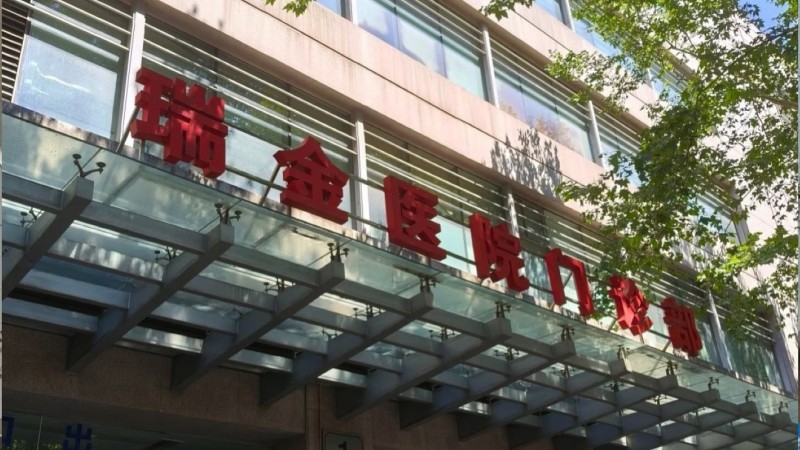
Ruijin Hospital (上海交通大学医学院附属瑞金医院), affiliated with Shanghai Jiao Tong University School of Medicine, has been ranked in China’s top-tier hospitals for over a decade. Founded in 1907, it carries over a century of clinical tradition combined with world-class CAR-T cell therapy, haematology, and endocrinology. Its International Medical Center (IMC) is one of Shanghai’s most experienced units for international patient coordination. For the right case, it may be a suitable option for top-tier national expertise in CAR-T and haematology — but whether it’s appropriate for your situation depends on your diagnosis and objectives. China Care helps you work that out before you travel, then provides bilingual escort throughout your stay.
197 Ruijin 2nd Road, Huangpu District, Shanghai — central location, accessible from both airports
Quick Facts
Payment
Paid directly to hospital
Consultation
In-person only at IMC
Advance booking
1–2 weeks minimum
Language
English (IMC) + bilingual escort
Type
Public hospital · Grade 3A · SJTU affiliated
Top-Tier
National hospital ranking
CAR-T
NMPA-approved protocols
IMC
International patient center
1907
Century of medical history
About the Hospital
A Century of Excellence — Shanghai’s Top-Tier General Hospital
Ruijin Hospital (上海交通大学医学院附属瑞金医院) was founded in 1907 by French missionaries as St Marie Hospital in the French Concession of Shanghai. Today, as an affiliate of Shanghai Jiao Tong University School of Medicine, it consistently ranks in China’s top-tier hospitals and serves as a national reference center for haematology, endocrinology, and cardiovascular medicine.
The hospital’s haematology department is one of China’s most respected, with deep expertise in NMPA-approved CAR-T protocols, bone marrow transplantation for lymphoma, leukaemia, and multiple myeloma, and complex haematological malignancies. Ruijin’s haematology team has been involved in landmark Chinese clinical trials for novel haematological therapies and is a reference center for difficult or relapsed cases referred from across China.
The International Medical Center (IMC) at Ruijin is one of Shanghai’s most experienced for international patient coordination. Staff are well-versed in the documentation required for S2 medical visa applications and have supported hundreds of international patients through the process. China Care works directly with the IMC to coordinate case referrals, ensure smooth admissions, and manage documentation for both treatment and visa purposes.
"Ruijin’s depth in haematology and endocrinology reflects over a century of clinical development — combined with an IMC that genuinely understands what international patients need to navigate China’s healthcare system."
Why Patients Choose Ruijin Hospital
Three reasons international patients choose Ruijin Hospital Shanghai
IMC S2 Visa Expertise
Ruijin’s International Medical Center has processed hundreds of medical visa invitation letters for international patients seeking haematology, oncology, and endocrinology care. The IMC team understands exactly what documentation Chinese embassies require. China Care coordinates directly with the IMC to ensure your visa support documents are complete and consistent, minimising the risk of application delays or rejections.
Haematology & CAR-T Leadership
Ruijin’s haematology department runs NMPA-approved CAR-T cell therapy protocols for B-cell lymphoma, acute lymphoblastic leukaemia, and multiple myeloma. The bone marrow transplant unit is one of Shanghai’s most active, with strong outcomes in allogeneic transplantation for AML, ALL, and lymphoma. Multiple active haematology trials provide access to investigational agents for relapsed and refractory cases.
Endocrinology & Diabetes
Ruijin is one of China’s leading centers for complex endocrinology — type 1 diabetes, type 2 diabetes with complications, thyroid disease (Graves’, Hashimoto’s, thyroid cancer), adrenal disorders, pituitary disease, and metabolic conditions. Its endocrinology department has one of the longest patient outcome databases in China and is involved in major national diabetes research programmes.
Beyond the Hospital
Why Patients Work With China Care
Finding a hospital's name is easy. Knowing whether it's actually the right one for your situation is much harder — that's where China Care helps.
Most international patients researching Ruijin Hospital are unsure whether it's genuinely the right fit for their case, or whether another hospital might serve them better. China Care helps you answer questions like:
Ruijin Hospital covers more than 40 clinical departments. Below are those most frequently accessed by international patients through China Care.
Primary Focus
Haematology & CAR-T
NMPA-approved CAR-T protocols for B-cell lymphoma, ALL, and multiple myeloma. High-volume bone marrow transplant unit. Active clinical trials for relapsed/refractory haematological malignancies. National reference center for complex haematological cases referred from across China.
Nationally ranked endocrinology department. Complex type 1 and type 2 diabetes management, insulin pump therapy, thyroid disease, Graves’ ophthalmopathy, adrenal insufficiency, Cushing’s syndrome, pituitary disorders. One of China’s largest endocrine disease outcome databases.
Complex DiabetesThyroid DiseaseAdrenal Disorders
Also Available
Cardiology
Interventional cardiology, coronary angiography, PCI, electrophysiology, and structural heart disease. One of Shanghai’s leading cardiac centers. Strong in managing complex cases where cardiovascular disease coexists with diabetes or haematological conditions.
Comprehensive solid tumour oncology alongside the dedicated haematology programme. Multidisciplinary tumour boards, molecular profiling, immunotherapy. Particularly strong in gastric cancer, colorectal cancer, and lung cancer — all high-volume in Ruijin’s patient population.
Gastric CancerLung CancerImmunotherapy
Also Available
Gastroenterology
High-volume gastroenterology and endoscopy center. Inflammatory bowel disease (Crohn’s, ulcerative colitis), complex liver disease, advanced endoscopy (ESD, ERCP, EUS). Particularly noted for managing IBD in a population where the condition is rapidly increasing.
IBD SpecialistAdvanced EndoscopyLiver Disease
Explore your options
Not sure which department fits your case?
Hospital Access reviews your records, identifies the right specialist team, and books and confirms your appointment before you commit to travelling.
How China Care Helps You Reach Ruijin Hospital — If It's Right for You
Finding a hospital is the easy part. Understanding whether it's the right one for your situation is harder — China Care guides you through that, from initial guidance through to on-the-ground support in Shanghai.
Step 1 · Tell Us What You Need
Submit Your Records to China Care
Share your medical records, test results, and diagnosis. For haematology cases, include bone marrow biopsy, molecular markers, prior treatment history, and CD19/BCMA expression results for CAR-T eligibility assessment. For endocrinology cases, include HbA1c history, hormone panels, and any relevant imaging. China Care prepares a bilingual case summary for the relevant Ruijin department within 1–2 working days.
1–2 days
Step 2 · Hospital Access
China Care Arranges and Confirms Your Appointment
China Care registers your case with Ruijin Hospital's IMC, translates your medical records and referral documents, and confirms your appointment date, department, and specialist before you arrange your travel — all coordinated in English on your behalf. This is a fixed-fee service, agreed with you upfront. Already in China? Skip this step — China Care can arrange direct escort and interpretation for your own visit instead.
Travel to Shanghai for Your In-Person Consultation
With your appointment confirmed, you travel to Shanghai for your own in-person consultation at Ruijin. The specialist reviews your case in person, confirms the treatment plan, and issues a formal cost estimate — this step cannot be completed remotely at a public hospital. China Care’s bilingual coordinator accompanies you throughout. For CAR-T and BMT cases, the haematology team will confirm eligibility at this appointment.
in-person consultation · treatment plan & cost estimate issued
Step 4 · Medical Journey
Admission & Treatment
China Care coordinates your hospital admission through the IMC. For CAR-T therapy, leukapheresis (T-cell collection) occurs first, followed by a manufacturing period of approximately 7–21 days, then lymphodepletion and CAR-T infusion. China Care coordinates accommodation and logistics during the manufacturing wait period. For BMT cases, conditioning begins after admission. For endocrinology cases, outpatient treatment allows flexible scheduling.
All treatment fees are paid directly to the hospital in Chinese yuan (RMB). Accepted payment methods vary by hospital — China Care will confirm with Ruijin before you travel. A deposit is required at admission; the balance is settled before discharge. China Care does not collect or handle medical payments.
IMC admission · payment direct to hospital
Step 5 · Medical Journey
Discharge and Follow-Up
Full discharge documentation is provided including treatment summary, laboratory results, and follow-up monitoring plan. For CAR-T and BMT patients, a detailed post-treatment monitoring schedule is established before discharge. For endocrinology patients, ongoing management guidance including medication protocols is provided in written form for your home physician. China Care ensures all documentation is prepared in a format compatible with your home doctor.
bilingual documentation · monitoring plan · post-discharge support
First ConversationHospital Access (fixed fee)Bilingual case coordinationNMPA-approved CAR-T protocolsHigh-volume BMT unitIn-person escort & interpretationRMB payment direct to hospitalBilingual discharge documentsPost-discharge coordination
Before You Travel
What international patients need to know
Payment
Direct to hospital
Payment is made directly to the hospital. Accepted payment methods vary by hospital — your China Care coordinator will confirm before you travel.
Advance booking
1–2 weeks minimum
Walk-in not available for international patients. All appointments booked through China Care before you travel.
Consultation type
In-person only
Public hospital. All specialist consultations take place in person at the IMC. Remote pre-consultation not available.
Language
English + bilingual escort
IMC physicians typically speak functional English. Ward staff: Mandarin. China Care arranges escort for Arabic, Russian, and other languages.
From airport
~20–45 min taxi
Huangpu District is central. ~45 min from Pudong Airport; ~25 min from Hongqiao Airport. Metro Line 9 / Line 13 available.
Hospital type
Public · Grade 3A · Top-Tier nationally
Government-funded. China’s highest hospital classification. Treatment costs quoted directly by the hospital — zero treatment markup from China Care.
Your Next Step
How China Care Can Help
Whichever stage you're at, China Care's role is the same: help you make an informed decision, not just a booking.
Who is eligible for CAR-T therapy at Ruijin Hospital?
NMPA-approved CAR-T at Ruijin is available for adults with relapsed or refractory B-cell non-Hodgkin lymphoma, B-cell acute lymphoblastic leukaemia, or multiple myeloma who have received at least two prior lines of therapy. Eligibility requires adequate performance status (typically ECOG 0–2), sufficient organ function, and appropriate CD19 or BCMA expression on tumour cells. China Care submits your case to Ruijin’s haematology team for a pre-travel eligibility assessment. See our complete CAR-T therapy guide for detailed eligibility criteria.
How long does the CAR-T process take from arrival to treatment?
The CAR-T process begins with leukapheresis (T-cell collection) — typically on the day of or shortly after admission. Your T cells are sent to the manufacturer for CAR-T product production, which takes 7–21 days for standard commercial products. Gracell’s FasTCAR platform achieves next-day manufacturing — the cell engineering step itself is completed within 24 hours — for eligible protocols, though the overall treatment timeline from admission to discharge remains approximately 4–6 weeks. During the manufacturing wait, patients typically remain in Shanghai for monitoring. Plan for a total stay of approximately 5–8 weeks from leukapheresis to discharge after post-infusion monitoring.
How does Ruijin’s IMC handle the documentation process for international patients?
Ruijin’s IMC issues official hospital documentation once a consultation has been confirmed, including letters that specify the treating department, estimated treatment duration, and the attending physician’s details. China Care prepares the full supporting documentation package for your specific nationality and guides you through the requirements. The IMC team is experienced with the documentation requirements of multiple nationalities and understands which additional supporting materials specific embassies sometimes request.
Is Ruijin also a good option for non-haematological conditions?
Yes — Ruijin’s endocrinology department is one of the best in China for complex diabetes management, thyroid disease, and metabolic disorders. Its cardiology programme is among Shanghai’s strongest. For patients with complex multi-system conditions (e.g., lymphoma plus significant cardiac comorbidity, or cancer plus severe diabetes), Ruijin’s breadth as a top-tier general hospital is an advantage over a dedicated cancer center. China Care helps you determine whether Ruijin or a specialist institution is the better fit for your overall clinical picture.
How does payment work at Ruijin Hospital?
All treatment fees are paid directly to Ruijin Hospital in Chinese yuan (RMB). Accepted payment methods vary by hospital — your China Care coordinator will confirm before you travel. A deposit is typically required at admission; the remaining balance is settled before discharge. Payment is made directly to the hospital. China Care does not collect or process medical payments on your behalf; your coordination fee is paid to China Care separately and in advance.
What is the difference between the IMC ward and the general ward at Ruijin?
The IMC wing at Ruijin offers private or semi-private rooms, international patient coordinators, and dedicated administrative staff. General wards are multi-bed with shared facilities and are designed primarily for Chinese-speaking patients with domestic insurance. International patients admitted through China Care’s referral are accommodated through the IMC pathway, which provides a more comfortable experience during inpatient stays. Clinical care quality — physician skill and treatment protocols — is identical across both settings. The IMC primarily improves accommodation, administrative support, and communication assistance.
Still Deciding?
Not every hospital is the right fit for every patient
We'll help you understand whether Ruijin Hospital — or another hospital in China — may be a better option for your situation.
China Care coordinates your case with Ruijin Hospital’s International Medical Center. Treatment costs are quoted directly by the hospital. We never add to or mark up the hospital’s quoted treatment cost.
Hospital profile note: This profile is general reference information. China Care does not endorse or guarantee a particular hospital, treatment, appointment, clinical decision, or outcome. Current services, requirements, language support, availability, and clinical suitability should be confirmed directly with the hospital.
We use essential cookies to make this site work. With your permission, we also use analytics cookies to improve it. See our Cookie Policy for details.