Robotic Surgery PioneerCardiologyPublic · Grade 3AFounded 1946Cross-Border HK Patients
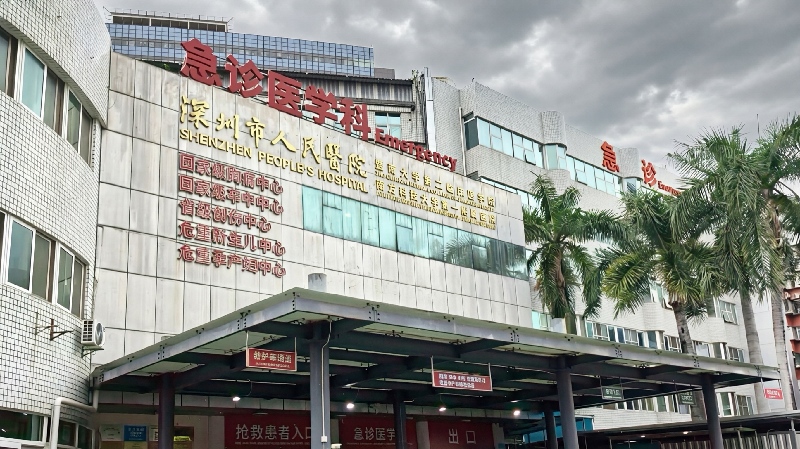
Shenzhen People's Hospital Luohu District — A Short Ride from the Hong Kong Border
One of Shenzhen's founding hospitals with over 70 years of clinical history — and the city's earliest adopter of da Vinci robotic surgery for oncology. Located in Luohu District a short ride from the Lo Wu border crossing, this Grade 3A hospital has served Hong Kong residents seeking cross-border medical care for decades. Strong cardiology, gastroenterology, and orthopaedics departments alongside a well-established robotic surgery programme — for the right case, it may be a suitable option. Whether it's the appropriate fit for your situation depends on your diagnosis and objectives; China Care helps you work that out before you travel.
Luohu District, Shenzhen — a short ride from the Lo Wu / Luohu border crossing (Hong Kong MTR East Rail terminus)
Quick Facts
Payment
Paid directly to hospital
Border crossing
~15 min by car from Lo Wu / Luohu
Advance booking
1–2 weeks minimum
Language
Mandarin + bilingual escort via China Care
Type
Public hospital · Grade 3A · Founded 1946
70+
Years of clinical history
Public 3A
China's highest hospital grade
Pioneer
Robotic surgery in Shenzhen
High
Annual surgical volume
About the Hospital
Shenzhen's Oldest Major Hospital — and the City's First to Adopt Robotic Oncology Surgery
Shenzhen People's Hospital (深圳市人民医院) has served the city since its earliest years of development. As one of the original major hospitals in Shenzhen, it has accumulated decades of surgical volume and clinical experience that newer institutions are still building. Its Grade 3A designation reflects consistent performance across a broad clinical base, and its location in Luohu District — a short ride from the Lo Wu border crossing with Hong Kong — has made it one of the most practically accessible major hospitals for cross-border patients from Hong Kong.
The hospital adopted da Vinci robotic surgery ahead of most other public hospitals in Shenzhen, building expertise in robotic-assisted oncology procedures — particularly for gastric, colorectal, and urological cancers — that is now measured in years of surgical volume. Beyond oncology, the cardiology and gastroenterology departments are among the strongest in the city, and the orthopaedics department handles complex trauma and joint reconstruction cases that draw referrals from across the region.
"Decades of surgical volume matter — the procedural confidence that comes from high-volume robotic surgery is not something newer hospitals can replicate quickly."
Why Patients Choose Shenzhen People's Hospital
Three reasons international patients choose Shenzhen People's Hospital
Robotic Oncology Surgery at Public Hospital Prices
Shenzhen People's Hospital was among the first public hospitals in Shenzhen to adopt da Vinci robotic surgery and has been operating its robotic programme for long enough that surgeons have accumulated significant case volume. For patients requiring robotic-assisted cancer surgery — colorectal, gastric, urological — this combination of early adoption and high volume means mature surgical technique at public hospital pricing. See our overview of cancer treatment in China for context on how surgical pricing compares internationally.
Cross-Border Infrastructure for Hong Kong Patients
The hospital sits about 15 minutes by car from the Luohu / Lo Wu border crossing — the busiest land crossing between Hong Kong and mainland China. This location has made it a long-standing destination for Hong Kong residents seeking public-hospital-quality care at mainland prices. Administrative processes for cross-border patients are well established, and the hospital has experience handling the documentation and intake requirements specific to Hong Kong patients.
Decades of Surgical Volume in Cardiology and Gastroenterology
The cardiology department manages the full spectrum from interventional procedures to complex cardiac surgery, backed by decades of case volume. The gastroenterology department covers advanced endoscopy, GI oncology, and complex hepatic and pancreatic cases. For patients with conditions requiring multi-disciplinary management across these specialties, the depth of clinical experience accumulated over 70 years of operation provides meaningful assurance.
Beyond the Hospital
Why Patients Work With China Care
Finding a hospital's name is easy. Knowing whether it's actually the right one for your situation is much harder — that's where China Care helps.
Most international patients researching Shenzhen People's Hospital are unsure whether it's genuinely the right fit for their case, or whether another hospital might serve them better. China Care helps you answer questions like:
Is Shenzhen People's Hospital suitable for my diagnosis?
The departments most commonly accessed by international patients coordinated through China Care.
Primary Focus
Robotic & Minimally Invasive Oncology Surgery
Pioneer da Vinci robotic surgery programme in Shenzhen. High volume in colorectal, gastric, and urological cancer resections. Laparoscopic and robotic approaches reduce recovery time and blood loss compared to open surgery.
Robotic SurgeryColorectal CancerGastric CancerUrological Cancer
Primary Focus
Cardiology & Cardiac Surgery
Interventional cardiology, electrophysiology, cardiac imaging, and open-heart surgery. Coronary artery disease, valve disease, and complex arrhythmia management. High annual procedure volume across catheter lab and surgical theatre.
Advanced endoscopy, GI cancer (colorectal, gastric, pancreatic), liver disease, and complex hepatic cases. Endoscopic resection and interventional procedures available within the department.
GI OncologyAdvanced EndoscopyLiver Disease
Also Available
Orthopaedics & Trauma
Joint replacement, complex fracture management, spine surgery, and sports medicine. Serves as a regional trauma and orthopaedic referral center. High volume in hip and knee arthroplasty.
Joint ReplacementSpine SurgeryTrauma
Also Available
Urology & Male Health
Prostate cancer, bladder cancer, kidney stones, and urological reconstruction. Robotic-assisted procedures available for eligible cases. Andrology and male reproductive health within the same department.
Prostate CancerRobotic UrologyBladder Cancer
Explore your options
Not sure which department fits your case?
Hospital Access reviews your records, identifies the right specialist team, and books and confirms your appointment before you commit to travelling.
How China Care Helps You Reach Shenzhen People's Hospital — If It's Right for You
Finding a hospital is the easy part. Understanding whether it's the right one for your situation is harder — China Care guides you through that, from initial guidance through to on-the-ground support in Shenzhen.
Step 1 · Tell Us What You Need
Tell Us About Your Situation
Send your medical records, pathology reports, and imaging to China Care. For oncology cases, include surgical history and prior treatment records. For cardiac cases, include ECG reports, echocardiography results, and catheterisation reports if available. This step is free and helps us understand whether Shenzhen People's Hospital — or another hospital — may be worth exploring for your case. We review your records and prepare a bilingual case summary within 1–2 working days.
1–2 days
Step 2 · Hospital Access
China Care Arranges and Confirms Your Appointment
China Care registers your case with Shenzhen People's Hospital's international coordination team, translates your medical records and referral documents, and confirms your appointment date, department, and specialist before you arrange your travel — all coordinated in English on your behalf. This is a fixed-fee service, agreed with you upfront. Already in China or Hong Kong? Skip this step — the hospital is about 15 minutes by car from the Luohu crossing, and China Care can arrange direct escort instead.
Travel to Shenzhen for Your In-Person Consultation
With your appointment confirmed, you travel to Shenzhen for your own in-person consultation. The specialist reviews your case in full, confirms the treatment plan, and provides a formal cost estimate — this step cannot be completed remotely at a public hospital. For Hong Kong patients, the Luohu crossing makes this a particularly straightforward journey. China Care's bilingual coordinator accompanies you throughout.
in-person consultation · treatment plan & cost estimate issued
Step 4 · Medical Journey
Admission & Treatment
Once you agree to proceed, admission is arranged through the hospital's international patient channel. China Care's coordinator remains on hand throughout your stay — accompanying you to ward rounds, pre-operative assessments, and administrative processes. Ward nursing staff and hospital administration operate primarily in Mandarin, so on-site escort is strongly recommended for non-Chinese speakers.
All treatment fees are paid directly to the hospital in Chinese yuan (RMB). Accepted payment methods vary by hospital — China Care will confirm with Shenzhen People's Hospital before you travel. A deposit is required at admission; the balance is settled before discharge. China Care does not collect or handle medical payments.
admission · payment direct to hospital
Step 5 · Medical Journey
Discharge and Follow-Up
Complete bilingual discharge documentation is issued on the day of discharge. For oncology patients requiring post-surgical monitoring, China Care can coordinate follow-up scheduling with the surgeon. For Hong Kong-based patients, cross-border follow-up visits are logistically straightforward given the hospital's proximity to the Luohu crossing.
bilingual documentation · post-discharge support
Hospital Access (fixed fee)Bilingual case coordinationRobotic surgery accessCross-border HK patient supportIn-person escort & interpretationMedical visa supportRMB payment direct to hospitalBilingual discharge documents
Before You Travel
What international patients need to know
Payment
Direct to hospital
Payment is made directly to the hospital. Accepted payment methods vary by hospital — your China Care coordinator will confirm before you travel.
Advance booking
1–2 weeks minimum
Walk-in not available for international patients. All appointments coordinated through China Care before you travel.
From Hong Kong
~15 min by car from Luohu crossing
MTR East Rail to Lo Wu Station (Hong Kong) → walk across border → short taxi. Total door-to-door from Kowloon: ~60 min.
Language
Mandarin + bilingual escort
Ward staff and administration operate in Mandarin. China Care arranges bilingual escort for all consultations and inpatient stays.
Consultation type
In-person only
Public hospital. All specialist consultations take place in person. China Care's Hospital Access service books and confirms your appointment before you travel.
Hospital type
Public · Grade 3A
Government-funded. China's highest hospital classification. Treatment costs quoted directly by the hospital — zero markup from China Care.
Your Next Step
How China Care Can Help
Whichever stage you're at, China Care's role is the same: help you make an informed decision, not just a booking.
What patients ask about Shenzhen People's Hospital
Is this hospital genuinely accessible for Hong Kong patients on a day-trip basis?
Yes — for outpatient consultations and day procedures, the proximity to Luohu / Lo Wu makes same-day return from Hong Kong straightforward. MTR East Rail to Lo Wu, a short walk across the border crossing, and a ~15-minute taxi puts you at the hospital within about 60 minutes of leaving central Kowloon. For patients requiring inpatient admission, China Care helps arrange accommodation options in Luohu District. The logistics are significantly simpler than for hospitals in Futian or Nanshan, which require additional transit after crossing the border.
What types of cancer are best suited to robotic surgery at this hospital?
The hospital has accumulated the most volume in robotic-assisted surgery for colorectal cancer (colon and rectal resections), gastric cancer, and urological cancers (prostate and bladder). These are the areas where the surgical team's robotic case experience is deepest. For other cancer types — such as lung, liver, or pancreatic cancer — China Care will assess whether this hospital is the optimal choice or whether a different Shenzhen or Guangzhou center would better match the patient's specific surgical needs. See our overview of cancer treatment in China for context.
How does the cardiology department compare to other Shenzhen hospitals?
Shenzhen People's Hospital has one of the higher-volume cardiology departments in the city, with both interventional cardiology and cardiac surgery operating at significant scale. The department handles complex coronary artery disease, valvular conditions, and complex arrhythmia cases. For patients specifically focused on cardiac surgery or complex interventional cardiology, it sits alongside HKU Shenzhen Hospital as one of the stronger options in the city. The proximity to Hong Kong also makes it practical for patients travelling from there specifically for cardiac evaluation or treatment.
Can patients get a second opinion at this hospital without committing to treatment?
Yes — but as a public hospital, an in-person visit is required for a formal opinion. Written opinions based on remotely submitted records alone are not standard practice in China's public hospital system. China Care's Hospital Access service translates your records and referral documents and confirms your appointment with the relevant specialist before you travel, so the visit itself is as efficient as possible. You are not committed to treatment until you agree to proceed at your in-person consultation.
Does the hospital have experience treating patients from outside mainland China?
Yes. Shenzhen People's Hospital has treated Hong Kong residents seeking cross-border care for decades, and its Luohu District location has always made it a natural first stop for patients crossing from Hong Kong. The administrative and intake processes for non-mainland patients are well established. For patients from further abroad — Southeast Asia, the Middle East, or elsewhere — China Care provides the coordination layer that makes the process navigable: bilingual case submission, Hospital Access appointment booking, visa documentation support, and on-site escort throughout the stay.
How does payment work and can I use insurance?
All treatment fees are paid directly to Shenzhen People's Hospital in Chinese yuan (RMB). Accepted payment methods vary by hospital — your China Care coordinator will confirm before you travel. A deposit is required at admission; the remaining balance is settled before discharge. Regarding international insurance: the hospital issues standard invoices and discharge documentation, but whether your specific insurer accepts claims from Chinese public hospitals is a matter for your insurer. China Care does not process insurance claims on your behalf. Payment is made directly to the hospital.
Still Deciding?
Not every hospital is the right fit for every patient
We'll help you understand whether Shenzhen People's Hospital — or another hospital in China — may be a better option for your situation.
China Care coordinates your case with Shenzhen People's Hospital. Treatment costs are quoted directly by the hospital. We never add to or mark up the hospital's quoted treatment cost.
Hospital profile note: This profile is general reference information. China Care does not endorse or guarantee a particular hospital, treatment, appointment, clinical decision, or outcome. Current services, requirements, language support, availability, and clinical suitability should be confirmed directly with the hospital.
We use essential cookies to make this site work. With your permission, we also use analytics cookies to improve it. See our Cookie Policy for details.