
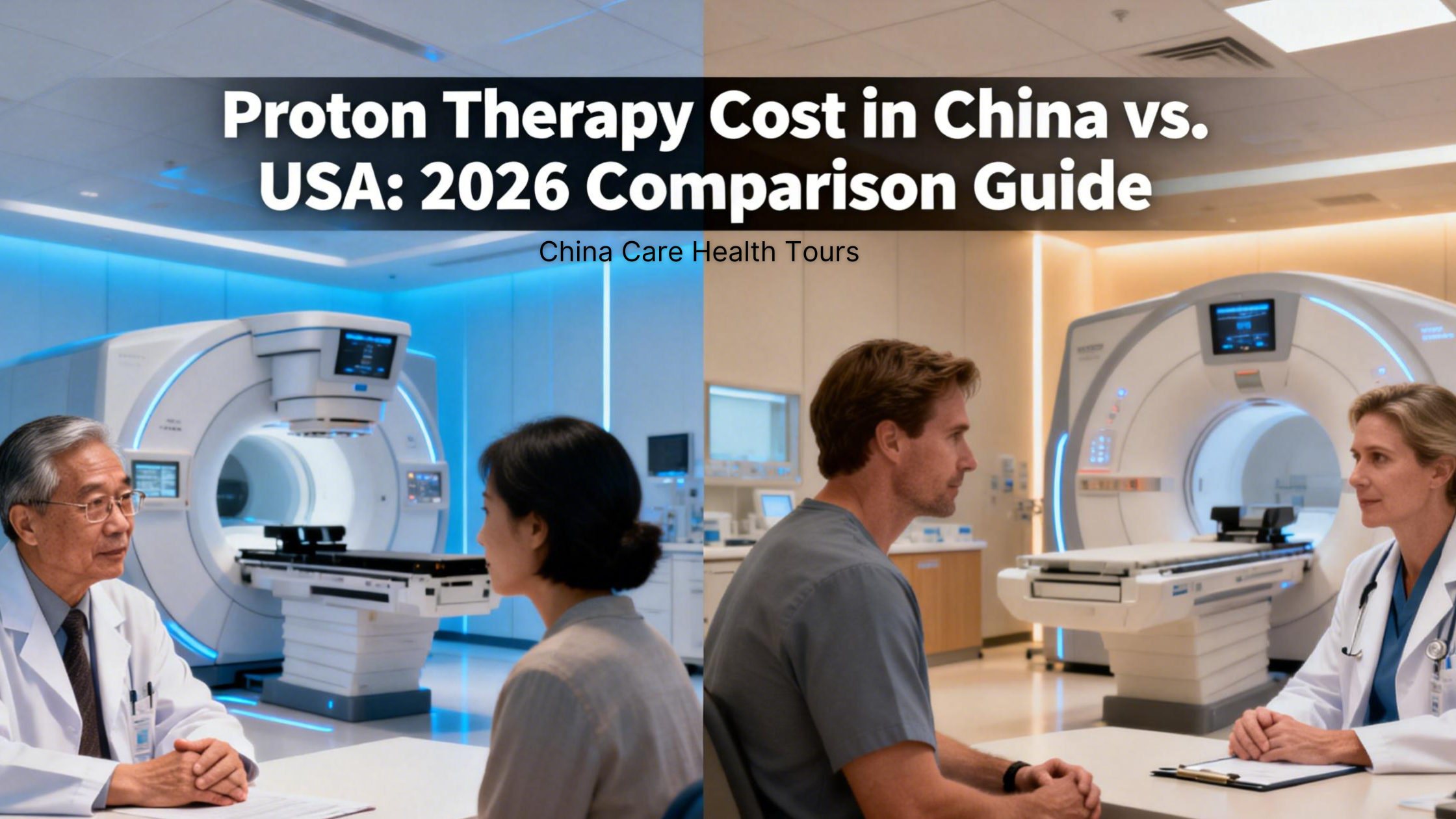
In 2026, proton therapy in China costs $30,000–$55,000 and carbon ion therapy costs $45,000–$60,000 — representing a 60–70% saving compared to the United States, where proton therapy typically exceeds $100,000–$150,000. This guide breaks down the full cost comparison, explains why Chinese facilities price particle therapy significantly lower, introduces the three leading centers, and outlines what international patients can expect during a 6–8 week treatment stay.
Key Facts
- Proton therapy in China costs $30,000–$55,000 in 2026, compared to $100,000–$150,000+ in the USA — a saving of 60–70% for equivalent technology and clinical outcomes.
- Carbon ion therapy in China costs $45,000–$60,000; it is largely unavailable or considered experimental in the USA, with no comparable published benchmark for routine clinical pricing.
- A diagnostic PET-CT scan in China costs $1,200–$1,800, versus $5,000–$8,000 in the USA — a pre-treatment diagnostic cost difference that compounds total savings for international patients.
- Lower Chinese pricing is driven by three structural factors: government price regulation at public hospitals, higher patient volume per facility reducing per-person operational costs, and domestically manufactured accelerator technology that eliminates import costs.
- International patients typically spend 6–8 weeks in China for a full course of particle therapy, with daily treatment sessions of 20–30 minutes during weeks 2–6.
Table of Contents
Understanding the Technology: Why Particle Therapy?
Particle therapy — encompassing both proton therapy and carbon ion therapy — represents the most technologically advanced form of radiation oncology currently available for clinical use. Unlike conventional X-ray (photon) radiation, which irradiates tissue along its entire beam path including beyond the tumor, particle beams stop at a precise depth inside the body (the Bragg Peak), releasing maximum energy directly into the tumor while leaving zero radiation beyond it.
Proton therapy is one of several advanced cancer treatment options available to international patients in China. For a full overview, see Cancer Treatment in China.
This physical property delivers two practical advantages:
- Higher tumor dose: The full energy budget concentrates at the tumor, not dispersed across the body.
- Lower healthy-tissue dose: Organs and structures beyond the tumor receive no exit radiation.
Proton therapy suits pediatric cancers and tumors adjacent to sensitive structures (brain, spine, optic nerve, heart).
Carbon ion therapy is additionally effective against radioresistant cancers — pancreatic cancer, bone sarcomas, and recurrent tumors that have already failed conventional radiotherapy — because carbon ions carry approximately 3 times the biological “killing power” of protons.
China currently operates three clinical particle therapy centers treating international patients, making it one of only a handful of countries where both proton and carbon ion therapy are routinely accessible outside a clinical trial. According to the Particle Therapy Co-Operative Group (PTCOG), the number of active particle therapy facilities worldwide has grown significantly over the past decade, with Asia now home to the largest share of operational centers.
2026 Cost Comparison Table: China vs. USA
The financial gap is significant. In the US, Carbon Ion therapy is largely restricted to expensive clinical trials, whereas in China, it is a standardized clinical option at facilities like the Shanghai Proton and Heavy Ion Center (SPHIC).
| Treatment Category | China (All-Inclusive Est.) | USA (Est. Total) |
| Proton Therapy Cost | $30,000 – $55,000 | $100,000 – $150,000+ |
| Carbon Ion Therapy Cost | $45,000 – $60,000 | Limited/Experimental |
| Diagnostic (PET-CT) | $1,200 – $1,800 | $5,000 – $8,000 |
| Daily Inpatient Care | Included in Package | $2,000 – $5,000 (extra) |
You may like: CAR-T Cell Therapy Cost in China vs USA: 2026 Comparison Guide
Top Particle Therapy Centers in China
Shanghai Proton and Heavy Ion Center (SPHIC) — Shanghai
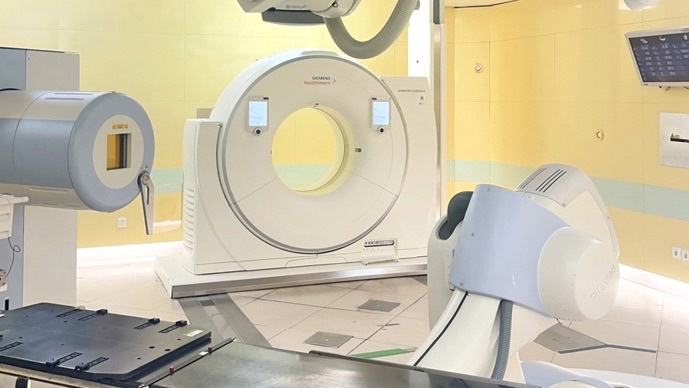
SPHIC is China’s flagship particle therapy center and one of the most advanced in the world. It is the only facility in China offering both proton and carbon ion therapy at the same campus, enabling oncologists to select or combine modalities based on tumor biology. SPHIC accepts international patients and provides English-language clinical coordination. For reference on international proton center standards, the MD Anderson Proton Therapy Center offers useful context on clinical protocols and patient eligibility criteria used at leading global centers.
Wuwei Heavy Ion Center — Wuwei, Gansu
The Wuwei Heavy Ion Center operates China’s domestically manufactured heavy ion accelerator, making it a strategically important facility for carbon ion therapy access beyond Shanghai. It treats a range of radioresistant solid tumors.
Hefei Ion Medical Center — Hefei, Anhui
The Hefei Ion Medical Center extends particle therapy capacity to central China. It is equipped for carbon ion therapy and serves patients from surrounding provinces as well as international referrals coordinated through medical tourism agencies.
The Timeline: What to Expect
International patients planning proton or carbon ion therapy in China should budget 6–8 weeks in-country. A typical schedule proceeds as follows:
| Week | Activity |
|---|---|
| Week 1 | Arrival, medical evaluation, simulation scan, treatment planning |
| Weeks 2–6 | Daily treatment sessions (20–30 minutes each) |
| Week 7–8 | Final fractions, discharge consultation, follow-up imaging if required |
Treatment planning — the process of designing the beam angles, energy levels, and dose distributions — typically requires 3–7 days after the simulation scan. Patients do not receive radiation during this planning phase.
Daily treatment sessions are brief. Actual beam-on time is typically 1–5 minutes; the remainder of the session involves positioning and verification. Most patients experience minimal acute side effects during treatment and are able to continue light activities.
Why is the Cost Lower in China?
Three structural factors explain why particle therapy in China is priced 60–70% below US benchmarks, without compromising the underlying technology or clinical outcomes:
1. Government price regulation
Public hospitals in China — including SPHIC, which is affiliated with the Shanghai municipal health system — operate under government-set fee schedules. These schedules cap the price of individual treatment fractions below what would be charged in a private US hospital operating under insurance-maximization pricing.
2. Higher patient volume
China’s particle therapy centers treat a substantially higher number of patients per year than their US counterparts. Greater throughput spreads fixed facility costs (accelerator capital, maintenance, physicist and physicist staffing) across a larger patient base, reducing the per-patient unit cost.
3. Domestic accelerator technology
China has invested in domestically manufactured proton and heavy ion accelerator systems, eliminating the import costs and foreign-currency capital expenses associated with purchasing US- or European-manufactured systems. The Wuwei Heavy Ion Center is the most prominent example, operating a Chinese-built heavy ion accelerator.
Frequently Asked Questions
Is the quality of proton therapy in China comparable to the USA?
The underlying physics of proton and carbon ion therapy is the same worldwide. SPHIC’s clinical team includes radiation oncologists and medical physicists trained at international institutions. Treatment planning software is equivalent to systems used at leading US centers. China Care Health Tours can share facility accreditation documentation on request. The Mayo Clinic overview of proton therapy provides a useful patient-facing summary of how proton therapy works and what patients should expect, regardless of treatment country.
Does health insurance cover proton therapy in China?
Coverage varies by insurer and policy. Some international health insurance plans cover medically necessary proton therapy regardless of country. Payment is made directly to the hospital. Patients should contact their insurer before travel to confirm coverage terms.
How do I arrange proton therapy in China as a foreign patient?
China Care Health Tours coordinates the full process: case assessment (free), hospital matching, appointment scheduling, medical visa documentation, airport transfers, accommodation, and in-hospital interpretation. Contact via WhatsApp for a response within 24 hours.
What cancers are treated with particle therapy at SPHIC?
SPHIC treats a broad range of solid tumors including head and neck cancers, brain tumors, lung cancer, liver cancer, pancreatic cancer, prostate cancer, bone and soft-tissue sarcomas, and pediatric tumors. Eligibility for proton vs. carbon ion therapy depends on tumor type, stage, and prior treatment history.
Is carbon ion therapy covered by Chinese national insurance?
Carbon ion therapy at SPHIC is available to both Chinese nationals and international patients on a self-pay basis. Pricing is set by the facility and quoted directly to patients after clinical evaluation.