

Every April and October, the Canton Fair brings well over 100,000 international buyers, exhibitors, and business travellers to Guangzhou for one to two weeks of long days, crowded halls, and unfamiliar food and air. Most trips go fine. A small number don’t — a stomach bug, a flare-up of allergies, a cracked tooth, or simply the realisation that it’s been three years since anyone had a proper check-up. This guide is a practical, plain-English companion: what to prepare before you fly, everyday health habits on the ground, what Guangzhou’s hospital system actually looks like for a foreign visitor, a closer look at one specialist dental hospital worth knowing about, and how to fit in an executive health screening if you have a free morning between meetings. It does not replace medical advice, and it is not a substitute for your own travel insurance — see the disclaimer at the end.
Key Facts
- The Canton Fair runs in three phases each spring (April) and autumn (October) at the Pazhou Complex, drawing well over 100,000 international buyers and exhibitors per session.
- The three most common visitor health issues are stomach upset, respiratory/allergy irritation, and fatigue from jet lag layered onto a demanding schedule — all minor and preventable.
- Prescription medication cannot be refilled or obtained on your behalf without an in-person consultation with a licensed doctor in China.
- Current package directions for Guangzhou visitors include named references from RMB 1,499 to RMB 5,988; China Care confirms the current package rate and booking details before payment.
- China Care Health Tours is a medical coordination service, not a hospital — it does not diagnose, treat, or prescribe.
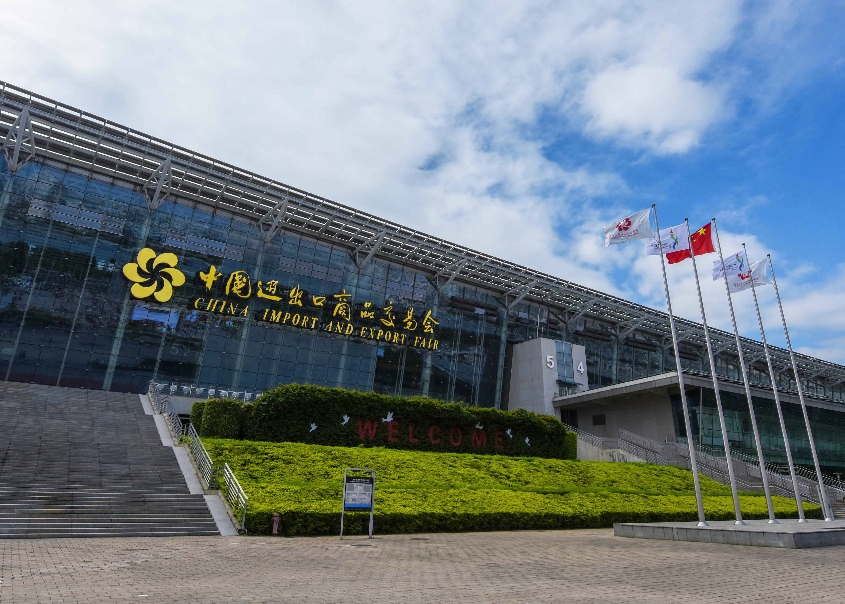
Table of Contents
Why Health Prep Matters at the Canton Fair
The Canton Fair (China Import and Export Fair) runs in three phases each spring (April) and autumn (October) at the Pazhou Complex, with each phase typically lasting several days. For exhibitors and buyers, that means long days on your feet, back-to-back meetings, irregular meals, and a level of physical fatigue that’s easy to underestimate when you’re focused on sourcing decisions.
The three health issues that come up most often among international visitors during the fair are unremarkable but disruptive: stomach upset from unfamiliar food or water, respiratory irritation or allergy flare-ups from air quality and air-conditioning swings, and fatigue or disrupted sleep from jet lag layered on top of a demanding schedule. None of these are dangerous on their own. All three can knock a day or two off a trip you planned carefully.
The reassuring part: Guangzhou has a mature, internationally oriented healthcare network, and a little preparation goes a long way toward not needing it. The rest of this guide walks through both — prevention first, then what your options actually are if something does come up.
Before You Fly: Pre-Travel Health Prep
Routine vaccinations and a health summary. Confirm your routine vaccinations are current before you travel — the CDC’s China travel health page lists current recommended vaccinations and travel health notices and is worth checking a few weeks before departure. Also carry a one-page English-language summary of any chronic conditions, allergies, and current medications. If you need care in Guangzhou, this single page saves a consultation’s worth of back-and-forth.
Travel and medical evacuation insurance. Decide on insurance before you fly, not after something happens. China Care Health Tours is not an insurance provider and does not sell travel insurance — our role, described in How China Care Health Tours Can Help, is coordinating your access to hospitals and screening centres, not underwriting risk. If your policy includes a remote medical advice line, save that number.
Prescription medication. Bring enough of your regular medication for the full trip, kept in its original packaging, along with a copy of your prescription showing the generic (non-brand) name. Some medication categories — including certain psychiatric and controlled substances — face import restrictions in China; the safest approach is to check your specific medication against current Chinese customs rules before you pack, rather than assume it will be fine. Prescription medication cannot be obtained on your behalf without an in-person consultation with a licensed doctor in China — more on this in On the Ground in Guangzhou: Everyday Health Tips.
Jet lag and the long flight. Basic measures help more than people expect: stay hydrated, move periodically during a long flight, and try to shift your sleep schedule a day or two before departure if your itinerary allows it. This is general wellness advice, not a treatment recommendation.
Before-you-fly checklist:
- Routine vaccinations confirmed current
- One-page English health/allergy summary printed
- Travel insurance confirmed, remote medical line number saved
- Prescription medication packed in original packaging + prescription copy
- Checked any restricted medication categories against current entry rules
- Copy of passport and visa saved to phone and email
On the Ground in Guangzhou: Everyday Health Tips
Food and water. Tap water in Guangzhou is not typically drunk directly — stick to bottled or boiled water, which is the norm locally as well, not a foreigner-specific precaution. Street food is part of the culture and generally fine in moderation; use the same judgement you would in any unfamiliar city (busy stalls with high turnover, food cooked in front of you). If you do get travel diarrhoea, the standard first response is oral rehydration — plenty of fluids with electrolytes — rather than reaching for the strongest thing on a pharmacy shelf. If symptoms are severe or don’t improve within a day, see a doctor rather than self-treating further.
Air quality. Guangzhou’s air quality varies by season and weather, similar to many large Chinese and Southeast Asian cities. Checking a local air quality index app on higher-pollution days and carrying a mask for those days is a reasonable precaution, particularly if you have asthma or another respiratory condition — this is about sensible awareness, not alarm.
Heat and hydration. Guangzhou has a subtropical climate, and even the October fair phase can be warm and humid. Between hall-to-hall walking and long days, dehydration and heat fatigue are more likely than most visitors expect. Carry water, and pay attention to electrolytes, not just water volume.
Mosquitoes. Guangdong province has a seasonal dengue fever risk carried by mosquitoes, higher in warmer, wetter months. Standard precautions — repellent, covering up in the early evening — are worth the minor inconvenience, especially if you’ll be outdoors near the Pearl River or in green spaces.
Fatigue and sleep. Long exhibition days add up. Build in short breaks where you can, and treat sleep as part of your schedule rather than an afterthought — fatigue is the quiet cause behind a lot of the minor health complaints visitors report.
Buying medication. Over-the-counter medication (for colds, mild pain, allergies) is available at pharmacies without a prescription, the same as in most countries. Prescription-only medication is different: it requires an in-person consultation with a licensed doctor in China — it cannot be purchased, ordered online, or brought in on your behalf without one. If you need a prescription refilled or adjusted while you’re here, that means booking a doctor’s visit, not a pharmacy counter.
Useful apps. A translation app, a mapping app with offline capability, a ride-hailing app, and a food delivery app cover most day-to-day friction points for first-time visitors.

October fair phase.
If You Need Care: Guangzhou Healthcare for Foreigners
Guangzhou’s hospital system has three broad tiers: large public tertiary (Grade 3A) hospitals with deep specialist resources and high patient volumes, private international-standard hospitals designed around a calmer, more navigable patient experience, and specialist or foreign-focused clinics for narrower needs. Which one fits depends on what you need — a routine consultation is a very different decision than something you’re worried might be serious.
In an emergency, dial 120 for ambulance services or 110 for police. Check your own country’s consulate or embassy contact information for Guangzhou before you travel, in case you need consular assistance — US citizens can look up the nearest consulate via the US State Department’s China travel advisory page, and UK nationals via the UK government’s China travel advice page, both of which list consular contact details and any current travel notices. For anything you believe could be serious — chest pain, difficulty breathing, a serious injury — go directly to a hospital emergency department rather than waiting to arrange an appointment.
What to expect at a visit: registration at a hospital’s international patient department where one exists, payment by WeChat Pay, Alipay, or international card (cash is far less common now), and — outside a handful of large public hospitals with international/VIP wings — limited English at the front desk even if the treating doctor speaks some English. Bring your passport; it’s accepted as identification at all major facilities. Keep your receipts and any discharge summary for insurance claims.
The hospitals below are ones China Care has an established profile and coordination relationship with in Guangzhou — a mix of public tertiary institutions and private hospitals, listed here for what they are, not ranked against each other:
- Sun Yat-sen University Cancer Center (SYSUCC) — a public tertiary hospital and one of China’s leading specialist cancer centres, particularly recognised for nasopharyngeal cancer treatment.
- Nanfang Hospital — a public tertiary hospital with strong haematology, stem cell transplant, and CAR-T cell therapy programmes.
- The 6th Affiliated Hospital of Sun Yat-sen University — a public tertiary hospital recognised nationally for colorectal and gastrointestinal surgery.
- Guangzhou United Family Hospital — a private hospital built on a Western/JCI-accredited operating model, with English-speaking staff throughout and comparatively little language barrier.
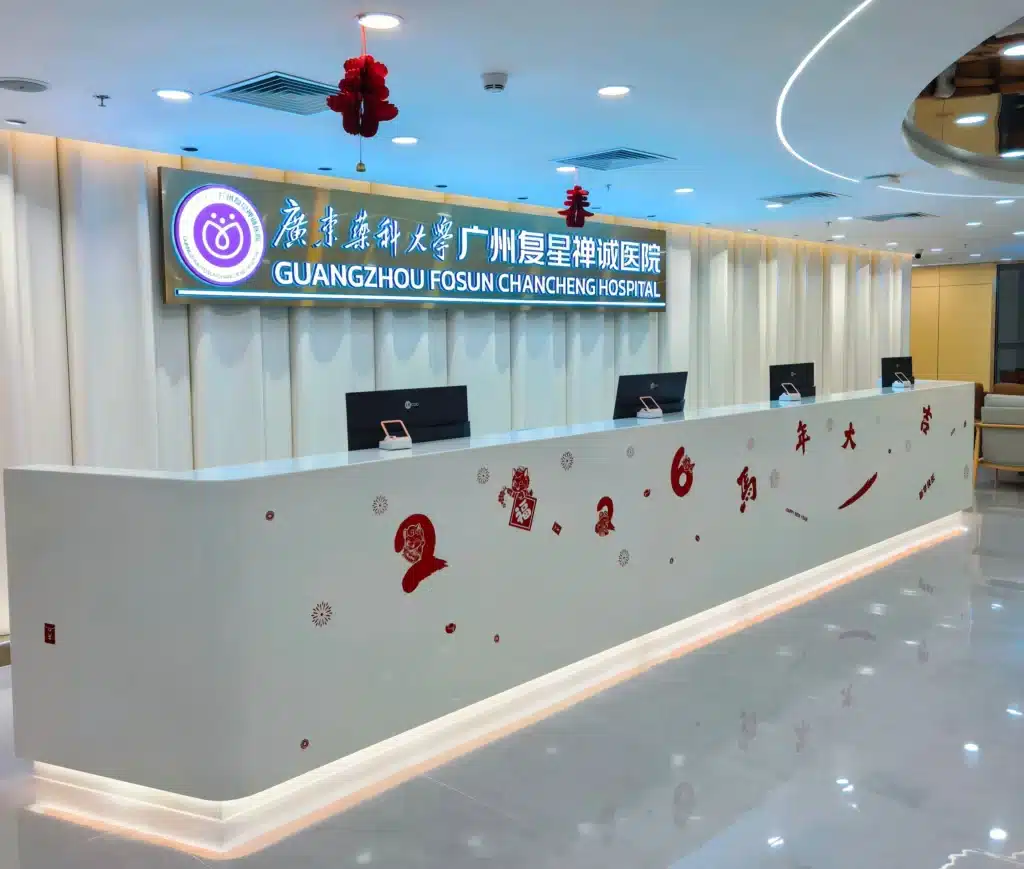
- Guangzhou Fuxing Chancheng Hospital — a private hospital under the Fosun International platform, offering full-department outpatient and inpatient care in a comfort-oriented private setting.
- Guangzhou Concord Cancer Center — a private cancer hospital within the Concord Medical network, offering medical, radiation, and surgical oncology with multidisciplinary tumour board planning.
For the full directory of hospitals China Care works with across China, see Hospitals or the Guangzhou Medical Guide.
On cost: public hospitals bill by item (consultation, tests, procedures charged separately), and private hospitals generally charge more for the same category of care in exchange for a more comfortable, English-navigable experience. Keep every receipt if you plan to claim through travel insurance — most insurers require itemised documentation.
If you have travel insurance with a remote medical advice line, that’s often the fastest first call for a non-urgent question — it can tell you whether a visit is even necessary before you leave your hotel.
Dental Care Spotlight: Sun Yat-sen University Stomatological Hospital
Dental problems are disproportionately disruptive on a business trip — an acute toothache or a lost crown does not wait for a quiet week, and it’s hard to concentrate on sourcing negotiations through dental pain. Guangzhou is home to one of China’s most established specialist dental institutions, worth knowing about specifically for this reason.
Hospital of Stomatology, Sun Yat-sen University (中山大学附属口腔医院) is a public tertiary specialist dental hospital affiliated with Sun Yat-sen University, and one of the constituent institutions within China’s National Clinical Research Center for Oral Diseases network. It covers the full range of dental specialties — oral and maxillofacial surgery, orthodontics, implants, endodontics (root canal and related treatment), and periodontics — combining high patient volume with a teaching and research role.
Common needs among visiting business travellers: acute pulpitis or toothache, a dislodged crown or filling, routine cleaning and periodontal maintenance, and minor dental trauma.
What to expect: care is delivered primarily in Mandarin. As a busy public specialist hospital, appointments are usually needed in advance and same-day walk-in queues can be long — arranging an interpreter ahead of time is strongly advisable for anything beyond a very simple visit. Costs are charged by item, and keeping your receipt matters for any insurance claim.
If a toothache strikes before you can be seen: a cold compress against the outside of the cheek, keeping the area clean, and avoiding very hot, cold, or hard foods can reduce discomfort temporarily. Over-the-counter pain relief may help in the short term. None of this replaces an actual dental exam — persistent or worsening pain, swelling, or fever alongside a toothache needs prompt in-person assessment.
We do not name individual clinicians, and hospital tier and accreditation details are as publicly listed by the relevant authorities at time of writing — always confirm current status directly with the hospital or your coordinator before treatment.
Health Checkups While You’re in Town
If your trip has a free morning and you’ve been putting off a proper check-up, Guangzhou’s screening centres can deliver a comprehensive result faster and at a more transparent price than squeezing in an equivalent appointment at home. A single visit typically covers blood work, imaging, and a physical exam, with a digital report delivered in 3–7 working days — not same-day, but fast enough to review before you fly home.
Three screening options with a presence in the Guangzhou area, at different depths and price points:
 Featured
 Heart & Vascular Screening
Heart & Vascular Screening at Meinian Onehealth Screening Centre, 1,499 RMB. Nationwide package, coordinated in English by China Care.
- Pay in full to reserve
- Flexible scheduling
- Heart & Vascular Screening (Meinian Onehealth, nationwide network) — ¥1,499 (~$210 USD, indicative). A head CT, low-dose chest CT, carotid ultrasound, cardiac ultrasound, and H. pylori test — a focused option if cardiovascular risk is your main concern and your schedule is tight.

Deep Screening (With MRI)
Deep Screening (With MRI) at Xingyuanhui, RMB 3700. Comprehensive deep screening in Guangzhou or Foshan, coordinated in English by China Care.
- Pay in full to reserve
- Flexible scheduling
- Deep Screening with Brain MRI (Xingyuanhui, Guangzhou & Foshan) — ¥3,700 (~$510 USD, indicative). A broader morning programme covering a brain MRI, an expanded tumour marker panel, thyroid function, and multi-organ ultrasound including carotid, cardiac, and coronary calcium scoring.
 Featured
 Family Executive Health Check
Family Executive Health Check at Ruici Health Screening Centre, 5,988 RMB. Ruici's most comprehensive nationwide family package, coordinated in English by China Care.
- Pay in full to reserve
- Flexible scheduling
- Family Executive Health Check (Ruici Health Screening Centre, nationwide network) — ¥5,988 (~$827 USD, indicative). The most comprehensive of the three, adding brain MRI with MRA cerebral angiography, an extended thyroid panel, expanded liver function testing, and a gastrin/pepsinogen panel.
All prices above are indicative — the screening centre issues the final quote for your individual case, and China Care adds no coordination fee on top of the published package rate. Booking ahead (a few working days’ notice) is recommended, and you’ll typically need to fast for several hours beforehand — your coordinator will confirm the specific preparation requirements for whichever package you choose.
For the full range of screening options across China, see Executive Health Screening.
How China Care Health Tours Can Help
To be direct about what we are: China Care Health Tours is an independent healthcare concierge and medical coordination service. We are not a hospital, and we do not diagnose, treat, or prescribe. Every medical decision is made by the treating doctor or hospital, not by us.
For visitors combining the Canton Fair with a health need, our coordination generally falls into a few categories:
- Deciding where to go — if you’re unsure whether a public or private hospital fits your situation, or which department to approach, we can help you think it through before you commit to an appointment.
- Hospital Access — getting your first appointment booked and confirmed: registration, translated records, and appointment confirmation in writing before you travel, so you’re not negotiating a language barrier from scratch on arrival.
- Health screening booking — helping you choose between screening centres and packages like the ones in Health Checkups While You’re in Town, and booking the appointment for you.
- On-the-ground support — interpretation at your appointment, help understanding a report or discharge summary, and general coordination if you need more than a single visit.
What this does not include: a second medical opinion, a diagnosis, or treatment recommendations — those come from the treating doctor, not from China Care. Our coordination fee, where one applies, is separate from and does not add a markup to whatever the hospital or screening centre charges you directly; you can ask your coordinator for current fees for the specific service you need.
If any of this is useful for your trip, the simplest way to start is a message on WhatsApp with a short description of what you need and your travel dates — we’ll tell you honestly whether we can help and what the next step looks like.
Quick-Reference Toolkit
Emergency contacts
- Ambulance: 120
- Police: 110
- Your country’s consulate/embassy in Guangzhou — check contact details before you travel via your government’s travel advisory page (e.g. US State Department, UK government)
- Your travel insurer’s remote medical advice line, if included in your policy
Useful phrases
- “I need to see a doctor” — 我需要看医生 (wǒ xūyào kàn yīshēng)
- “I’m allergic to…” — 我对…过敏 (wǒ duì…guòmǐn)
- “Where is the emergency room?” — 急诊在哪里 (jízhěn zài nǎlǐ)
Packing checklist
- Prescription medication in original packaging + prescription copy (generic name)
- One-page English health/allergy summary
- Oral rehydration salts or equivalent
- Insect repellent
- Mask (for higher-pollution days)
- Basic over-the-counter medication for colds/pain (or plan to buy locally — widely available)
Useful apps: a translation app, an offline-capable map, a ride-hailing app, a food delivery app.
FAQs
For current questions about this topic, contact China Care or consult the relevant official provider or authority for up-to-date information.
Disclaimer
This article is general health information for travellers and does not constitute medical advice, diagnosis, or treatment. China Care Health Tours is a medical coordination service, not a hospital — all medical decisions are made independently by the treating doctor or hospital. Prices, hospital classifications, and accreditation status are indicative and subject to change; always confirm current details directly with the hospital or your coordinator. In an emergency, contact local emergency services or your embassy/consulate immediately.