Home ›
The Care Blog ›
Chengdu Medical Care for Foreigners: Hospitals, ERs & Checkups
Medical Insights
Chengdu Medical Care for Foreigners: Hospitals, ERs & Checkups
Medical WriterChloe Chen
Medically reviewed byDr. Min Zhang
August 18, 202620 min read
Table of Contents
Not sure which service fits you?Readers reach out for different reasons: planning a checkup, arranging treatment they have already been advised to have, following up on a diagnosis they already have, helping a family member, or a work relocation. Tell us your situation and we will point you to the right next step. No obligation.
Need medical care while visiting Chengdu? This guide helps international visitors separate emergencies from planned care, research hospitals without relying on outdated listings, and prepare for an optional health check or a higher-altitude trip in western Sichuan.
Emergency boundary: China Care’s WhatsApp is not an emergency service. For chest pain, severe bleeding, loss of consciousness, stroke symptoms, severe breathing difficulty, confusion at altitude, or another life-threatening symptom, call 120 or go to the nearest emergency department immediately. Do not wait for a WhatsApp reply.
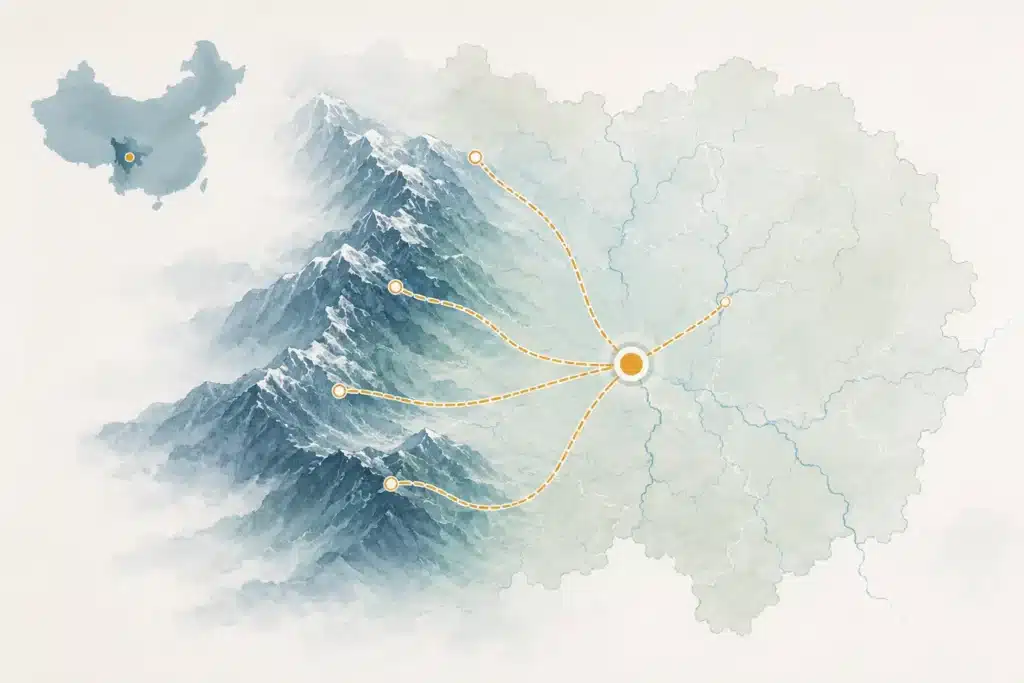
Chengdu is a common departure point for western Sichuan routes, where elevation can rise quickly beyond the city.
Quick Overview
Foreign visitors can seek medical care in Chengdu, but the right next step depends on whether the problem is urgent, what type of care is needed, and what the provider can currently support for the exact appointment.
What this guide covers: emergency decisions, hospital research, language and records questions, optional health checks, TCM visits, and western-Sichuan altitude preparation.
Who it may help: tourists, business travellers, family members travelling together, and visitors considering a planned appointment while in Chengdu.
Main things to consider: your symptoms, medical history, desired appointment, provider confirmation, insurance terms, travel route and document requirements.
What coordination can do: for non-urgent planned care, a coordinator can help with practical questions and communication. A coordinator cannot diagnose, dispatch emergency care, decide clinical suitability or guarantee provider services.
Situation
What to do first
Important boundary
Chest pain, severe bleeding, stroke symptoms, unconsciousness or serious breathing difficulty
Call 120 or go to the nearest emergency department
Do not wait for China Care, an insurer, a hotel reply or a language escort
Stable illness or a minor injury that needs assessment
Seek an appropriate clinic or hospital department
Confirm current provider availability and language support at the time
Mild digestive symptoms that are improving
Hydrate as tolerated and monitor symptoms
Seek medical assessment for warning signs or uncertainty
Planning a health check, dental appointment or TCM visit
Compare options and confirm details directly with the provider
It is optional planned care, not emergency care or medical advice
Planning Jiuzhaigou, Daocheng Yading or another high route
Read altitude guidance and build a conservative itinerary
Chengdu’s low elevation is not proof of acclimatization
Need non-clinical help understanding the practical choices for a planned, non-emergency visit? Get Personalized Guidance
Save this before you travel
Keep these details available even if you never use a coordinator:
your accommodation name and address in Chinese;
your passport and a secure copy of it;
a medication, allergy and medical-history list using generic medicine names where possible;
your travel insurer’s emergency-assistance details; and
your onward itinerary, especially any higher-altitude route.
These practical preparations help a hotel, travelling companion, clinician or insurer assist you more quickly if a problem arises. The US CDC’s China destination guidance is a useful pre-trip source for general health preparation and travel precautions.
This Guide Is for You If
This Chengdu medical guide for foreigners is useful if:
you are visiting Chengdu for food, culture, business or family travel;
you need to know what to do if someone becomes ill or injured during the trip;
you are continuing to Jiuzhaigou, Daocheng Yading, Kangding, Mount Siguniang or another higher-altitude area;
you are travelling with a child, older relative, chronic condition or prescription medicine;
you want to compare Chengdu hospitals or understand what language and records questions to ask;
you are considering an optional health check, dental appointment, acupuncture or other planned visit; or
you are planning healthcare travel for yourself or a family member and need to distinguish practical logistics from clinical decisions.
This guide is not a substitute for an emergency clinician, your usual doctor, a travel-insurance assistance line, a pharmacy consultation, immigration authorities, or a treating provider’s current instructions. Long-term residents also need local insurance and primary-care arrangements that go beyond this short-stay orientation.
Why Chengdu Needs Its Own Medical Plan
Chengdu itself is not a high-altitude city, but it is a common air and rail hub for visitors continuing into western Sichuan. A traveller can feel well in Chengdu and then gain substantial elevation over a short itinerary, particularly when flying or driving toward higher mountain areas. That makes pre-trip decisions about route flexibility, insurance and emergency access more important than they may be in a city-only visit.
The city also gives visitors several types of healthcare choices: major public hospitals, private clinics, optional health checks and traditional Chinese medicine services. None of these labels tells you exactly what a provider can offer today. Language support, appointment availability, payment procedures, documentation and department processes can vary by clinician, service, date and appointment type.
International visitors may therefore continue researching Chengdu because it offers hospital options and planned-care pathways, not because one hospital or clinic can be described as universally suitable. The valuable question is not simply, “Do you speak English?” Ask what help is available for the complete process: booking, consent, payment, consultation, prescriptions and written records.
Suitable for: life-threatening symptoms, serious injuries, sudden neurological symptoms, severe allergic reactions, major breathing difficulty, or a condition that cannot safely wait for a planned appointment.
Considerations: in a serious emergency, the nearest capable emergency department matters more than a preferred hospital name, an English-language listing, an insurer call or a pre-arranged report. Call 120 if you can. If Chinese communication is difficult, ask someone nearby to help and show your saved Chinese address. A translation app can help with simple information, but it should never delay emergency transport.
Option B: Planned Hospital or Clinic Appointment
Suitable for: stable symptoms, a follow-up question, a non-urgent specialist visit, a routine issue or a planned consultation that can wait for provider confirmation.
Considerations: before committing to a planned appointment, confirm directly with the provider:
whether it currently accepts foreign visitors for the service you need;
whether spoken language support is available for that appointment, rather than assumed from a general website;
whether a companion or interpreter is permitted during registration and consultation;
what identification, prior records and payment method are required;
whether any medical record, receipt or translation is available, in what language, at what cost and on what timeline; and
whether your insurer must approve or arrange payment in advance.
For orientation, browse Chengdu hospitals for international patients. It lists major local hospital profiles, but it does not establish a current appointment, language or international-service arrangement for a particular visitor. West China Hospital is one of the major hospitals visitors may encounter when researching care in Chengdu. Its official website provides general institutional background, but it does not establish current arrangements for an individual visitor.
If your question involves planned treatment rather than a travel-related or routine-care need, read A Guide to Medical Treatment in China for Foreigners. It explains broader planning questions to take to a treating institution; it does not confirm a treatment route, provider acceptance, clinical suitability, entry permission or outcome for an individual patient.
Option C: Planned Health Check Packages
Suitable for: visitors who want an optional preventive health check and have enough time to plan it before the visit.
Considerations: a health check is not a replacement for emergency assessment or ongoing care with your usual clinician. Ask what the programme actually includes, which items require fasting or separate scheduling, what documentation can be issued and how results are delivered. For a verified screening programme, digital results are generally delivered within 3–7 working days, subject to the provider and test type. Do not assume results will be available on the appointment day, in a particular language, with an official translation, for insurance reimbursement, or with a particular test unless the provider confirms it in writing.
You can compare verified health check packages by provider, city, screening focus and published price. Use the catalogue to create a short list, then compare what each option actually includes, the preparation required and whether it fits your practical screening goal. Confirm the exact centre, current package version, date, availability, price, included items and preparation requirements before payment. For a confirmed partner package arranged through China Care, you pay the published package rate, with no extra fees added on top. The health screening guide for foreigners and executive health screening overview explain the general planning process.
Option D: Optional TCM, Acupuncture or Wellness Visit
Suitable for: visitors who independently choose an optional cultural or wellness appointment and have no emergency or unresolved acute medical need.
Considerations: Chengdu has a prominent traditional Chinese medicine culture, and some visitors choose acupuncture, tuina or a wellness appointment. These are personal, planned choices, not an emergency path or a substitute for assessment of serious symptoms. Confirm the provider’s current licensing, location, appointment procedure, language support, consent process, expected documentation and payment terms. Tell the provider about relevant diagnoses, pregnancy, implanted devices, bleeding risk, allergies and medicines. Consult your own clinician when you need individual medical advice.
Choosing the Right Option Is Not Always Simple
Many visitors begin by comparing a hospital name, a listed price, a travel route or a claim about English support. Those details matter, but they do not by themselves answer which option is appropriate for an individual situation.
The practical choice can depend on:
your current symptoms and health condition;
your reason for seeking care, such as an urgent problem, planned screening, follow-up or a treatment question;
your medical history, medicines and records;
the documents or written records you need after the visit;
your insurer’s terms and payment requirements;
your travel plan, including any high-altitude onward route; and
what the provider can confirm for the exact appointment.
Information is not the same as a decision. A hospital directory or health-package catalogue can narrow a search, but a provider and treating clinician decide their own current services and clinical matters. You can make these checks independently through the provider, your insurer, a trusted Mandarin-speaking companion or another qualified coordinator.
If you want optional, non-clinical help framing the practical questions for a planned visit, comparing arrangements or communicating with a provider, Get Personalized Guidance. Do not use this route for an emergency.
Detailed Chengdu Planning Information
Emergency Care and the 120 Ambulance
Dial 120 for a medical emergency in Chengdu and elsewhere in China. Use it for chest pain, severe bleeding, loss of consciousness, suspected stroke, serious breathing difficulty, seizure, severe allergic reaction or another life-threatening event. The operator may not speak English, so save your accommodation address in Chinese and ask hotel staff, a tour guide, a travelling companion or a Mandarin-speaking person to help if possible.
China Care does not dispatch ambulances, triage symptoms, decide where an ambulance will take a patient or provide emergency medical advice. In a serious emergency, seek care first. Do not wait for a coordinator, insurer, provider reply or language arrangement.
Pharmacies and Medicines
Pharmacies are common in Chengdu, often marked 药店 or 大药房. Regulations, brand names, prescription status and suitability vary. Bring medicines in their original packaging where possible, together with a medication list that shows generic names, dose and allergies.
Do not rely on a travel guide for a drug choice, dose, interaction check or diagnosis. Ask a licensed clinician or pharmacist about safe options for your circumstances, particularly if you are pregnant, travelling with a child, managing a chronic condition or taking prescription medicines. For a severe reaction, serious dehydration, worsening symptoms or uncertainty, seek clinical assessment instead of self-treating.
Altitude Preparation for Jiuzhaigou and Western Sichuan
A gradual, flexible itinerary is more useful than assuming a night in Chengdu provides high-altitude acclimatization.
A night in Chengdu may be useful for rest and logistics, but it does not by itself acclimatize a traveller for a high plateau itinerary. Acute mountain sickness can affect healthy people after rapid ascent, and physical fitness does not guarantee protection. The US CDC high-altitude travel guidance explains that a gradual ascent is the primary preventive measure and that travellers should avoid further ascent when symptoms appear.
Build time into the itinerary rather than treating altitude preparation as a product to buy at the last minute. If you have heart, lung, neurological or other health conditions, or you are uncertain about a planned route, speak with your own licensed clinician before travel. A local provider, tour operator, transport company and accommodation provider each control different parts of the journey. China Care cannot decide whether a route is medically suitable or guarantee that altitude-related care will be available on demand.
Headache, nausea, fatigue, dizziness and disturbed sleep can occur with acute mountain sickness. Do not continue ascending when symptoms begin. The CDC advises descent if symptoms worsen while resting at the same elevation and emphasizes immediate descent and urgent medical help for severe warning signs.
Descend and seek urgent medical help immediately for confusion, difficulty walking, breathlessness at rest, or a cough producing pink or frothy sputum. These may indicate serious altitude illness. Do not try to manage these symptoms through WhatsApp, a travel guide, a pharmacy recommendation or an attempt to “push through” the itinerary.
Before leaving Chengdu for a higher-altitude destination, confirm the route’s elevation profile, how quickly you will ascend, whether the itinerary allows lower-elevation rest or a change of plan, the closest current medical facility and emergency transport arrangement, and whether travel insurance covers the destination and evacuation. For a broader travel-health checklist, review the CDC’s traveller information for China.
Food-Related Stomach Symptoms
Chengdu’s food is a central part of many trips. Diarrhea, nausea or stomach pain during travel can have many causes, including dietary change, infection, food handling, alcohol, stress, medication effects or an unrelated illness. Do not assume symptoms are only a reaction to spice.
For mild symptoms that are improving and when you can drink fluids, pause strenuous sightseeing, take in fluids as tolerated and monitor how you feel. Seek clinical assessment promptly if you have blood in stool, high fever, repeated vomiting that prevents you from keeping fluids down, signs of dehydration, severe or worsening abdominal pain, confusion, or symptoms that are not improving. Children, older adults, pregnant travellers and people with underlying conditions may need a lower threshold for medical advice.
The CDC Yellow Book’s travellers’ diarrhea guidance is a useful clinical-information source, but personal medicines should be discussed with a clinician or pharmacist. This article does not recommend a specific product or replace medical assessment.
Language, Records, Payment and Insurance
A clinician who can speak some English may not mean that registration, consent forms, billing, prescriptions or written records are also available in English. Treat each as a separate question. For planned care, ask the provider exactly what it can offer for your appointment and get material terms in writing where possible.
If you need a record for a clinician at home, ask whether the provider can issue records in English, arrange a translation, or provide a Chinese record that an independent translator can work from. Do not promise your home clinician that a particular format, translation quality or turnaround is guaranteed. Medical documentation belongs to the treating provider and may have privacy, payment and identity requirements.
Payment procedures, deposits, insurance arrangements and direct billing vary by provider and insurer. For planned care, confirm them with both parties before booking. In an emergency, seek urgent medical care first. Do not delay because you are waiting for insurance approval, a written quote, a translation or a WhatsApp response.
Entry and Transit Rules Are Not a Medical Booking Tool
Do not plan medical care around a visa-free or transit assumption. Entry, transit, visa, carrier and itinerary decisions are made by the relevant immigration authority, embassy, carrier and border officials. Eligibility can depend on nationality, route, eligible ports, onward travel and the policy in force at the time.
Confirm current requirements directly with the China National Immigration Administration and the relevant carrier or visa authority before booking travel. China Care does not issue invitation letters, decide entry eligibility, confirm transit permission or guarantee a travel outcome. For broader orientation only, see the China medical visa planning guide.
Common Mistakes International Patients Make
Waiting for a coordinator during an emergency. Call 120 or go to the nearest emergency department first. WhatsApp is not an emergency dispatch channel.
Choosing based only on a hospital name or a listed price. Compare the actual appointment, records, language needs, insurance terms and travel constraints.
Assuming an online English listing covers the full visit. Confirm spoken language, paperwork, billing, records and appointment availability for the exact department and date.
Leaving the passport at the hotel. Planned hospitals may require original identification for registration. Keep it accessible while securing it appropriately.
Treating Chengdu as high-altitude acclimatization. The risk begins when the itinerary rises substantially above Chengdu’s elevation. Plan ascent conservatively.
Assuming stomach symptoms are only about spice. Infection, dehydration and other causes need consideration. Escalate for warning signs instead of relying on a home remedy.
Buying unfamiliar medicines without individual advice. Brand names, regulations and interactions vary. Ask a licensed clinician or pharmacist.
Assuming insurance will pay automatically. Confirm cover, documents, payment procedure and evacuation arrangements directly with the insurer.
Costs, Process and Timeline
Costs depend on the exact pathway
This guide does not publish generic hospital prices because the cost of a visit can depend on the provider, department, appointment type, tests, medicines, records, translation, insurer arrangement and length of stay. A planned health check should be compared through the actual package details rather than a broad price label. Use the health-package catalogue to compare published package rates, then request confirmation of the exact package and total requirements before payment.
For hospital treatment, treatment costs are quoted directly by the hospital. China Care never adds to, inflates, or marks up the hospital’s quoted treatment cost. Recommendations are based on clinical fit.
A typical planned-care process
Define the need. Decide whether the situation is urgent, a planned hospital visit, a health check, or a broader treatment-planning question.
Compare and verify. Use directories and package catalogues to form a short list, then ask the provider and insurer the questions that apply to your exact plan.
Obtain written confirmation. Confirm appointment arrangements, identification, price, payment method, preparation, records and relevant insurance terms before irreversible travel or payment decisions.
Attend and retain records. Bring identification, records and medication information; after a planned appointment, retain all documents and follow up with your own clinician where appropriate.
Timeline depends on provider availability, preparation requirements, tests, documentation and travel. Do not base an itinerary on an assumed appointment or report date until the relevant provider confirms it.
How China Care Helps International Patients
You can make the self-service checks in this guide directly through the provider, your insurer and trusted support people. China Care is an optional non-clinical coordination service for people who want practical support with a non-urgent planned healthcare question.
Find
We help you understand the practical options you are comparing and identify questions to ask about a provider, hospital directory entry, health check package, language arrangement, records or travel plan. We do not decide clinical suitability, diagnose, recommend medicines or select a treatment route.
Arrange
Where a scope is agreed for planned coordination, we can help with practical appointment communication and preparation questions. The treating provider controls current availability, appointment acceptance, language support, records, payment terms and clinical decisions. China Care does not issue visas, promise translations, guarantee insurance approval or guarantee treatment outcomes.
Support
For an agreed non-urgent plan, China Care can remain a practical point of contact while you work through non-clinical logistics. In an emergency, use 120 or the nearest emergency department instead. Do not wait for China Care, an insurer, provider confirmation or a language arrangement.
For hospital treatment, recommendations are based on clinical fit. Treatment costs are quoted directly by the hospital, and China Care never adds to, inflates, or marks up the hospital’s quoted treatment cost. For a confirmed health screening package arranged through China Care, you pay the published package rate, with no extra fees added on top.
Frequently Asked Questions
What is the emergency number in Chengdu?
Dial 120 for a medical emergency in Chengdu and elsewhere in China. The operator may not speak English, so keep your address in Chinese and ask a nearby person, hotel staff or a companion to help if possible. For life-threatening symptoms, do not wait for China Care or an insurer to respond.
Can a foreign visitor use a hospital in Chengdu?
Foreign visitors can seek care in Chengdu, but the current appointment, registration, language, payment and document process depends on the provider and department. For a planned visit, confirm these details directly before going. Bring identification and relevant medical information.
How do I choose a Chengdu hospital?
Start with the Chengdu hospital directory to identify relevant profiles, then compare the actual department, appointment process, language arrangements, records, payment terms and insurer requirements for your needs. A provider and treating clinician determine current service and clinical suitability.
What should I do if I develop symptoms at altitude after leaving Chengdu?
Do not continue ascending with altitude symptoms. The CDC high-altitude guidance advises descent and urgent medical help when symptoms worsen or serious signs such as confusion, trouble walking or breathlessness at rest appear. Call local emergency services or seek immediate clinical help; China Care WhatsApp is not an emergency service.
What should I do if I get diarrhea or stomach pain after eating in Chengdu?
Travel stomach symptoms can have many causes. Seek medical assessment promptly for blood in stool, high fever, repeated vomiting that prevents fluids, dehydration, severe or worsening pain, confusion, or symptoms that do not improve. Ask a licensed clinician or pharmacist about individual medicine choices rather than relying on a guide.
Can I get a health check while visiting Chengdu?
A health check is a planned optional service. Compare the actual programme, preparation requirements, price, language support and result delivery with the provider before booking. For verified screening programmes, digital results are generally delivered within 3–7 working days, subject to the provider and test type.
How can I confirm an English report or insurance arrangement?
Ask the provider directly what records, receipts, translations or English-language documents it can issue for your exact appointment, and ask your insurer what it requires for direct billing or a claim. Keep those confirmations in writing. A coordinator may help with non-clinical communication for a planned visit, but the provider and insurer decide their own current records, language, payment and coverage policies. Do not assume an English report, translation, direct billing or reimbursement will be available without their confirmation.
Can I use a transit or visa-free stay for a medical appointment?
Do not make care or travel bookings based on a general visa-free claim. Confirm current eligibility, route, ports and travel conditions with the relevant official authority and carrier. China Care does not decide entry eligibility or guarantee travel outcomes.
Need Help Choosing a Chengdu Hospital?
Every visitor’s situation is different. Start with your own emergency, provider, insurer and travel checks before making a decision. If you would like optional, non-clinical help comparing practical arrangements for a planned visit, you can ask China Care for support.
Readers reach out for different reasons: planning a checkup, arranging treatment they have already been advised to have, following up on a diagnosis they already have, helping a family member, or a work relocation. Tell us your situation and we will point you to the right next step. No obligation.