
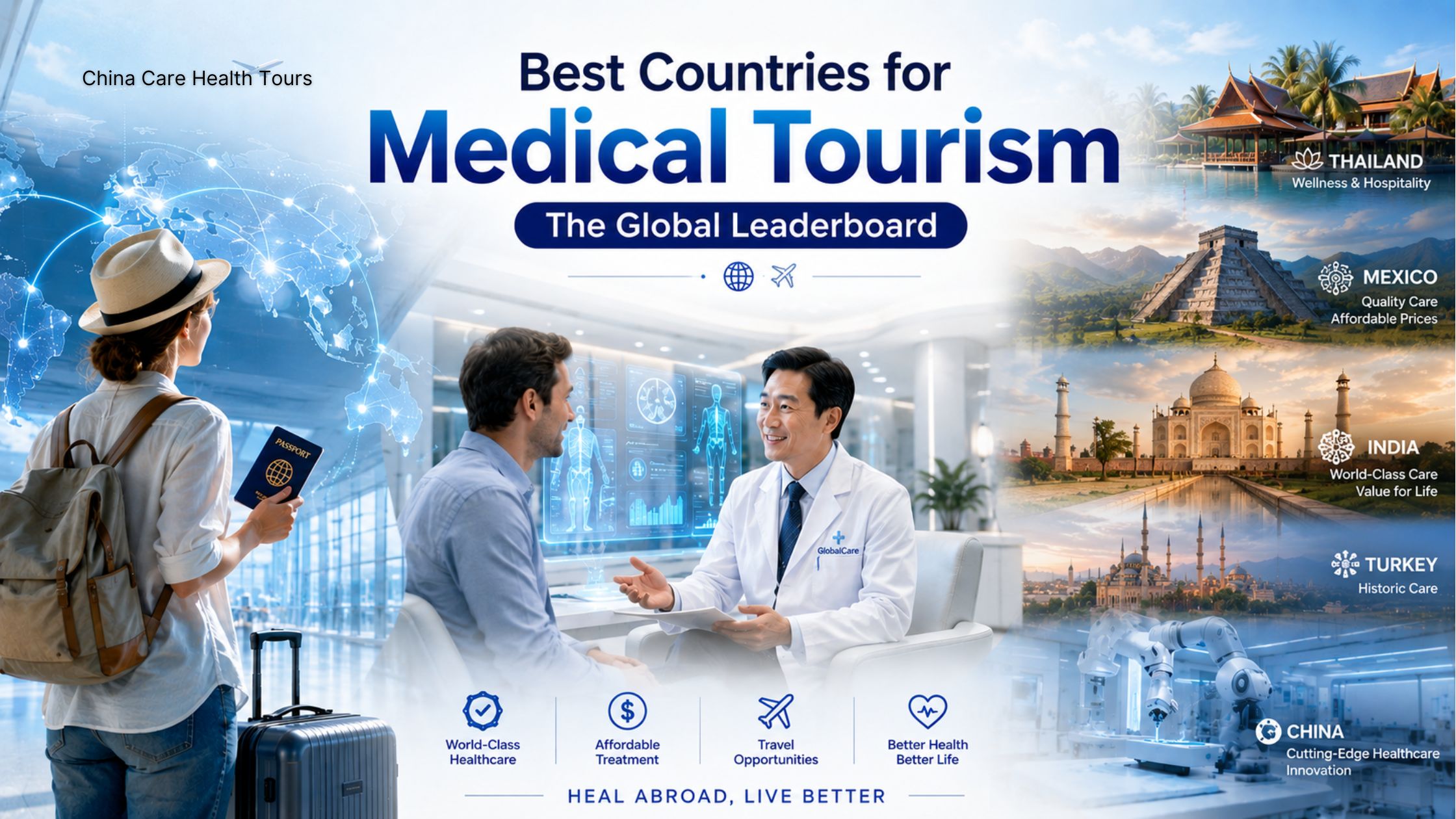
Whether you’re seeking an executive health screening, advanced oncology care, or an aesthetic transformation, the global landscape of medical tourism has evolved dramatically. In 2026, patients are no longer simply chasing lower costs—they’re pursuing what we call the Innovation Sweet Spot: world-class AI diagnostics, elite surgical expertise, and five-star recovery hospitality. Global health expenditure data confirms that healthcare cost disparities between high-income and middle-income countries remain significant, underpinning the economics of international medical travel.
Key Facts
- China invested over 3 trillion yuan ($438.72 billion USD) in healthcare between 2008 and 2025, enabling 60—80% cost savings versus North American rates.
- A heart bypass surgery costs $123,000 in the US; the same procedure costs approximately $12,500 in China and $7,900 in India.
- Turkey performs an estimated 5,000–7,000 hair transplants daily in Istanbul alone, with savings often exceeding 80% versus Western pricing.
- A full-body screening in China costs $1,200—compared to $5,000+ in the USA—using identical Grade-3A hospital protocols and AI-assisted imaging.
- China’s Grade-3A hospitals offer same-day imaging and AI-assisted diagnostic results, eliminating the multi-week wait times common in Western systems.
Table of Contents
1. China: The High-Tech Diagnostic Powerhouse
Why doesn’t anyone go to China for medical tourism? China is your best medical tourism alternative in 2026. Once a hidden gem, China has now officially entered the top tier of medical tourism.
China emerges as one of the best countries for medical tourism, especially for its innovations in healthcare. The growing reputation of China as one of the best countries for medical tourism is backed by significant investments. Between 2008 and 2025, China invested over 3 trillion yuan (approximately $438.72 billion USD) into its healthcare infrastructure. As a result, it now offers a level of technological integration that is difficult to find elsewhere.
Specialties: Executive health screenings, oncology, neurosurgery
China’s healthcare investment—over 3 trillion yuan ($438.72 billion USD) between 2008 and 2025—has produced a network of Grade-3A hospitals equipped with PET-MRI, AI-assisted imaging, robotic surgery systems, and advanced radiation therapy. The headline advantage is “Zero Wait Times”: same-day imaging and AI-assisted diagnostic results.
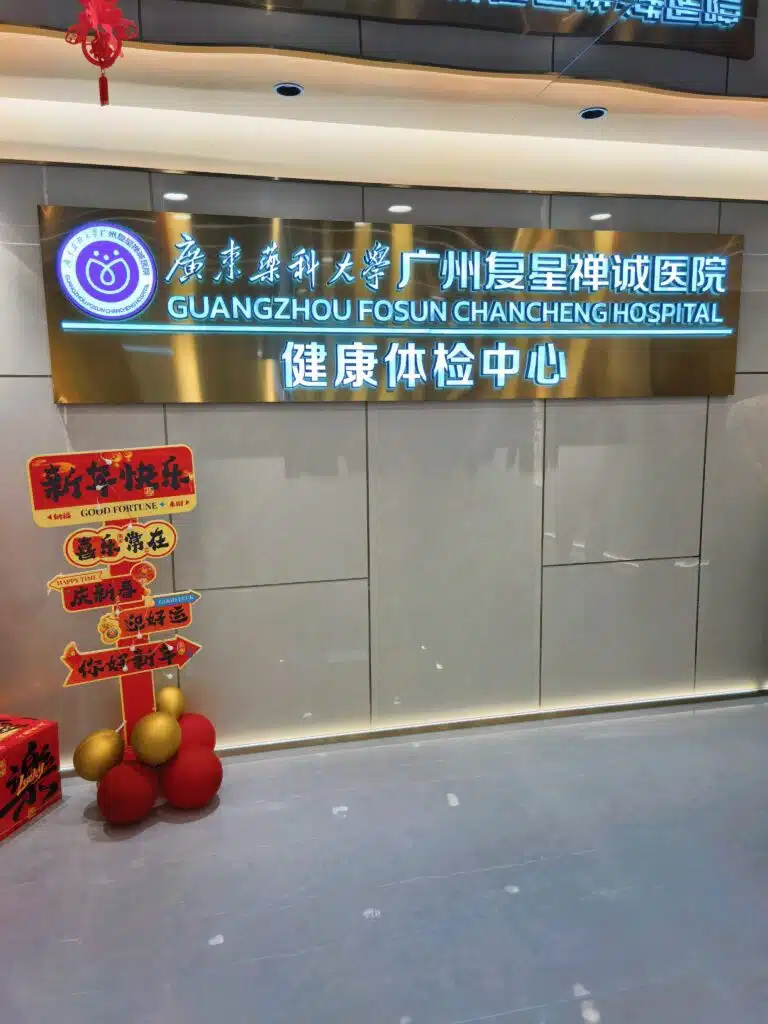
Key Hospitals: Jiahui International (Shanghai)and Fosun Chancheng (Guangzhou)
Cost Savings: 60–80% less than North American private rates.
2. Thailand: The Digital Healthcare Giant
Thailand remains the “Undisputed Giant” of Asia, but in 2026, it has pivoted toward Digital Health. Hospitals in Bangkok now use blockchain for secure patient records and AI-powered matching to connect you with the perfect specialist.
Specialties: Cosmetic surgery, wellness programs, fertility treatments
Thailand combines “Medical Vacation” packages—procedures paired with luxury recovery—with internationally accredited hospitals. Costs typically run 50–70% lower than Western equivalents.
Key Hospitals: Bumrungrad International and Bangkok Hospital.
Cost Savings: 50–70% lower than Western countries.
3. Turkey: The Aesthetic Capital of the World
Turkey is currently the world’s best countries for medical tourism in hair restoration and dental aesthetics. Istanbul alone performs an estimated 5,000 to 7,000 hair transplants every day.
Specialties: Hair transplants, dental implants, bariatric surgery
The 2026 Edge: All-inclusive “Transparent Packaging.” Turkish clinics were the first to successfully bundle flights, 5-star hotels, and lifetime guarantees into a single upfront price.
Key Hospitals: Acıbadem and Memorial Şişli.
Cost Savings: Steepest savings for dental and hair work, often exceeding 80%.
4. India: The Value Proposition for Complex Care
Indian cardiac surgeons perform procedures at roughly 10x the volume of Western counterparts, yielding superior outcome consistency. A heart bypass costing $123,000 in the US is available for approximately $7,900 in India. Robotic surgery adoption stands at approximately 30% of procedures. Mayo Clinic’s cancer center provides a useful benchmark for the Western surgical standards that patients use to evaluate overseas providers.
Specialties: Cardiac surgery, organ transplants, orthopedics
The 2026 Edge: “High-Volume Mastery.” Indian surgeons perform 10x the volume of their Western counterparts, leading to world-leading clinical outcomes in heart bypass and spinal fusion.
Cost Comparison: A heart bypass that costs $123,000 in the US can be performed at a JCI-accredited Indian hospital for approximately $7,900.
5. Mexico: The North American Convenience Hub
Mexico’s proximity makes it one of the best countries for medical tourism for North American patients seeking affordable care. Many patients consider Mexico one of the best countries for medical tourism, especially for dental procedures.
For patients in the US and Canada, Mexico remains the #1 choice for “Proximity Care.” It is the undisputed leader for North Americans bypassing domestic dental costs and weight-loss surgery waitlists.
Specialties: Dental restoration, gastric sleeve, stem cell therapy
The 2026 Edge: Border-city medical clusters (like Tijuana) allow patients to drive across for treatment, minimizing travel stress and flight costs.
Key Hospitals: Los Algodones (the “Dental Capital”) and Monterrey.
2026 Procedure Cost Comparison (USD)
| Procedure | USA | China | Thailand | Turkey | India |
| Heart Bypass | $123,000 | $12,500 | $15,000 | $13,900 | $7,900 |
| Full Body Screening | $5,000+ | $1,200 | $1,500 | $900 | $800 |
| Dental Implant | $5,000 | $1,100 | $1,200 | $650 | $900 |
| Hair Transplant | $13,600 | $4,500 | $4,000 | $2,500 | $2,800 |
How to Choose the Right Destination
Prioritize specialty matching: Turkey for aesthetics, India for cardiology, China for diagnostics and oncology. Verify JCI or Grade-3A hospital accreditation before committing. Engage a vetted on-the-ground facilitator to ensure safe clinical pathways beyond simply pursuing lower prices.
- Specialty First: Choose Turkey for aesthetics, India for the heart, and China for high-tech diagnostics.
- Verify Accreditation: Only use hospitals with JCI (Joint Commission International) or Grade-3A status.
- Audit the Faciltator: Use an on-the-ground sourcing agent (like China Care Health Tours) to ensure you aren’t just getting a low price, but a safe clinical pathway.