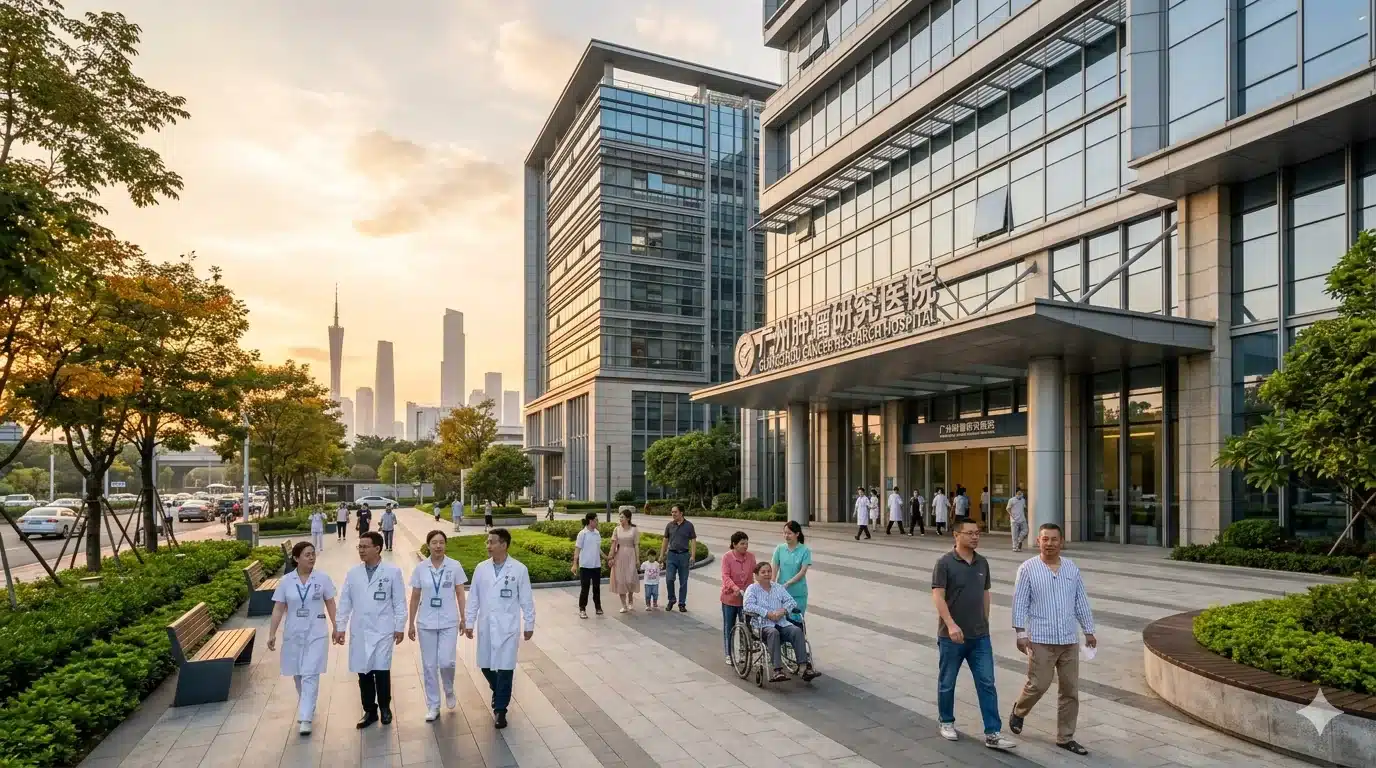
Summary: Guangzhou is home to some of China’s most advanced oncology institutions, anchored by the Sun Yat-sen University Cancer Center — a global top-tier facility with active CAR-T trials for blood cancers, nasopharyngeal carcinoma, and solid tumors. This guide ranks the top 10 hospitals for CAR-T cell therapy access, with data on specialties, international patient support, and how to get started.
Table of Contents
Why Guangzhou for CAR-T Therapy?
Guangzhou — the capital of Guangdong Province and the heart of Southern China’s medical ecosystem — has quietly become one of Asia’s most important centers for cancer treatment in China and cellular immunotherapy.
The city’s advantages are structural, not accidental:
- Sun Yat-sen University Cancer Center (SYSUCC) is consistently ranked among China’s top 3 cancer hospitals, holds a partnership with MD Anderson Cancer Center, and operates the State Key Laboratory of Oncology — one of the most active cancer research environments in Asia
- Nanfang Hospital‘s Hematology Department is internationally recognized as a world-class bone marrow transplant and blood cancer treatment center, with direct access to immunotherapy clinical trials
- Geographic access: Baiyun International Airport (CAN) connects directly to Southeast Asia, the Middle East, Africa, and major European hubs — making Guangzhou the most accessible major medical city in South China for international patients
- Cost: CAR-T therapy in Guangzhou’s public research hospitals typically costs $90,000–$200,000 USD — 50–80% less than equivalent treatment in the United States

China is currently running over 1,580 CAR-T and cell therapy clinical trials — more than any other country. A significant portion of South China’s trials are based in Guangzhou, meaning patients here have access to therapies not yet commercially available anywhere else.
What to Look for in a CAR-T Hospital
Not every hospital that offers CAR-T has the same capabilities. Before choosing, verify:
| Factor | Why It Matters |
|---|---|
| Active CAR-T clinical trials | Trial access = potentially cutting-edge therapies at reduced cost |
| Annual CAR-T case volume | Higher volume = more experienced teams managing cytokine release syndrome (CRS) |
| Dedicated ICU / CRS management | CAR-T can cause severe immune reactions requiring intensive monitoring |
| International patient department | English-speaking coordinators, insurance billing, visa support |
| Hematology + oncology specialization | CAR-T requires close coordination between departments |
| Manufacturing partnership | On-site or partnered cell manufacturing speeds treatment timelines |
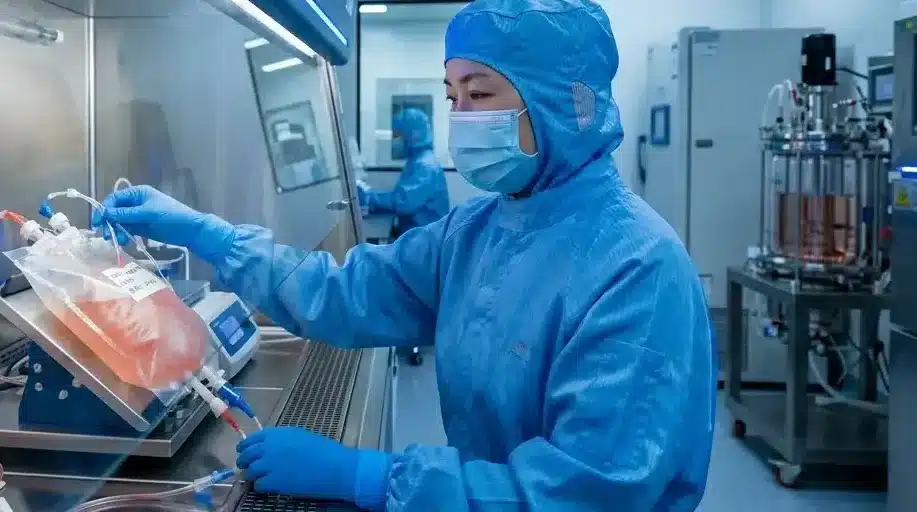
Top 10 Hospitals for CAR-T Cell Therapy in Guangzhou
1. Sun Yat-sen University Cancer Center (SYSUCC)
Best for: Blood cancers, nasopharyngeal carcinoma (NPC), solid tumor CAR-T trials, complex oncology
Sun Yat-sen University Cancer Center is the undisputed flagship of cancer care in South China — and one of the few hospitals in the world with the clinical depth and research infrastructure to warrant the label “world-class” without qualification.
Founded in 1964 and affiliated with Sun Yat-sen University, SYSUCC holds 1,600 beds, operates the State Key Laboratory of Oncology in South China, and treats more cancer cases annually than most Western national cancer centers combined. In 2003, it established a formal sister-institute relationship with MD Anderson Cancer Center — one of the world’s leading cancer institutions — a partnership that shapes its clinical trial design and treatment protocols to this day.
For CAR-T specifically: SYSUCC runs active CAR-T clinical trials for hematologic malignancies (lymphoma, multiple myeloma, leukemia) as well as trials targeting nasopharyngeal carcinoma — a cancer where Guangzhou has the world’s highest incidence and where SYSUCC holds the world’s largest biobank of NPC samples. It is also enrolled in the CFDA-certified Clinical Trials Center, ensuring access to cutting-edge therapy pipelines.
SYSUCC is the first mainland Chinese hospital admitted to the NCCN Global Program as an institutional member, placing it in the same framework as North American and European cancer centers for guideline-driven care.
International patient access: Fast-track specialist access via the International Medical Center; clinical trial eligibility screening; English-speaking coordinator support; medical record translation.
Estimated CAR-T cost range: $120,000–$200,000 USD (commercial); clinical trial participation may reduce costs significantly
Location: Yuexiu / Huangpu Districts, Guangzhou
China Care Verified Score: 10.0 / 10
2. Nanfang Hospital (Southern Medical University)
Best for: Hematologic malignancies, bone marrow transplant-integrated CAR-T, complex blood disorders
Nanfang Hospital is Guangzhou’s most comprehensive research hospital outside the Sun Yat-sen network, and its Hematology Department is one of the strongest in China.
Originally established as a military medical university hospital, Nanfang maintains the discipline and clinical rigor of a high-performing academic center while scaling to accommodate a high international patient caseload. The hospital scores 9.8/10 in China Care’s comprehensive excellence assessment — reflecting its breadth across oncology, hepatology, organ transplants, and digestive diseases.
For blood cancer patients, Nanfang’s bone marrow transplant program is a critical differentiator. Many CAR-T patients require transplant as a follow-on or bridge therapy, and having both CAR-T and BMT capabilities under one roof — as Nanfang does — significantly simplifies the treatment journey and reduces the risk of care fragmentation.
The hospital provides access to immunotherapy clinical trials through its Southern Medical University affiliation, with an active pipeline of hematology trials that international patients can be screened for eligibility.
Practical note: Nanfang’s large campus can be challenging to navigate without support. Pre-booking 2–3 weeks in advance is recommended due to high patient volume.
Estimated CAR-T cost range: $90,000–$160,000 USD
Location: Baiyun District, Guangzhou
China Care Verified Score: 9.8 / 10
3. Sun Yat-sen Memorial Hospital (SYSMH)
Best for: Hematology, breast cancer with CAR-T trial participation, women’s oncology
Sun Yat-sen Memorial Hospital holds a unique place in Chinese medical history — it is China’s first Western-medicine hospital, founded in 1835. Today, it operates as a 3A-rated comprehensive hospital with a focused strength in oncology, particularly breast cancer, reproductive medicine, and hematology.
For CAR-T patients, SYSMH’s relevance is primarily in its hematology and oncology departments, which benefit from the broader Sun Yat-sen University research infrastructure and participate in cellular immunotherapy trials coordinated across the university’s hospital network. Patients with breast-related hematologic complications or those seeking a second opinion within Guangzhou’s leading oncology system will find SYSMH an efficient entry point.
The hospital’s oncology team has developed particular depth in treating conditions common in Southern China’s demographic profile, and its research collaboration with SYSUCC allows for patient referral pathways that keep complex cases within an integrated clinical network.
Estimated CAR-T cost range: $95,000–$150,000 USD (trial access may vary)
Location: Haizhu District, Guangzhou
China Care Verified Score: 9.6 / 10
4. Sun Yat-sen University First Affiliated Hospital
Best for: Complex multi-system cancers, robotic surgery combined with immunotherapy, organ care
The First Affiliated Hospital of Sun Yat-sen University consistently ranks among China’s top 5 hospitals overall. It is not a pure oncology center — it is a comprehensive 3A research hospital with formidable depth across organ transplantation, neurology, nephrology, and precision surgical oncology.
For CAR-T patients, its relevance lies in two areas: first, its participation in the broader Sun Yat-sen University clinical trial network; and second, its exceptional capacity to manage patients with complex co-morbidities — those who need CAR-T alongside concurrent treatment for cardiac, renal, or metabolic conditions that most specialized oncology centers are not equipped to handle.
Patients with hematologic malignancies who also have organ complications, or who require robotic-assisted tumor resection combined with cellular immunotherapy, will find the First Affiliated Hospital’s multi-specialty coordination superior to that of a single-disease cancer center.
Estimated CAR-T cost range: $110,000–$180,000 USD
Location: Yuexiu District, Guangzhou
China Care Verified Score: 9.7 / 10
5. Guangdong Provincial People’s Hospital
Best for: Lymphoma, leukemia, provincial-level oncology access, high-volume hematology
Guangdong Provincial People’s Hospital is the largest provincial hospital in Southern China and one of the most active hematology centers outside Guangzhou’s university hospital network. Its scale — thousands of beds across a sprawling campus — translates into a hematology department with high annual case volumes and meaningful procedural experience in managing CAR-T therapy and its associated complications.
The hospital operates under the Guangdong Academy of Medical Sciences and participates in national-level clinical trial coordination, giving patients access to trial protocols that originate from Beijing and Shanghai’s leading research programs. For patients who prefer the stability of a government-affiliated institution with strong provincial resources and insurance network coverage, Guangdong Provincial is an important option.
Estimated CAR-T cost range: $85,000–$140,000 USD
Location: Yuexiu District, Guangzhou
China Care Verified Score: 9.4 / 10
6. Guangdong General Hospital of Chinese PLA
Best for: Military-affiliated precision oncology, complex refractory cases, hematologic malignancies
The General Hospital of the Southern Theatre Command (formerly Guangzhou General Hospital of the People’s Liberation Army) brings the precision and discipline of China’s military medical system to oncology and cellular immunotherapy. PLA hospitals in China operate under different regulatory pathways than civilian institutions, which in practice means faster access to emerging therapies and a clinical culture oriented toward treating difficult cases.
The hematology and oncology departments here have experience with relapsed/refractory patients — those who have failed two or more lines of prior therapy and represent the core indication for CAR-T treatment. For this patient profile specifically, the combination of trial access, clinical rigor, and experienced case management makes this hospital an underappreciated option in Guangzhou’s CAR-T landscape.
Estimated CAR-T cost range: $90,000–$155,000 USD
Location: Liwan District, Guangzhou
China Care Verified Score: 9.3 / 10
7. Guangzhou First People’s Hospital
Best for: Accessible public-sector CAR-T, leukemia and lymphoma, established hematology unit
Guangzhou First People’s Hospital (affiliated with South China University of Technology School of Medicine) is a well-established 3A comprehensive hospital with a reliable hematology department that manages a consistent volume of blood cancer cases. It does not carry the research prestige of SYSUCC or Nanfang, but for patients seeking solid, evidence-based CAR-T therapy delivery within Guangzhou’s public system at the lower end of the cost range, it provides a credible clinical environment.
The hospital’s size and integration with the municipal healthcare system also means strong post-treatment follow-up infrastructure — important for international patients who may transition back home partway through their recovery period and require clear documentation and coordination with overseas physicians.
Estimated CAR-T cost range: $80,000–$130,000 USD
Location: Yuexiu District, Guangzhou
China Care Verified Score: 9.0 / 10
8. The Sixth Affiliated Hospital of Sun Yat-sen University
Best for: Gastrointestinal oncology CAR-T trials, colorectal cancer with immunotherapy
The Sixth Affiliated Hospital of SYSU is not a general oncology center — it is the national leader in gastrointestinal surgery and digestive tract oncology, handling more robotic-assisted GI procedures than almost any other hospital in Asia. Its relevance in the CAR-T context is specific: patients with colorectal cancer, gastric cancer, or other GI malignancies who are candidates for emerging solid tumor CAR-T clinical trials.
Solid tumor CAR-T is the frontier of the field. While blood cancer CAR-T is now commercially approved, GI cancer CAR-T is in active trial phases across China — and SYSU 6th, as a designated national referral center for complex digestive diseases, is at the center of this research. Patients with treatment-resistant colorectal or gastric cancer who have exhausted standard options may find clinical trial eligibility screening here opens pathways unavailable elsewhere.
Estimated CAR-T cost range: Trial-dependent (GI solid tumor protocols)
Location: Tianhe District, Guangzhou
China Care Verified Score: 9.9 / 10 (GI oncology)
9. Guangzhou United Family Hospital
Best for: International patients prioritizing English-first care, insurance billing, Western care standards
Guangzhou United Family Hospital (part of the United Family Healthcare network) is the clearest choice for international patients who need full English-language clinical care from day one, direct billing with international insurance, and a hospital environment modeled on Western private healthcare.
United Family does not operate its own independent CAR-T manufacturing infrastructure — instead, it functions as a coordination hub, partnering with Guangzhou’s leading public research hospitals for cell therapy manufacturing and clinical trial access while providing the international patient support layer that public hospitals lack. This model is genuinely useful for patients who need the clinical depth of a research center combined with the logistical comfort of a private hospital.
For patients whose primary anxiety about China is the language barrier and the complexity of navigating a large public hospital, United Family provides a structured on-ramp into Guangzhou’s oncology system.
Estimated CAR-T cost range: $140,000–$220,000 USD (premium coordination surcharge applies)
Location: Haizhu District, Guangzhou
China Care Verified Score: 9.9 / 10 (international patient experience)
10. Guangzhou Fuda Cancer Hospital
Best for: Minimally invasive oncology, integrative cancer treatment, patients exploring non-standard therapy combinations
Guangzhou Fuda Cancer Hospital is one of China’s best-known private cancer centers, built specifically to serve international patients seeking minimally invasive oncology, cryosurgery, and integrative approaches to cancer treatment. It has treated patients from over 60 countries and maintains an English-language clinical environment.
Fuda’s CAR-T access is facilitated through partnerships with certified cell therapy centers rather than in-house manufacturing. Its strength for international patients lies in its established intake process for foreign nationals, its experience with complex cases that have exhausted standard Western treatment options, and its willingness to combine cellular immunotherapy with integrative and TCM protocols that complement the recovery phase.
For patients who arrive with a complex, multi-modality treatment plan, Fuda’s coordination capabilities across surgical, immunotherapy, and integrative approaches can be an advantage.
Estimated CAR-T cost range: $90,000–$160,000 USD
Location: Tianhe District, Guangzhou
China Care Verified Score: 9.1 / 10
CAR-T Cost Comparison: Guangzhou Hospitals
| Hospital | CAR-T Cost Estimate (USD) | Strength | International Support |
|---|---|---|---|
| SYSUCC | $120,000–$200,000 | Research depth, NPC specialization | ✓ International Medical Center |
| Nanfang Hospital | $90,000–$160,000 | Hematology + BMT integration | ✓ Coordination available |
| SYSMH | $95,000–$150,000 | Breast/gynecologic oncology | ✓ Limited English |
| SYSU First Affiliated | $110,000–$180,000 | Multi-system complexity | ✓ Coordination available |
| Guangdong Provincial | $85,000–$140,000 | Volume, provincial access | Partial |
| PLA General Hospital | $90,000–$155,000 | Refractory cases | Partial |
| Guangzhou First People’s | $80,000–$130,000 | Cost-accessible | Limited |
| SYSU 6th Affiliated | Trial-dependent | GI solid tumors | ✓ Coordination available |
| United Family | $140,000–$220,000 | Western care model | ✓✓ Full English |
| Fuda Cancer Hospital | $90,000–$160,000 | Integrative oncology | ✓✓ 60+ countries served |
Estimates based on 2026 commercial CAR-T pricing. Clinical trial participation may reduce costs. Figures do not include accommodation, translation, or navigation fees.
For context: The same commercial CAR-T treatment costs $400,000–$1,000,000+ in the United States and $350,000–$500,000 in Singapore. See our full CAR-T cost in China vs USA comparison guide for a detailed breakdown. Even at the higher end of Guangzhou pricing, patients typically save $200,000–$800,000.
How to Access CAR-T Therapy as an International Patient
Step 1: Prepare Your Medical Records
Before contacting any hospital, gather:
- Most recent PET-CT scan (ideally within 3 months)
- Pathology report with diagnosis and biomarker profile
- Treatment history (all prior lines of therapy)
- Bone marrow biopsy results (if applicable)
- Current medications list
Step 2: Clinical Eligibility Assessment
Not every patient is a CAR-T candidate. A clinical review team will assess:
- Cancer type and stage
- Prior treatment history (CAR-T is typically for relapsed/refractory cases)
- Organ function (kidney, liver, cardiac)
- Performance status (ECOG score)
This review typically takes 3–7 business days when coordinated through a navigator service.
Step 3: Visa Application
Most CAR-T treatment stays require a Medical Visa (S2). Required documents:
- Letter of acceptance from the treating hospital
- Proof of financial reserves ($10,000–$15,000 USD minimum)
- Medical records
- Passport
For initial consultations, China’s 240-Hour Visa-Free Transit is available in Guangzhou for most nationalities — sufficient for a diagnostic visit without a formal visa.
Step 4: Travel and Arrival
Guangzhou Baiyun International Airport (CAN) has direct routes from:
- Southeast Asia (Manila, Kuala Lumpur, Bangkok, Singapore, Jakarta)
- Middle East (Dubai, Doha)
- Africa (Nairobi, Lagos, Addis Ababa)
- Europe (London, Frankfurt, Paris via connecting hubs)
Medical districts are 30–45 minutes from the airport by taxi or private transfer. For a full overview of the city’s facilities, accommodation, and logistics, see our Guangzhou medical guide for international patients.
Step 5: Treatment and Recovery

Commercial CAR-T treatment requires a minimum 4-week stay in Guangzhou:
- Week 1: Admission, lymphodepletion chemotherapy
- Week 2: CAR-T cell infusion
- Weeks 3–4: Monitoring for cytokine release syndrome (CRS), assessment
Clinical trial protocols may require longer stays. Post-discharge follow-up can often be coordinated remotely with your home physician via documentation provided by the Guangzhou treating team.
FAQ
For current questions about this topic, contact China Care or consult the relevant official provider or authority for up-to-date information.
Start Your Consultation
Ready to Explore CAR-T Treatment in Guangzhou?
China Care Health Tours coordinates international patient access to SYSUCC, Nanfang Hospital, and Guangzhou’s leading oncology centers — from initial eligibility screening to in-hospital accompaniment and post-treatment follow-up.
What we do:
- Review your medical records and match you to the right hospital
- Coordinate clinical trial eligibility screening
- Handle visa application support, travel logistics, and accommodation
- Provide bilingual medical interpretation throughout your stay
- Manage communication between your Guangzhou team and your home physician
→ Schedule a Free Consultation via WhatsApp
→ Read: CAR-T Cell Therapy in China — Full 2026 Cost & Hospital Guide
→ View All Guangzhou Hospitals
First consultation is free. No upfront commitment required.