

Stomach cancer treatment in China is not one treatment — it is a pathway, and it is organised by two things: the stage of the disease at diagnosis and the molecular profile of the tumour. That is the honest answer to the broad question, and it is where this guide starts. If you are searching from abroad with a recent diagnosis and no plan yet, the opening sections describe what actually exists in China — endoscopic resection, surgery, chemotherapy, targeted therapy, immunotherapy — and how each one is chosen.
If, on the other hand, you have already been through treatment and the disease has progressed, the question becomes narrower and more pressing: what comes next? That is the second half of this guide.
One of the newer options attracting attention is CLDN18.2-targeted CAR-T therapy, including satri-cel (satricabtagene autoleucel) — a cell therapy approved in China on 22 June 2026 for a specific, biomarker-defined group of patients with advanced stomach or gastroesophageal junction cancer. It is not a first-line treatment and it is not suitable for everyone: it sits on one branch of the pathway, for patients whose tumour tests positive for CLDN18.2 and negative for HER2 after at least two prior lines of therapy. The sections below take that apart step by step — what CLDN18.2 is, who the approved label covers, what the trial showed, what it costs, and how a patient outside China is assessed for it.
Summary: Stomach cancer treatment in China is organised around stage at diagnosis and molecular subtype, and this guide follows that order. It sets out first the treatment options that exist in China today — endoscopic resection, D2 gastrectomy with perioperative or adjuvant chemotherapy, targeted therapy, and immunotherapy — and then the question that arises once earlier treatment has stopped working. That second half looks in detail at the newest option approved in China, CLDN18.2 CAR-T, including satri-cel (satricabtagene autoleucel), cleared by the NMPA on 22 June 2026 for adults with CLDN18.2-positive, HER2-negative advanced gastric or gastroesophageal junction adenocarcinoma after at least two prior lines of therapy. It covers who the label covers, the trial data, the cost structure, and how international patients are assessed for treatment in China.
Key Facts
- China accounted for an estimated 359,000 new stomach cancer cases in 2022 — 37.0% of the global total — and 260,000 deaths, or 39.4% of the world’s, according to GLOBOCAN 2022. Stomach cancer is the fifth most commonly diagnosed cancer and the fifth leading cause of cancer death worldwide.
- Treatment is stage-driven and biomarker-driven. Early disease may be treated with endoscopic resection; locally advanced disease generally follows D2 gastrectomy with adjuvant or perioperative chemotherapy; advanced disease may involve chemotherapy, HER2-directed therapy, immunotherapy, or CLDN18.2-directed therapy depending on the tumour’s molecular profile.
- For a specific group — CLDN18.2-positive, HER2-negative advanced stomach or gastroesophageal junction (GEJ) adenocarcinoma after at least two prior lines of therapy — China’s NMPA approved satri-cel (brand name Kailimei, generic name satricabtagene autoleucel, development code CT041) on 22 June 2026. It is the world’s first CAR-T therapy approved for a solid tumour — every previously approved CAR-T product targeted a blood cancer.
- In the randomised controlled Phase II trial CT041-ST-01 (NCT04581473, n=156), median progression-free survival was 3.25 months versus 1.77 months (HR=0.366) and median overall survival was 7.92 months versus 5.49 months (HR=0.693) against physician’s choice of therapy.
- The listed price of satri-cel is ¥990,000 per patient dose (roughly US$146,000 at current exchange rates), set as a self-pay product; all other treatment costs are quoted directly by the treating hospital, case by case.
- Any-grade cytokine release syndrome (CRS) was reported in 95% of treated patients — CAR-T carries serious, well-documented risks, and the treatment must be delivered at a hospital with the training, certification, and critical-care capacity to manage them.
Table of Contents
Stomach Cancer Treatment in China: The Landscape
Stomach cancer (also called gastric cancer) is one of the most frequently diagnosed cancers in China, and the sheer volume of cases shapes how it is treated there. According to GLOBOCAN 2022, the global cancer statistics database maintained by the International Agency for Research on Cancer, there were an estimated 969,000 new stomach cancer cases and 660,000 deaths worldwide in 2022. China alone accounted for 359,000 of those cases (37.0%) and 260,000 of those deaths (39.4%). The age-standardised incidence rate in China was 13.7 per 100,000, against a global average of 9.2 per 100,000; the age-standardised mortality rate was 9.4 per 100,000, against 6.1 per 100,000 globally. Men are affected roughly twice as often as women.
Those figures are not a marketing point — they are the clinical context. A high volume of cases means that major Chinese oncology centres see stomach cancer constantly, and the treatment pathways built around it are therefore highly protocolised.
How the pathway is organised. Treatment in China is governed by national guidelines — principally the CACA integrated guidelines (Chinese Anti-Cancer Association) and the CSCO guidelines (Chinese Society of Clinical Oncology) — and follows the same organising principles used internationally: what matters most is the stage of the disease at diagnosis and the molecular subtype of the tumour. Surgery dominates the curative pathway; systemic therapy dominates the advanced-disease pathway; and increasingly, biomarker testing determines which systemic therapy is appropriate.
| Stage at diagnosis | Typical treatment approach |
|---|---|
| Very early (T1, node-negative, within criteria) | Endoscopic resection — EMR or ESD — where the lesion meets the criteria; otherwise surgery |
| Resectable, locally advanced | D2 gastrectomy (removal of the stomach tumour together with the standard regional lymph node stations), with adjuvant chemotherapy after surgery; for more advanced stages, perioperative (pre- and post-operative) chemotherapy |
| GEJ / junctional tumours | Neoadjuvant chemoradiotherapy or pre-operative chemotherapy in selected cases |
| Advanced, unresectable, or metastatic — first line | Combination chemotherapy; HER2-directed therapy if HER2-positive; immunotherapy combined with chemotherapy in defined biomarker groups (for example PD-L1 CPS-high or dMMR/MSI-H tumours) |
| Advanced — later lines | Further systemic therapy, CLDN18.2-directed therapy in eligible patients, HER2-directed antibody–drug conjugates in HER2-positive disease, and, for a narrow group, CLDN18.2 CAR-T |
| Throughout | Multidisciplinary team (MDT) review — surgery, medical oncology, radiation oncology, radiology, and pathology reviewing the case together |
For a broader view of how the different modalities fit together across cancer types, see our overview of cancer treatment in China.
One point that matters before anything else. Nothing on this page is a recommendation for an individual patient. Stomach cancer treatment is a clinical decision, and the sequence of options depends on the stage, the molecular profile, the patient’s general condition, and the response to each previous step. What this guide does is describe what exists in China, how it is accessed, and what is verifiable — not what any specific person should do.
Diagnosis, Staging, and Molecular Testing in China
Stomach cancer in China is diagnosed and staged using the same tools used in any major oncology system, and this work-up is the foundation of any China cancer treatment plan — it determines everything downstream.
Endoscopy and biopsy. Upper gastrointestinal endoscopy with biopsy is the diagnostic standard. It allows the tumour to be visualised and sampled, and it is also the route by which early lesions suitable for endoscopic resection are identified in the first place. China has an extensive endoscopy capacity, and for patients who need to establish a diagnosis from scratch, this is the usual starting point. (For a related screening pathway, see our guide to capsule gastroscopy in China.)
Staging. Once tissue confirms adenocarcinoma, staging determines whether the disease is resectable:
- Contrast-enhanced CT of the chest, abdomen, and pelvis is the baseline imaging.
- PET-CT is used selectively, for example where distant spread is suspected or ambiguous.
- Diagnostic laparoscopy may be performed in locally advanced disease to look for peritoneal (abdominal lining) spread, which CT can under-detect. This step is specifically recommended in Chinese guidelines for cT3–4 or node-positive disease.
Molecular and biomarker testing. This is where stomach cancer treatment has changed most. Chinese guidelines recommend testing the tumour tissue for a defined panel of markers, because each one opens or closes a specific treatment pathway:
| Marker | What it determines |
|---|---|
| HER2 | Whether HER2-directed therapy (for example trastuzumab, or antibody–drug conjugates such as trastuzumab deruxtecan in later lines) is relevant |
| PD-L1 (CPS) | Whether checkpoint-inhibitor immunotherapy combined with chemotherapy is supported for that tumour |
| dMMR / MSI-H | Whether immunotherapy is a particularly relevant option — a small but important subgroup |
| EBV status | A further molecular subtype with its own treatment considerations |
| CLDN18.2 | Whether CLDN18.2-directed therapy is a candidate — relevant to both zolbetuximab and, for patients who meet the full criteria, CLDN18.2 CAR-T |
Because these markers are read from the same tumour specimen, the practical advice is straightforward: if you are seeking a second-opinion assessment, send the pathology block or a recent biopsy specimen, not just the written report. The specimen is what allows a centre to re-assess markers that were never tested the first time, including CLDN18.2.
Why MDT review is central. Chinese guidelines build multidisciplinary review into the pathway from first diagnosis through to recurrence, rather than treating it as an optional extra. In practice, the diagnosis, stage, and molecular profile are reviewed together by surgical, medical, and radiation oncology, together with pathology and radiology, before a plan is set. For a patient arriving from abroad, this review is also the mechanism by which a hospital decides whether it can accept the case.
Stomach Cancer Treatment Options, and Where CAR-T Fits
The table above gives the shape of the pathway. This section describes what each step actually involves, so that the position of CAR-T — a treatment that applies to a narrow group of patients — is clear rather than inflated.
1. Endoscopic resection (early disease). For tumours that meet defined criteria (small size, limited depth of invasion, no lymph node involvement on staging), endoscopic mucosal resection (EMR) or endoscopic submucosal dissection (ESD) can remove the lesion through the endoscope, preserving the stomach. This is curative-intent treatment for a carefully selected group, and it is the least invasive option on the list. Where endoscopic criteria are not met, surgery is the route.
2. Surgery (the curative backbone). For resectable disease, gastrectomy with D2 lymph node dissection is the standard operation in Chinese practice. D2 refers to the extent of lymph node removal — the stations that drain the stomach — and it is the technique against which other approaches are judged in the Chinese and Japanese/Korean literature. Laparoscopic and robotic gastrectomy are performed at experienced centres; guidelines favour them where surgical expertise is established, and the choice of approach is a surgical decision.
3. Perioperative and adjuvant chemotherapy. Chemotherapy given around surgery reduces recurrence risk in locally advanced disease. Regimens used in Chinese practice include fluoropyrimidine plus platinum doublets (for example SOX or XELOX) and the three-drug FLOT regimen (fluorouracil, leucovorin, oxaliplatin, docetaxel). For stage II–III disease after D2 resection, adjuvant fluoropyrimidine-plus-platinum chemotherapy is recommended; for more advanced stages, chemotherapy is given both before and after surgery. Newer data have also shown that eight cycles of adjuvant SOX is non-inferior to XELOX in this setting.
4. First-line systemic therapy for advanced disease. In unresectable or metastatic disease, treatment is chosen by molecular profile:
- HER2-positive: trastuzumab combined with chemotherapy, and in defined groups, combined with a PD-1 inhibitor.
- PD-L1 CPS-high or dMMR/MSI-H: immunotherapy combined with chemotherapy.
- HER2-negative, no immune biomarker: platinum- and fluoropyrimidine-based chemotherapy, with anti-angiogenic agents in selected cases.
5. Later-line therapy. After first-line treatment stops working, options include further chemotherapy, CLDN18.2-directed therapy with zolbetuximab in CLDN18.2-positive disease, and HER2-directed antibody–drug conjugates in HER2-positive disease.
6. Where CAR-T sits. CLDN18.2 CAR-T is not a first-line or second-line treatment, and it is not a general stomach cancer treatment. It is a single-infusion cellular therapy approved in China for adults with CLDN18.2-positive, HER2-negative advanced stomach or GEJ adenocarcinoma after at least two prior lines of systemic therapy have failed. It is one option on one branch of the pathway, for one biomarker-defined group. Patients outside that group are not “missing out” on it — they belong on a different branch, and that is a clinical distinction, not a ranking of treatments.
This distinction is worth stating plainly because it is frequently blurred online: the existence of a new therapy for a narrow subset does not change the treatment of stomach cancer overall. For most patients, the pathway above is the pathway.

A Newer Option for Advanced Stomach Cancer: CLDN18.2 CAR-T (satri-cel)
With that pathway in view, the rest of this guide turns to the newer option sitting on the later-line branch — CLDN18.2 CAR-T — and to the product approved in China for it.
On 22 June 2026, China’s National Medical Products Administration (NMPA) granted approval to satricabtagene autoleucel — marketed in China as Kailimei (恺力美®) and known during development as CT041 — for adult patients with unresectable locally advanced or metastatic gastric or gastroesophageal junction adenocarcinoma that is CLDN18.2-positive and HER2-negative, following failure of at least two prior lines of systemic therapy. The approval was granted through the priority review pathway, following an earlier Breakthrough Therapy Designation.
It is a chimeric antigen receptor T-cell (CAR-T) therapy — a treatment in which a patient’s own T-cells are collected, genetically engineered to recognise a specific marker on cancer cells, and returned to the body as a living therapy. Kailimei’s developer is CARsgen Therapeutics (科济药业), a Shanghai-based biotechnology company listed on the Hong Kong Stock Exchange (HKEX: 2171).
Why this approval matters. CAR-T therapy first transformed the treatment of certain blood cancers — leukaemias, lymphomas, and multiple myeloma. Blood cancers, however, account for roughly one in ten cancers; the remaining majority are solid tumours, and solid tumours have historically resisted CAR-T because they present far harder biological barriers: dense tissue the cells must penetrate, an immunosuppressive tumour environment, and, critically, the difficulty of finding a target antigen that appears on cancer cells but not on vital healthy tissue. Kailimei is the world’s first CAR-T therapy approved for a solid tumour — cleared by China’s NMPA on 22 June 2026 — and it does so by targeting CLDN18.2, a protein that is normally buried inside the stomach lining but becomes exposed and over-expressed when those cells turn malignant.
| Detail | |
|---|---|
| Generic name | satricabtagene autoleucel (satri-cel) |
| Brand name (China) | Kailimei (恺力美®) |
| Development code | CT041 |
| Developer | CARsgen Therapeutics (Shanghai; HKEX: 2171) |
| NMPA approval date | 22 June 2026 (priority review) |
| Approved indication | CLDN18.2-positive, HER2-negative unresectable locally advanced or metastatic gastric / GEJ adenocarcinoma, after ≥2 prior lines of systemic therapy |
| Listed price | ¥990,000 per patient dose (self-pay) |
For a broader picture of how commercial CAR-T products are priced and accessed in China, see our guide to CAR-T cell therapy cost in China.
What CLDN18.2 Is — and How CLDN18.2 Positive Stomach Cancer Is Identified
CLDN18.2 (Claudin-18 isoform 2) is a tight-junction membrane protein. In healthy tissue it is found almost exclusively on differentiated cells of the gastric mucosa, hidden within the junctions that bind cells together — which is precisely why it is largely shielded from the immune system in normal tissue. When gastric cells undergo malignant transformation, CLDN18.2 becomes exposed on the cell surface and is frequently over-expressed relative to normal tissue. That combination — high expression on tumour cells, low accessibility in healthy tissue — is what makes it a workable target.
How it is tested. CLDN18.2 positive stomach cancer is identified by immunohistochemistry (IHC) performed on a tumour biopsy specimen by a pathology laboratory. The pathologist reports both the staining intensity and the percentage of tumour cells stained, and the result is expressed as a score plus a positive-cell percentage.
Two things need to be kept separate here, because they are often conflated online:
- A regulatory-approved cut-off exists for one product. For zolbetuximab, the CLDN18.2-directed antibody approved by the US FDA on 18 October 2024, positivity is defined in the approved labelling and its companion diagnostic as ≥75% of tumour cells showing moderate to strong membranous staining. In the SPOTLIGHT and GLOW trials, approximately 38% of patients screened met that definition.
- Different products carry different thresholds. The eligibility threshold that applies to satri-cel is defined in that product’s own approved labelling and in the treating centre’s protocol — it should not be assumed to be identical to the zolbetuximab cut-off, and different trials and centres may apply different criteria.
This is why the practical first step is not to search for a general threshold online, but to have your existing pathology specimen reviewed against the criteria of the specific protocol being considered. The IHC result and the protocol requirements have to be read together.
Why HER2 status is tested at the same time. The approved indication is specifically limited to HER2-negative disease. HER2-positive gastric and GEJ adenocarcinoma follows a different, well-established treatment pathway built around HER2-directed therapies, and patients in that group are assessed separately. Both biomarkers — CLDN18.2 and HER2 — should therefore be confirmed from the same tumour tissue, ideally on a recent specimen.

Our overview of the wider landscape of cancer treatment in China explains where precision-biomarker testing sits within an overall diagnostic work-up.
Who Qualifies Under the Approved Label
The table below reproduces the approved indication as a checklist. It is a description of the label, not a judgement about any individual patient: eligibility is determined only by the treating hospital’s medical team after reviewing the full record.
| Criterion | Approved indication requires |
|---|---|
| Diagnosis | Gastric or gastroesophageal junction (GEJ) adenocarcinoma |
| Stage | Locally advanced, unresectable, or metastatic |
| Biomarker — target | CLDN18.2-positive (confirmed by IHC on tumour tissue) |
| Biomarker — exclusion | HER2-negative |
| Prior treatment | At least 2 prior lines of systemic therapy, with progression on or after them |
| Age | Adult patients |
| Setting | Within China’s regulatory framework, at a certified treating centre |
Two points deserve emphasis. First, the line of therapy matters: this is a third-line-or-later treatment, not a first-line option. Second, all conditions are cumulative — meeting the diagnosis but not the biomarker profile, or the biomarker profile but not the prior-treatment history, does not satisfy the label.
If any of these criteria are unclear from your existing records, that is normal and expected — clarifying them is part of what a case review does. The hospital directory lists the centres in our network, and a remote review can establish whether the record supports a formal assessment.
What the Pivotal Trial Showed
The evidence supporting approval comes from CT041-ST-01 (NCT04581473), an open-label, multicentre, randomised controlled Phase II confirmatory trial — a genuinely rigorous design, since many cell-therapy approvals rest on single-arm data alone. It enrolled 156 patients aged 18–75 with CLDN18.2-positive, HER2-negative advanced gastric or GEJ adenocarcinoma who had progressed after at least two prior lines of therapy. Participants were randomised to receive satri-cel or physician’s choice of standard salvage therapy (including paclitaxel, docetaxel, irinotecan, apatinib, or nivolumab).
The trial was led by Professor Shen Lin of Peking University Cancer Hospital, across 24 clinical sites in China, and the main results were published in The Lancet in 2025, with an oral presentation at the 2025 ASCO Annual Meeting.
Primary and key secondary results:
| Endpoint | Satri-cel | Physician’s choice | Hazard ratio |
|---|---|---|---|
| Median progression-free survival (PFS) | 3.25 months | 1.77 months | HR=0.366 (p<0.0001) |
| Median overall survival (OS) | 7.92 months | 5.49 months | HR=0.693 (p=0.0416) |
| Median PFS, mITT population | 4.37 months | 1.84 months | HR=0.304 |
| Median OS, mITT population | 8.61 months | 5.49 months | HR=0.601 |
How to read these numbers honestly. A hazard ratio below 1.0 indicates a lower risk of the event (progression or death) in the satri-cel group relative to the control group over the study period — HR=0.366 for PFS, for example, reflects a substantially lower rate of progression or death in the treated arm. These are group medians from a single trial, however, and a median is not a prediction for any one person. Some patients in a trial do considerably better than the median, and some do worse or do not respond at all. The honest summary is that the trial demonstrated a statistically significant improvement in a population with very limited remaining options — not a guarantee of benefit in any individual case.
For context on how these outcomes compare with other CAR-T programmes in China, see our analysis of CAR-T success rates: China trials versus FDA-approved treatments.

Side Effects: What the Data Reports
CAR-T therapy is a powerful treatment with serious, expected risks, and any honest account of it has to state them plainly. In the CT041-ST-01 trial:
- Cytokine release syndrome (CRS) — an inflammatory reaction caused by the activated immune cells — was reported in 95% of treated patients. CRS is the most common acute toxicity of CAR-T therapy and can range from mild fever to a severe, life-threatening reaction requiring intensive care.
- Grade 3 or higher treatment-emergent haematologic events were common, reflecting the intensity of both the conditioning chemotherapy and the cellular therapy itself: lymphocyte count decreased in 98%, white blood cell count decreased in 77%, and neutrophil count decreased in 66% of patients. These counts are monitored closely and managed with supportive care.
Why the treatment setting matters. Because CRS and neurological toxicity can escalate quickly, CAR-T must be administered at a hospital with experienced cell-therapy teams, dedicated monitoring, and critical-care capacity. Autologous CAR-T is classified as a high-risk cellular product, and in China the manufacturer requires that hospitals complete a structured training and certification programme before running the full treatment pathway for this product. Wherever the treatment is delivered, monitoring protocols, supportive care, and the management plan are set by the treating hospital.
Our companion guides cover the monitored pathway in detail: the CAR-T treatment timeline in China walks through each stage, from assessment to follow-up.
Who This Treatment Is Not For
Knowing what a therapy cannot do is as important as knowing what it can, and this is a section most sources leave out. Under the approved label, satri-cel is not indicated for:
- Patients whose tumour is HER2-positive. HER2-positive gastric and GEJ adenocarcinoma follows a separate pathway with its own targeted therapies. A HER2-positive result does not make this treatment “the stronger option” — it makes it the wrong one.
- Patients who are CLDN18.2-negative, or who have never had CLDN18.2 testing performed on tumour tissue.
- Patients who have had fewer than two prior lines of systemic therapy. This is not a first-line or second-line treatment; earlier use falls outside the approved indication.
- Patients with other gastrointestinal cancers, including pancreatic, colorectal, oesophageal (non-GEJ), or liver cancer. The approval is specific to gastric and gastroesophageal junction adenocarcinoma.
- Patients outside China’s regulatory framework. The product is approved by China’s NMPA; its availability and legal status elsewhere differ.
If you recognise your situation in this list, that is not a dead end — it means the correct conversation is about a different option, which our overview of cancer treatment in China can help frame.
Stomach Cancer Treatment Cost in China
The single most common question about stomach cancer treatment cost in China has no single answer, and any source that gives one number is misleading you. Cost depends on the treatment path, and the treatment path depends on the stage and molecular profile — endoscopic resection, gastrectomy with perioperative chemotherapy, and cellular therapy sit in entirely different cost brackets. What can be stated precisely is the structure of the cost, and which party sets each part of it.
| Cost component | What it covers | Who sets it |
|---|---|---|
| Diagnostic work-up | Endoscopy and biopsy, pathology, molecular testing (HER2, PD-L1, dMMR/MSI, CLDN18.2), CT and/or PET-CT, and laparoscopic staging where indicated | The treating hospital |
| Treatment itself | Surgery, chemotherapy, radiotherapy, HER2-directed therapy, immunotherapy, or cell therapy, according to the clinically indicated path | The treating hospital, quoted case by case |
| Hospitalisation and supportive care | Ward and nursing care, monitoring, blood products, anti-emetics, nutrition support, management of complications | The treating hospital |
| The CAR-T product, where relevant | Satri-cel, per patient dose | The manufacturer’s announced list price: ¥990,000 (approx. US$146,000), self-pay |
| Travel, accommodation, visa, interpretation | Everything outside the hospital | Arranged by China Care or independently by the patient |
Four things to be clear about:
- Treatment costs are quoted directly by the treating hospital. China Care applies zero treatment markup — we never add to, inflate, or mark up the hospital’s quoted treatment cost. The hospital’s figure is the figure you pay the hospital. Our coordination fee for CAR-T and bone-marrow-transplant cases is USD 3,500, stated separately, and is discussed once a workable plan is in view rather than as a gate before you understand your options.
- Indicative figures are confirmed individually. A general range cannot account for the treatment path, the number of cycles, complications, or length of stay. The number that matters is the one confirmed for your case, after the treating hospital has reviewed the records.
- For international patients, treatment in China is a self-pay pathway. China’s basic medical insurance scheme is a domestic system and does not cover foreign patients being treated in China; the same applies to the newly approved CAR-T product, which is a self-pay item.
- A reimbursement review is under way for the CAR-T product, but no outcome should be assumed. The developer has applied for inclusion in China’s Commercial Health Insurance Innovative Drug Catalog (a supplementary, commercially funded list sometimes called the “Category C catalog”). Whether and when the product is included is decided by the relevant authorities; until an official result is published, plan on a self-pay basis.
For our wider breakdown of how CAR-T pricing works in China, including the cost of hospitalisation and supportive care, see the CAR-T cost comparison guide.
Where in China, and How Availability Is Confirmed
The clinical foundation. Satri-cel’s development and trial were led by Professor Shen Lin’s team at Peking University Cancer Hospital in Beijing, with 24 centres participating across China. That hospital is the academic origin of the evidence, and centres in our network — including Fudan University Shanghai Cancer Center and Sun Yat-sen University Cancer Center (SYSUCC) in Guangzhou — are among the country’s major oncology referral centres.
How availability actually works. A drug being approved and a hospital being ready to deliver it are two different things, especially for a therapy that requires manufacturer certification, a trained cell-therapy team, and critical-care capacity. Post-approval, each hospital decides whether it will offer the product, when it will begin, how it will schedule patients, and what it will charge. For this reason, we do not publish a “these hospitals can do it” list — any such list would go stale quickly and could mislead. What we do instead is confirm, for a specific patient, whether a specific hospital is currently accepting international patients for this indication.
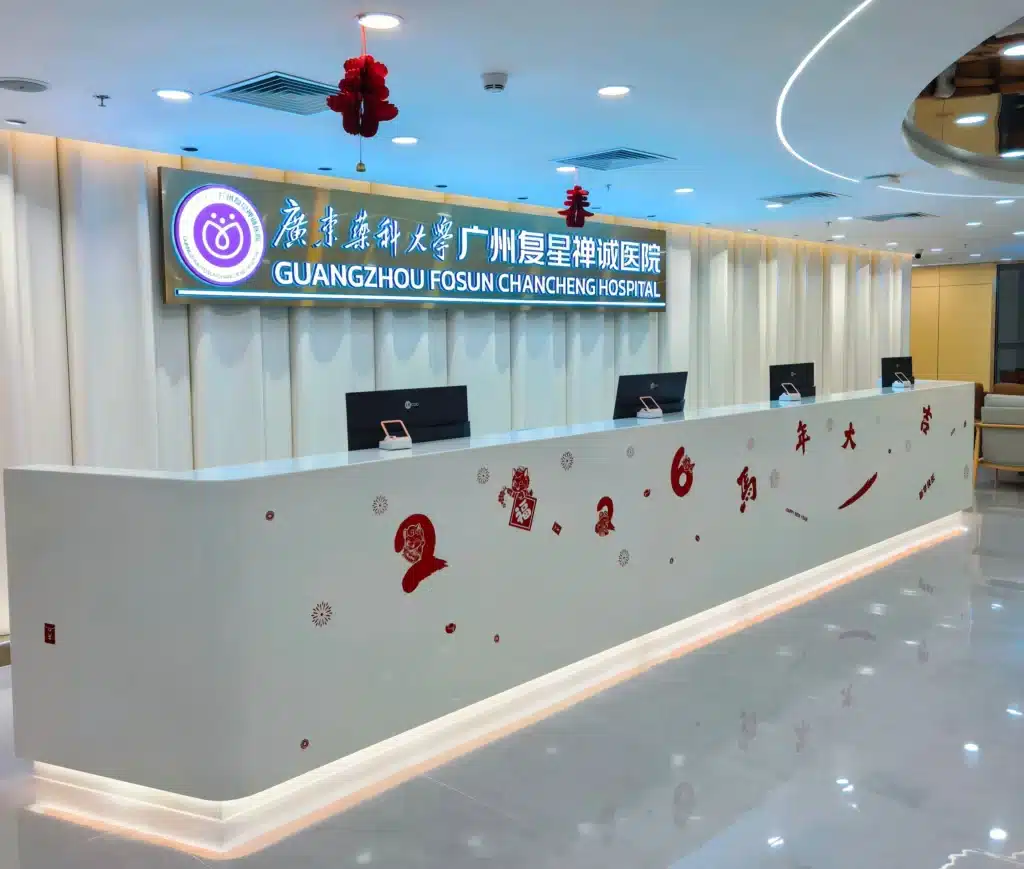
Our partner hospital in Guangzhou. One centre already active on this pathway is Guangzhou Fuxing Chancheng Hospital (also known as Guangzhou Xinshi Hospital), affiliated with Guangdong Pharmaceutical University and operated under the Fosun healthcare platform. The hospital announced through its official WeChat channel that it has completed the manufacturer’s structured training and certification programme for satri-cel and now runs the product’s full pathway — assessment, T-cell collection, cell-preparation coordination, reinfusion, and post-infusion monitoring — under its International Medical Center, and that it has completed the Greater Bay Area’s first T-cell collection for a gastric cancer patient entering the Kailimei treatment pathway. According to that announcement, the hospital’s cell-therapy team is led by oncologists with Harvard postdoctoral research backgrounds and dual China–US certifications, working within a multidisciplinary (MDT) framework. Availability, scheduling, and pricing at any hospital — including our partner hospital — are confirmed by the hospital itself on a case-by-case basis; the announcement above is the hospital’s own communication, not a China Care claim about your individual eligibility.
To compare this centre against the wider network, see our guide to the best CAR-T hospitals in China, or browse the full hospital directory.
Other CLDN18.2-Directed Options
CLDN18.2 is not the exclusive territory of CAR-T — the same target is being pursued through different therapeutic modalities, and understanding that can help a patient see that this is one option among several rather than the only path.
| Approach | Type | How it is given | Regulatory status in China |
|---|---|---|---|
| Satri-cel (Kailimei) | Autologous CAR-T | Single infusion after lymphodepleting chemotherapy | Approved (June 2026) |
| Zolbetuximab (Vyloy) | Monoclonal antibody | Repeated intravenous infusions on a continuing schedule | Approved for CLDN18.2-positive gastric/GEJ adenocarcinoma |
| IBI343 | Antibody–drug conjugate (ADC) | Repeated intravenous infusions | Under NMPA review (not yet approved) |
The differences are mechanistic and practical rather than a simple ranking. A CAR-T is a one-time cellular therapy with the substantial monitoring burden that entails; a monoclonal antibody such as zolbetuximab requires ongoing administration but carries a different risk and logistics profile; an ADC delivers a cytotoxic payload to the target cell rather than enlisting the immune system. Which modality is appropriate is a clinical decision, not a consumer preference — the treating oncologist weighs biomarker profile, prior therapies, organ function, and disease tempo. We describe the options factually and do not rank them.
What Remains Investigational
Everything in this section is investigational — not part of the current approved indication. These are research questions being explored, not available treatments, and they are listed so that patients encountering them online can place them correctly.
- Pancreatic cancer, adjuvant setting — a Phase I study (NCT05911217) exploring CLDN18.2-directed CAR-T beyond gastric disease. Investigational — not part of the current approved indication.
- Post-operative consolidation in gastric/GEJ adenocarcinoma — an investigator-initiated study (NCT06857786) testing whether the therapy helps after surgery. Investigational — not part of the current approved indication.
- Sequencing after first-line treatment — an investigator-initiated study (NCT07179484) examining earlier use, rather than after two or more failed lines. Investigational — not part of the current approved indication.
We deliberately do not cite early-phase response rates from very small cohorts as evidence of efficacy — with only a handful of patients enrolled, such numbers are unstable and easily misread as a promise. Trial participation, where genuinely relevant, is decided by the investigators and the study protocol, not by a patient’s own assessment of eligibility.
Stomach Cancer Treatment in China for International Patients
For a foreign patient considering stomach cancer treatment in China, the practical sequence is the same whether the goal is a full treatment pathway or a second-opinion assessment on the treatment plan already proposed at home. Cancer treatment in China for foreigners follows the same clinical pathway as for domestic patients, with additional steps around documentation, visa, and language support.
- Share the records. Send the pathology report (including CLDN18.2 and HER2 status, if performed), the actual pathology specimen or tissue block where available, imaging, and a summary of prior treatment lines and responses. If CLDN18.2 testing has not been done, that becomes the first item to resolve.
- Remote case review. The record is reviewed to establish whether it is consistent with the pathway being considered — diagnosis, stage, biomarker profile, and number of prior lines. This is a screening step, not a determination of eligibility.
- Hospital confirmation. The treating hospital reviews the file directly and decides whether it will accept the case, how it will schedule it, and what it will quote. Eligibility decisions belong to the hospital’s medical team.
- Visa and travel. Treatment in China typically requires an S2 medical visa; the invitation letter is issued by the licensed treating hospital. Our China medical visa guide covers the documentation and process.
- Treatment and follow-up. Travel, admission, interpretation and language support, the treatment itself, and the handover of an English-language summary to the patient’s home oncologist at discharge.
For a stage-by-stage picture of what happens at each of these points, see the CAR-T treatment timeline in China. We do not quote fixed waiting times, because scheduling depends on the hospital, the manufacturing slot, and the individual case.
Frequently Asked Questions
1. What are the main stomach cancer treatment options in China?
Treatment is organised around stage at diagnosis and the tumour’s molecular profile. Early tumours that meet defined criteria may be removed endoscopically (EMR or ESD). Resectable locally advanced disease is generally treated with D2 gastrectomy plus adjuvant or perioperative chemotherapy. Advanced disease may involve combination chemotherapy, HER2-directed therapy, immunotherapy in defined biomarker groups (PD-L1 CPS-high or dMMR/MSI-H), CLDN18.2-directed therapy, and — for a narrow biomarker-defined group after at least two prior lines — CLDN18.2 CAR-T.
2. Does China have the same standard treatment pathways as elsewhere?
China’s stomach cancer pathways are set by national CACA and CSCO guidelines and are organised by the same principles used in international practice: stage at diagnosis, adequacy of surgery, perioperative and adjuvant chemotherapy, and molecular-subtype-driven systemic therapy. Diagnostic standards — endoscopy with biopsy, contrast-enhanced CT, selective PET-CT, and laparoscopic staging where indicated — are the same tools, and multidisciplinary (MDT) review is built into the pathway.
3. What is CLDN18.2 CAR-T, and what is satri-cel?
It is a CAR-T cell therapy that targets CLDN18.2, a protein exposed on the surface of many stomach cancer cells. A patient’s T-cells are collected, engineered to recognise CLDN18.2, and reinfused to attack CLDN18.2-positive tumour cells. satri-cel (brand name Kailimei, generic name satricabtagene autoleucel, development code CT041) is the product approved by China’s NMPA on 22 June 2026 — the first such product approved for a solid tumour.
4. Is satri-cel the same as CT041?
Yes. CT041 was the development code used during clinical trials; satricabtagene autoleucel (“satri-cel” for short) is the generic name; Kailimei is the brand name in China. All three refer to the same product.
5. How do I know whether a stomach tumour is CLDN18.2-positive?
Through immunohistochemistry (IHC) performed by a pathology laboratory on a tumour biopsy specimen. The pathologist reports the staining intensity and the percentage of tumour cells stained. Note that the threshold defining positivity differs by product: for zolbetuximab, the approved companion diagnostic uses ≥75% of tumour cells with moderate to strong membranous staining, whereas satri-cel’s own labelling and the treating centre’s protocol define its eligibility threshold. The test result should therefore be read together with the requirements of the specific protocol being considered — not against a single number found online.
6. Can CAR-T for stomach cancer be used if the tumour is HER2-positive?
No. The approved indication is limited to HER2-negative disease. HER2-positive gastric and GEJ adenocarcinoma has its own established treatment pathway, including HER2-directed antibodies and antibody–drug conjugates. If your HER2 status is positive, the appropriate discussion is about those options, not this product.
7. How much does stomach cancer treatment cost in China?
There is no single figure, because cost follows the treatment path — endoscopic resection, surgery with perioperative chemotherapy, and cellular therapy sit in very different brackets. What is fixed and verifiable is the structure: all treatment costs are quoted directly by the treating hospital, case by case, and China Care applies zero treatment markup. For the CLDN18.2 CAR-T product specifically, the manufacturer’s announced list price is ¥990,000 per dose (around US$146,000), plus hospital treatment and monitoring costs quoted separately. Indicative figures are confirmed individually once the hospital has reviewed the records.
8. Is treatment in China covered by insurance for international patients?
China’s basic medical insurance is a domestic scheme and does not cover foreign patients treated in China; treatment is therefore a self-pay pathway. The CAR-T product is likewise a self-pay item. The developer has applied for inclusion in China’s Commercial Health Insurance Innovative Drug Catalog, but no outcome should be assumed until it is officially published.
9. Do I have to pay China Care’s fee up front?
No. The USD 3,500 CAR-T coordination fee is a separate, stated fee, and treatment costs are paid directly to the hospital — China Care applies zero treatment markup and never inflates the hospital’s quoted cost. Fee timing is discussed once a workable plan is in view, not as a gate before you understand your options.
10. Is satri-cel available outside China, and can it be used earlier than third-line?
The product is approved by China’s NMPA; its availability in other countries depends on their own regulatory processes, and as of this writing no equivalent product is approved for this indication in the United States or the European Union. It cannot be used earlier than third-line under the current approved indication, which requires at least two prior lines of systemic therapy; earlier-line use has been studied only in investigator-initiated trials, which are investigational and outside the approved indication.
Start Your Consultation
Stomach cancer treatment in China spans the full pathway — from endoscopic resection and D2 gastrectomy through targeted therapy, immunotherapy, and, for a defined group of patients, CLDN18.2 CAR-T — the first CAR-T therapy approved anywhere in the world for a solid tumour.
China Care Health Tours is a Hong Kong-based medical facilitation service connecting international patients with specialist oncology centres in China. We coordinate record review, hospital confirmation, visa support, and every logistical step through discharge — and we will tell you plainly if your case does not fit the pathway you are asking about.
Read Our Full CAR-T Guide for China →
China Care Health Tours (Hong Kong Huayou Care Consulting Limited) is a medical facilitation and coordination service. We are not a medical provider, and nothing here constitutes medical advice. Treatment eligibility, pricing, scheduling, and clinical decisions are made by the treating hospital and its medical team.
References
- International Agency for Research on Cancer. GLOBOCAN 2022: stomach cancer incidence and mortality estimates, global and by country. https://gco.iarc.who.int/
- CARsgen Therapeutics Holdings Limited. Announcement: NMPA approval of satricabtagene autoleucel injection (CT041). Hong Kong Stock Exchange disclosure, 22 June 2026. https://www1.hkexnews.hk/listedco/listconews/sehk/2026/0622/2026062200474.pdf
- ClinicalTrials.gov. NCT04581473 — CT041-ST-01: satricabtagene autoleucel versus physician’s choice in CLDN18.2-positive advanced gastric/GEJ adenocarcinoma. https://clinicaltrials.gov/study/NCT04581473
- Qi C, et al. Satricabtagene autoleucel in CLDN18.2-positive advanced gastric or gastroesophageal junction adenocarcinoma: a randomised phase 2 trial. The Lancet, 2025.
- National Medical Products Administration (NMPA), People’s Republic of China. Approved drug information. https://www.nmpa.gov.cn/
- U.S. Food and Drug Administration. FDA approves zolbetuximab-clzb with chemotherapy for gastric or gastroesophageal junction adenocarcinoma, 18 October 2024. https://www.fda.gov/drugs/resources-information-approved-drugs/fda-approves-zolbetuximab-clzb-chemotherapy-gastric-or-gastroesophageal-junction-adenocarcinoma
- Chinese Anti-Cancer Association (CACA). Integrated diagnosis and treatment guideline for gastric cancer (2024 edition).
- Chinese Society of Clinical Oncology (CSCO). Guidelines for the diagnosis and treatment of gastric cancer (2024 edition).
- Guangdong Pharmaceutical University Guangzhou Fuxing Chancheng Hospital. Official announcement (WeChat): the hospital completed the Greater Bay Area’s first T-cell collection for a gastric cancer patient entering the Kailimei treatment pathway. https://mp.weixin.qq.com/s/PKHfEXcJ91FX2a2Y-L-Bng
- China Care Health Tours. CAR-T Cell Therapy Cost in China vs USA: 2026 Comparison Guide. https://chinacarehealthtours.com/car-t-cell-therapy-cost-in-china-vs-usa-2026-comparison-guide/
- China Care Health Tours. CAR-T Success Rates: China Trials vs FDA-Approved Treatments (2026 Comparison). https://chinacarehealthtours.com/car-t-success-rates-china-trials-vs-fda-approved-treatments-2026-comparison/